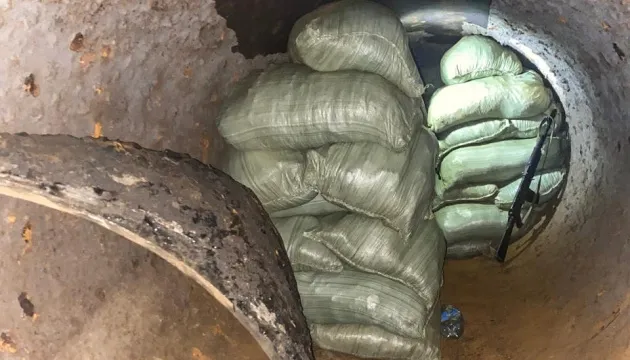
28 Days in an underground pipe (to launch an attack on Russian positions)
For 28 days, they lived and worked inside a metal pipe, unable to straighten up properly. They endured constant back pain, dust, a lack of oxygen, and the constant threat of enemy drones. This was the operation carried …
以下正文同步自 Hacker News 最新,版权归原站所有,已转换为易读排版。
For 28 days, they lived and worked inside a metal pipe, unable to straighten up properly. They endured constant back pain, dust, a lack of oxygen, and the constant threat of enemy drones. This was the operation carried out in the summer of 2024 by soldiers of the 107th Separate Territorial Defense Brigade from Bukovyna near Krasnohorivka, on the Pokrovsk axis.
Ukrinform correspondent spoke about the operation with Ihor Nazhyha, a serviceman with the 107th Brigade originally from the village of Lomachyntsi in Chernivtsi region. At the time, he was a squad leader in one of the companies of the 94th Battalion. Ihor now serves as the brigade’s head of communications.
“WE WERE TOLD THERE WAS AN INTERESTING TASK”
At the time, the battalion was operating on the Pokrovsk axis as part of the 59th Separate Assault Brigade named after Yakiv Handziuk, also known as the “Steppe Predators.” The soldiers were deployed in Krasnohorivka and nearby settlements, taking part in counterassault operations. After one combat mission, when they had a day or two to rest, they were offered a new assignment.
“We were told there was an interesting task for us. By ‘interesting,’ they meant the ‘pipe’ position. We had heard about it, but at first, we didn't understand what it meant,” Ihor recalls.
It was an old metal pipe, 1.3 meters in diameter, that formed part of a field irrigation system. It was uncovered after a shell struck the area. The pipe itself had remained intact, so the command decided to use it to approach Russian positions undetected.
At first, the soldiers were told the work could be completed in ten days. Ihor was tasked with organizing the work and digging an additional four meters. But things turned out to be much more complicated than expected. In the end, the soldiers had to dig approximately 40 meters of tunnel, including two entrances.
“We barely managed to complete the task in 28 days. The ground was as hard as concrete. Just try spending even a single day in a space where you can't straighten up. And we had to do it for almost a month. It was extremely difficult,” the serviceman recalls.
Some of the soldiers were nearly two meters tall. Inside the pipe, they had to move around almost constantly on their hands and knees.
“It was difficult for me in there, but for those guys, it must have been almost unimaginable. Perhaps we should have picked tank crewmen for the job – guys who were only 1.5 meters tall,” Ihor Nazhyha jokes.
At first, the soldiers had to break up the soil with entrenching shovels. Later, they were supplied with regular shovels, pickaxes, and a cordless demolition hammer. They used the hammer to break into the hard ground, then loosened the soil with pickaxes.
They loaded the excavated earth into sacks and carried them along the pipe. To make the job easier, the soldiers even built a small four-wheeled cart.
“The guys made us this little cart – something like a Kravchuchka shopping trolley. We moved it along inside the pipe, sometimes pushing it from the front, sometimes from behind, in pairs or one at a time. We had to get rid of the soil somehow,” the serviceman explains.
Because of the low ceiling, the soldiers had to remain bent over all the time. Their backs hurt so badly that they had to give themselves injections.
“As soon as I started feeling pain – bam, I'd give myself an injection and crawl on, like the Terminator. The pain just wouldn't let up. It was hellish work,” the serviceman says.
Still, there was no shortage of jokes. Ihor Nazhyha recalls that most of them were dark – otherwise, he says, it would have been difficult to endure the ordeal.
“We joked that if something flew in there, the pipe itself was like a gun barrel, and we were the shells inside it,” he recalls.
The soldiers even joked about the conditions they were living in. When temperatures soared outside, they would say they had it good inside the pipe and even had air conditioning.
“In the army, if you don't laugh, you'll start crying. And to keep from crying, you have to laugh. We joked about everything – how we went to the toilet, how we were staying in a ‘luxury hotel.’ The guys would say, ‘Wow, those out there have it much worse. It's scorching hot, while we've got it good here – we've got air conditioning,’” the soldier says with a smile.
The soldiers set up two exits. One led to a former Ukrainian trench very close to Russian positions. The other led directly to the enemy's position.
“It used to be our position, but it was completely destroyed, and the Russians had set up their own positions all around it. Our guys came up with a plan to emerge undetected between two of their positions and wreak havoc. Which is basically what happened later, but that's another story,” Ihor says.
The exits were camouflaged. One of them was not fully dug out but prepared so that it could be quickly opened with a few blows from a pickaxe if necessary. One soldier stood guard near the exit while the others continued digging. The soldiers also built barricades out of sandbags and prepared for the possibility of enemy troops getting inside.
They tried to emerge above ground as rarely as possible. Drones were constantly flying over the tree line, and the soldiers could not always identify whether an approaching drone was friendly or hostile.
“We weren't too keen on going out for fresh air. When you know there are drones flying back and forth overhead like commuter trains, and you don't know whether they're ours or theirs, you lose any desire to come out. We knew that if they spotted us up there, we might not make it out alive,” Ihor recalls.
Even walking from one end of the pipe to the other was difficult. The dust and stale air forced them to stop several times to catch their breath.
“You walk bent halfway over, your back feels like a piece of wood. Now imagine having to run out of there. If they spot us or start bombing the area, how are you supposed to get out? We knew our chances were slim. That's why we couldn't afford to give ourselves away,” the serviceman says.
They also had to keep a constant eye on the tunnel to make sure it did not collapse. The ground was hard, but that did not mean the structure was safe. Eventually, the soldiers began reinforcing the passage with wooden planks.
The Russians periodically shelled the area, and on one occasion dropped a gas grenade at the entrance to the pipe.
“When they dropped the grenade, we didn't even hear it land. Someone started shouting over the radio. By the time we heard them, by the time I asked them to repeat it, by the time we put on our gas masks... But the exit we had dug created an airflow, and the gas didn't get inside. That saved our lives,” the defender recounts.
On one occasion, the soldiers had to rescue one of their comrades who had collapsed from exhaustion. At first, they thought he was having an epileptic seizure.
“We started administering first aid. Thank God, we saved him. At the first opportunity, we got him out because we realized he was completely exhausted,” the serviceman recalls.
HOW THEY GOT FOOD AND CHARGED THEIR PHONES
Even while underground, the soldiers could get almost everything they needed. To arrange supplies, Ihor would contact a fellow soldier and tell him exactly what they needed. His comrade would then organize the delivery.
An entire military logistics system was behind these deliveries. Ihor's comrade could buy the necessary items at a supermarket that was still operating near Pokrovsk at the time or order them online. The supplies would then pass through several intermediate points.
First, the items were delivered to a designated location, where other soldiers picked them up and transported them farther. Once they reached the point beyond which vehicles could no longer travel, the soldiers continued on foot, under the threat of Russian drones. Eventually, the supplies reached the men inside the pipe.
They ordered not only tools and materials for setting up their position but also things they particularly craved after a hard day's work. Coca-Cola, for example.
“We'd be working in that pipe, sweating buckets. Then we'd sit down to rest and suddenly find ourselves craving Coca-Cola. They brought us everything we asked for. You're sitting in a pipe, trying to survive, but you still think: wouldn't it be nice to have a Coke? They brought us Coca-Cola, cutlets, and meat patties. Basically, we could order whatever we wanted. The guys were working hard and needed a proper meal. Canned food is all well and good, but sometimes you just want something home-cooked,” the soldier says.
They also had small camping stoves with gas canisters, which allowed them to heat up food or make tea right there underground. The soldiers tried to take care of their own basic needs rather than wait for someone else to solve every problem.
Throughout those 28 days, they also had to maintain communications, charge their phones, and ensure they had lighting. To do this, they had to go to the nearest dugout.
“To charge our phones, we had to gather all the power banks in a bag, check whether there were any enemy drones nearby, and dash out of the pipe toward the tree line. Then we had to walk another 200 meters along trails to avoid being spotted,” Ihor explains.
At the dugout, the soldiers left their depleted power banks, picked up the charged ones, collected food and other supplies, and headed back. Sometimes they had to spend the night there if it was too dangerous to return in the evening.
“I'd spend the night in the dugout, get a little rest, and head back to the pipe first thing in the morning to get back to work,” the serviceman says.
Ihor Nazhyha considers the operation near Krasnohorivka a success.
“We dug a passageway to the Russian positions, which later allowed us to attack them, strike their positions by surprise, and disrupt their advance and logistics. They were trying to infiltrate one of the settlements along that route, and we knew exactly where to strike,” he says.
The mission was important in holding back the Russian offensive in that sector of the front. Although the enemy eventually captured the area, the Ukrainian soldiers did everything they could to stop them.
Ihor still remembers those 28 days. Sadly, some of the soldiers who worked alongside him in the pipe have since been killed...
“YOU BEGIN TO APPRECIATE AN ORDINARY SHOWER”
The 28 days in the pipe changed the serviceman's attitude toward the simple things in life. The soldiers had no way to wash properly, so they relied on wet wipes. They conserved water, as it also had to be brought to their position.
“We don't appreciate comfort enough; we don't even know what it really means. We're always looking for some kind of luxury. But sometimes comfort simply means being able to take a proper shower. Even a field shower,” my interviewee says.
When the soldiers were finally brought back above ground and taken to the city, Ihor realized just how physically exhausting the work had been.
“I started taking off my combat shirt, and it was literally stuck to my body. Don't even get me started on my feet. We tried to take our socks off from time to time, but our feet still felt as if they had been steamed,” the serviceman recalls.
He adds that an experience like this makes you look at everyday life differently.
“Military service makes you appreciate things differently. It teaches you to manage your time and understand what rest really means. In everyday life, we do a lot of unnecessary things and pay attention to things we shouldn't,” Ihor Nazhyha says.
“THE GUYS DESERVE TO H
正文由 探How 从来源站点 RSS 同步,内容未经改写;遇到排版缺失或需要图片、视频时请以原文为准。