Refurb weekend II: Alpha Micro Eagle 300 and friends
Six years ago I fixed the power supply and case fan in my 68EC030-based Alpha Microsystems Eagle 300, a more modernized and substantially faster Alpha Micro running AMOS, their unique DEC-inspired multiuser operating sy…
以下正文同步自 Hacker News 最新,版权归原站所有,已转换为易读排版。
Six years ago I fixed the power supply and case fan in my 68EC030-based Alpha Microsystems Eagle 300, a more modernized and substantially faster Alpha Micro running AMOS, their unique DEC-inspired multiuser operating system. These blue-collar boxes were very common in many vertical markets due to their tightly integrated business-specific software packages, and are especially unusual for running their big-endian 68000-series processors little-endian (for data file backwards compatibility with their WD-16 ancestors). The 1990s-era Alpha Micro Eagle family improves on the originals with later 68K and even ColdFire CPUs, plus Ethernet and faster SCSI.
The second way it's a sequel is to our previous Alpha Micro refurb weekend, a double header restoring an Alpha Micro AM-1000 and AM-1200, two members of Alpha Micro's most popular series of computers and some of the closest things they made in the early '80s to desktop workstations.
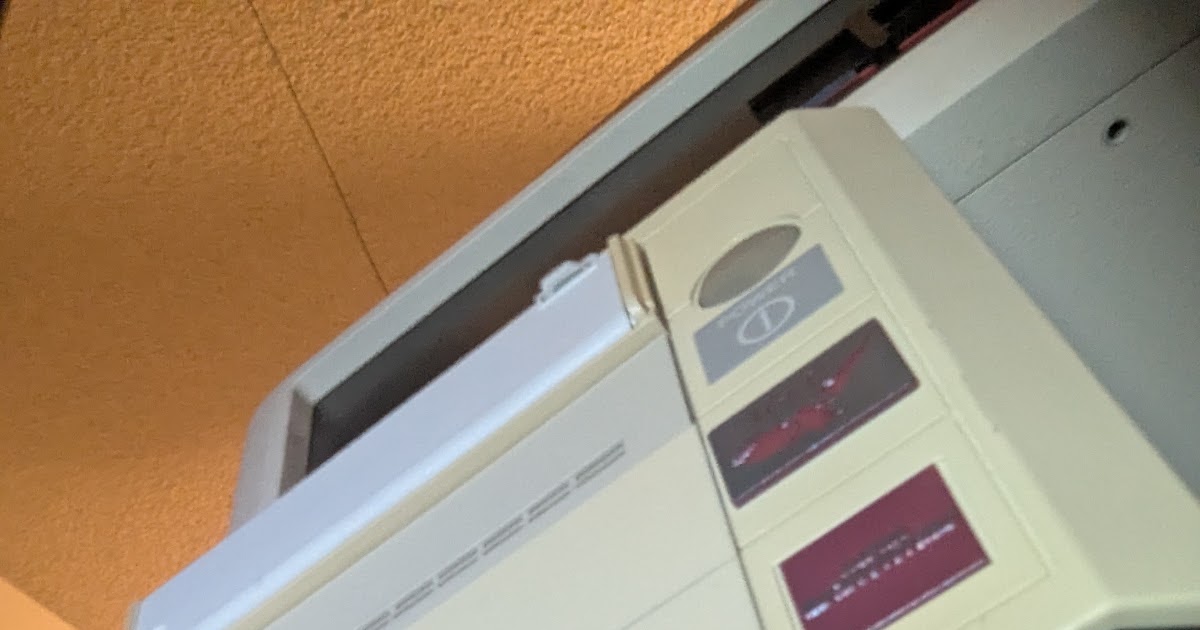
From the outside, the Eagle comes in a PC-style case, but it's not a PC:
This particular Eagle 300, with a 40MHz 68EC030 CPU, runs ampm.floodgap.com using the webserver provided with AlphaTCP — yes, Alpha Micros can be networked — and its own on-board Ethernet. At the time the cooling fan failure was putting a lot of strain on the hard disk because it was overheating, and since this was my first Alpha Micro and I wanted to keep it in good nick, I decided I would put a SCSI2SD in it after the repair and get rid of the spinning disk entirely. Fast-forward to last fall, a little over a year ago, when I tried to do exactly that with a ZuluSCSI.
And then it wouldn't start.
It would power on, but it wouldn't enter the boot sequence, not even with the old hard disk back in it, not even to run the internal self-test. I was worried I'd negligently blown one of its two main system boards and that meant I needed another. This entry took as long as it did to come to fruition because Eagles in general aren't easy to find, and on top of that I was looking for a specific one. Through a couple of referrals I managed to get what I thought was a replacement unit I could raid for parts, but it turned out to be something rather more special — and then I was even more fortunate when I got the Eagle 300 back out of storage to make one last attempt at reviving it.
To cap it off we'll go stick ZuluSCSIs in everybody else, including my Motorola ColdFire-based Eagle 450, the first ColdFire server ever produced and what used to be the fastest Eagle in the house until the new hotness came. I even converted the external BlueSCSI the AM-1200 was using to an internal ZuluSCSI too. Now nearly everybody's got a solid-state boot disk and they're all a good bit more zippy, so we'll gawk at the internals, compare 68K CPU and storage benchmarks and most importantly learn from my mistakes, because as my late father always said, "I'd rather be lucky than good." On a more solemn note, we'll also observe a moment of silence for one of the line's creators who passed away last year. It's time for a Refurb Multi-Weekend Sequel.
Alpha Microsystems, founded in Orange County, California in 1977, produced what were considered some of the earliest "poor man's minicomputers," smaller and more affordable multi-user systems that run a bespoke, Digital Equipment Corporation-influenced operating system named AMOS. In our previous entry we discussed their history in detail. First-generation Alpha Micros like the AM-100, designed by Dick Wilcox who also wrote most of the operating system, used large S-100 cases and a CPU chipset called the WD-16, derived from the Western Digital MCP-1600 chipset — the same one used in DEC's LSI-11 CPU — but with higher performance microcode developed by Rich Notari. These machines thoroughly outclassed low-end PDP-11s yet were substantially cheaper, and Alpha Micro found a ready audience initially with hobbyists and then later corporate turnkey environments, where its integrated AlphaBASIC and database functionality gave it a competitive advantage. As the WD-16 had little elbow room to evolve, in 1982 Alpha Micro introduced new systems based on the Motorola 68000, porting AlphaBASIC and AMOS to run natively, but swapping address lines to make it appear little-endian for compatibility with WD-16 data files and AlphaBASIC P-code. These new machines included the AM-1000, Alpha Micro's most popular single model, and by 1984 it constituted the majority of the over 20,000 Alpha Micro machines then in active use.
An idealized Alpha Micro office from the 1980s might look like this photo, from their actual advertising of the period. The main system is an AM-1042E, the S-100 box sitting on the pedestal next to the printer, using an AM-100/L CPU with an 8MHz 68000 (the same as the AM-1000, which was integrated into a desktop case), and in the factory-standard configuration shipped with 512K of RAM and a 60MB Winchester ST-506 hard disk. The system served some number of local users connected directly via serial ports, in this case the two administrative assistants with AM-60 terminals (a modified and rebadged Wyse WY-100). The fact everyone here was in the same room with the machine was helpful, because AMOS is a strictly real-memory operating system and executable code ran from where it was loaded in the user's fixed memory allocation — there was no memory protection. Although the admin assistants' explicit permissions were limited by which account they were logged into, using the same style of project-programmer numbers as DEC (e.g., [1,2] being the operator account), an errant job of theirs could readily stomp on another and it was not rare for busy systems with buggy software to regularly crash. On the other hand, this also made it fast and efficient with little separation between you and the hardware, and even Alpha Micros with fairly modest specifications could support hundreds of simultaneous users.
Alpha Microsystems tried multiple times to broaden the line technologically, though these efforts were largely for naught. Early attempts to put equivalent hardware onto a PC ISA co-processor card, with software to interchange between MS-DOS and AMOS, yielded only an expensive and poorly-selling PC that wasn't good at either OS (eventually the company gave up producing turnkey systems and just sold the card). In 1984 Alpha Micro introduced UNIMOS, a licensed version of AT&T System V UNIX which ran on modified AM-1000 hardware with an MMU, but it was likewise too expensive and garnered little interest from new users nor demand from existing ones. The cost of its development, the Unix license and its associated royalties, and a simultaneous lawsuit from DEC over AMOS's similarities subsequently caused lasting damage to the company, and by the end of the decade Alpha Micro found itself almost entirely dependent on legacy AMOS users. In the wake of Wilcox's 1990 retirement and original investor Bob Hitchcock's own departure in 1991, new management tried once more with Unix systems based on the Motorola 88000 — which Motorola abandoned shortly afterwards for the PowerPC AIM alliance, and so no hardware ever shipped.
If the platform couldn't be migrated, reasoned Alpha Micro leadership, then it would have to be modernized. A solution was needed for two problems in particular: more up-to-date yet less expensive and fully backwards-compatible hardware for new sales from their risk-averse userbase, and an upgrade path to entice users flatly refusing to part with their old machines. Up to this point, system upgradability had been somewhat uneven and highly model-dependent. RAM and serial port upgrades were generally bespoke boards made from discrete parts which were tedious to replace and repair. Although Alpha Micro had been quick to incorporate Motorola's subsequent 68K CPUs, these higher-performance processors generally only appeared in their larger, more expensive server systems (with the notable exception of the '020, first in the AM-2000 but later in the AM-1600, notionally a desktop computer). Some machines could be upgraded with board swaps, though this wasn't particularly cost-effective, and at the time the most popular AM-1000 and slightly upgraded AM-1200 systems had no official upgrade path from Alpha Micro at all. The December 1987 AM-3000 was the first 68030 machine available from anybody — yes, really, just two months after the '030's October introduction — initially offering a 20MHz CPU, 32K of L2 cache and supporting up to 360 simultaneous terminals, but even the lowliest 30-user configuration started north of $40,000 [about $117,600 in 2026 dollars]. By contrast, Alpha Micro was uncharacteristically tardy in adopting the 68040 and didn't release the 33MHz AM-4000 until 1993. It was nevertheless nearly as expensive, and for most small offices, which were now increasingly Alpha Micro's financial anchor, that kind of money was simply beyond consideration.
In 1993 the company settled on a two-board approach to solve both problems at once. The CPU board, dubbed the Roadrunner and designed by engineer Joshua Stumpf, contained the new processor, standard RAM SIMM slots, L2 cache (if present), and SCSI controller. This board was specifically designed to also fit in legacy machines, specifically the desktop AM-1000, AM-1200 and AM-1600 and server AM-2000 and AM-3000 systems, and initially came in a 68030 and two 68040 versions. A second board served as the CPU board's system interface, linked together using a custom "X-BUS" interconnect over twin 34-pin cables. For legacy installs, this second board was an active interposer physically replacing the original processor, which in elderly units sometimes needed to be desoldered (though that was also true for the few third-party CPU upgrades then extant, like InterLink's Dimension-030, so the Roadrunner was at least no worse). But this second board could be a whole new system architecture of its own, and that was what the I/O board was, designed by Rod Hewitt. It carried the power supply connectors, controlled the system front panel, contained the System Security Device for licensing (more on this later), presented built-in external ports for parallel, SCSI and (for certain loadouts) Ethernet, had an internal port for an optional floppy drive, and provided SIMM-format "paddle card" slots for option cards. Best of all, these boards were smaller and — by using off-the-shelf commodity hardware — cheaper to manufacture, and could be paired into multiple configurations, together becoming the company's long-promised updated low-end and mid-range systems.
In 1994, the new architecture launched — or perhaps I should say took flight, as the Alpha Micro Eagle family. These earliest systems shared a common PC-type minitower deskside case which was also used for a reworked AM-1600LC desktop system and the AM-950 486DX2/66 PC. The central model was the Eagle 300, powered by a 40MHz 68EC030 CPU board (remember, AMOS doesn't need an MMU) and an I/O board with SCSI-2, two parallel ports and Ethernet, plus four paddlecard slots for up to 32 serial ports. The Eagle 400 was correspondingly the same I/O system board with a 33MHz (billed as 66MHz because of the '040's double-speed secondary clock, to be discussed in the second half) full 68040 CPU board and 32K of L2 cache; the Eagle 500 had a 40MHz (80MHz) one. But their best attribute was the price: unlike the big AM systems, these machines started at just a few thousand dollars, depending on license caps, and they'd run all your old software.
If that was still too expensive for you, the company added two more choices that were even cheaper. One was the Eagle 200, which mated the 68EC030 CPU board with a cut-down system board missing Ethernet, one of the parallel ports and two of the paddlecard slots. In November the lowest-end Eagle 100 dispensed with the modularity of the other systems entirely, consolidating the
正文由 探How 从来源站点 RSS 同步,内容未经改写;遇到排版缺失或需要图片、视频时请以原文为准。