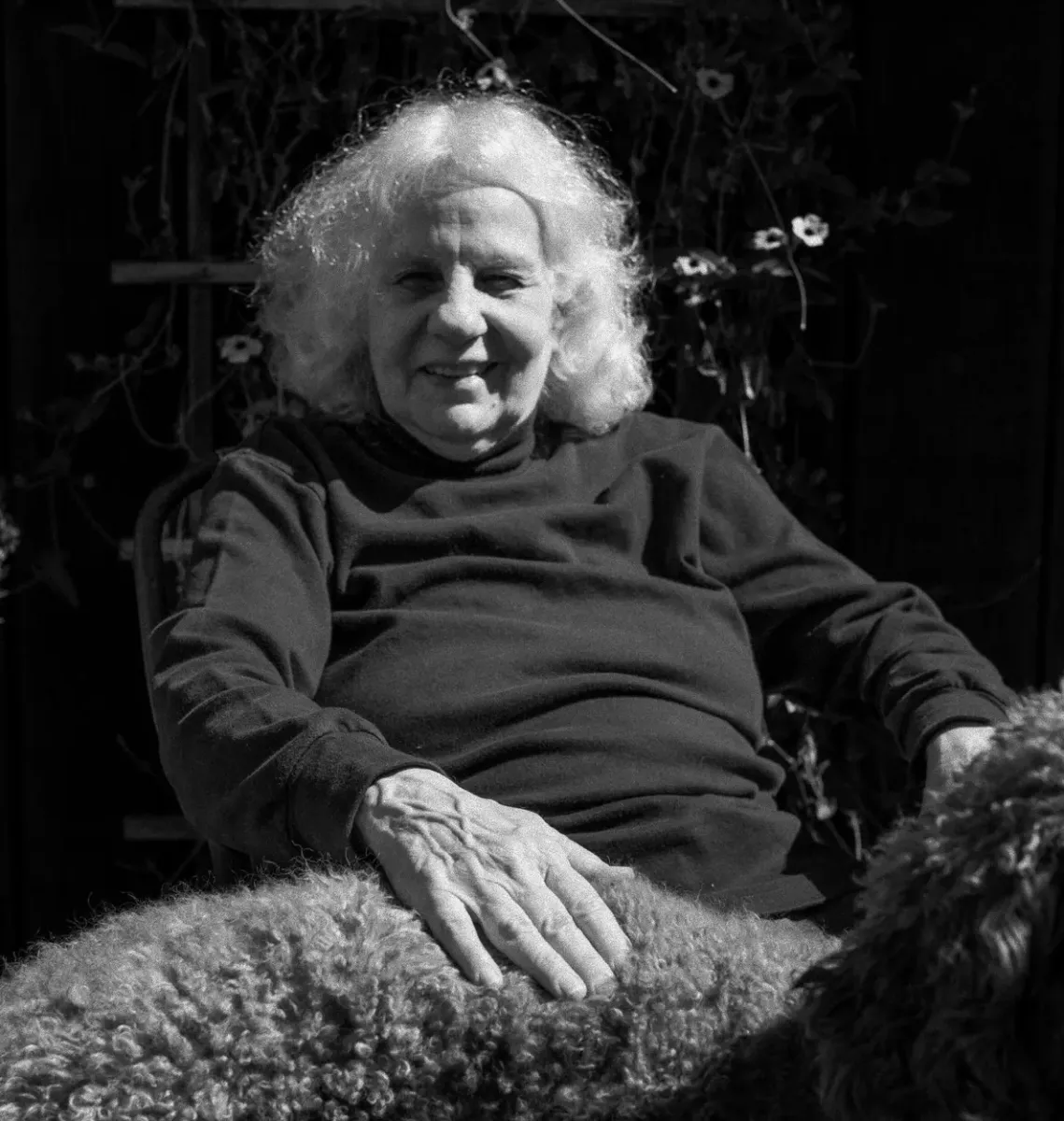
‘Cyberselfish’ author takes aim at techno-libertarianism as her book returns from the dead
"That's a 12-year-old view of the world."
以下正文同步自 TechCrunch,版权归原站所有,已转换为易读排版。
It’s hard for books about technology to age well. They always risk becoming outdated as companies rise and fall, and as one hot new product is replaced by the next.
But last year, “Nerd Reich” author Gil Durán declared that it was time to revive the career of Paulina Borsook, who he said “saw it all very clearly and tried to warn us 25 years ago.” Later that fall, The New York Times reported that Borsook’s “Cyberselfish” — first published in 2000 — was finding new fans who wanted to understand why the tech industry “lost its way.”
Now, long after going out of print, “Cyberselfish” is returning in a new edition from Tin House.
Borsook told me in a Zoom interview that the book is meant to be “almost a travelogue” of her attempts to understand what she calls the techno-libertarian influence on Silicon Valley culture.
“That’s a 12-year-old view of the world,” Borsook said, describing it as “a kind of basket of beliefs” that’s “violently anti-regulation,” despite the fact that “no sector of society had benefited more and suffered less from the government than these guys.” In her telling, “even after the dot-com crash, that attitude was just there, percolating around, contaminating the aquifers. It was uncorrected, and it just spread out more and more.”
Borsook has yet to publish a second book, and she said that after “Cyberselfish” was first released, “no one was interested in anything I might have to say about anything, tech or not tech, forever after.”
But last year, she began to notice that prices for used copies were beginning to creep up, and she was starting to see “very out-of-the-blue, I-did-not-know-these-people posts on social media about how important this book was,” as well inquiries from “European academics,” eventually leading to more press coverage and the new Tin House edition, with a new introduction by Durán.
Keep reading for our full conversation, edited for length and clarity, in which Borsook discusses AI, how the tech industry has transformed in the past 25 years, and what advice she has for young people seeking a career in tech.
Do you want to talk a little bit about how your interest in techno-libertarianism started, and how you decided that there was a book in this?
Everything with me is always inadvertent. I started knocking around tech circles, however we define it, in the early-middle ‘80s, in the Bay Area. And then I would say, starting around maybe the early ‘90s, I would hear these — to me — very weird, offhand remarks that some people would make that I couldn’t make any sense out of.
It’s not my nature to argue with people. It’s my nature to listen, and so I didn’t have the term for it except libertarian. But it seemed very screwy because initially, I grew up in Pasadena, which was [the home of the] Caltech-JPL space program, and so the parents of the kids I knew were another STEM culture. When I first got into Silicon Valley, I thought, “Oh, this is just another STEM culture like I’m familiar with.” And those guys [at Caltech and JPL] had a very clear sense of what the government can do for you, were not into enlightened self-interest. It was a different personality type, and they certainly didn’t self-anoint with how glorious and grand and magisterial they were, even though they were doing great things.
I was just listening, I guess, and being confused. Even then, I knew no sector of society had benefited more and suffered less from the government than these guys. So why are they acting like this?
So, backstory: My agent picked me up right after my MFA in Columbia, and he said to me, “You know, it’s really hard to get fiction published. Do you have a nonfiction book in you?” And I said, “Well, there’s this weird subculture that I’ve been observing that I don’t understand, and any time I don’t understand something, I want to explore it.” That got me down the rabbit hole of looking at this stuff and writing about it, and I consider it really almost a travelogue, in the sense of “Black Lamb and Gray Falcon” or that kind of stuff, almost more than, “This is a polemic.” It’s more like: snapshot, snapshot, snapshot.
I just fell into it, and also I’m sufficiently narcissistic that I felt I was uniquely qualified to write about this, and no one else was paying any attention, and that was very important to me.
I haven’t done a backread of all the other books written about the tech industry before Cyberselfish. My sense is that you do recognize, say, reading Stephen Levy’s work that there is this alternative philosophy, libertarian streak running through Silicon Valley. But no one really pulled it out and put it under the microscope in that way.
That’s really true. And then most of the writing — certainly in the ’90s, but maybe later — was very celebratory. It wasn’t, “Wait a minute, what’s going on here?”
I heard [New York Times reporter] John Markoff give a talk about six months ago, and he said something I really liked. He said, “Silicon Valley is a multicultural place.” By which he didn’t mean your country of origin. What he meant is there’s all these different kinds of cultures in there, and he was always more focused on these countercultural [elements,] that kind of thing.
I’m never saying that wasn’t there. I’m just saying there was this other thing that I was more interested in. So they’re running in parallel. I don’t even think they’re in conflict.
It sounds like you don’t see the techno-libertarian side of it emerging from the counterculture, but rather [as] distinct cultures within Silicon Valley.
One of the distinctions I made in — I call it TDB, that damn book — is that distinction I made between Ravers and Gilders, and the Gilders being the social conservatives. I named them after George Gilder, who was this repellent thought leader of the early ’90s, very conservative, very reactionary, very backward-looking. And then the Ravers, in homage to John Perry Barlow, drugs and sex and rock and roll, “we’re going to Burning Man,” much more culturally liberal.
And that distinction has held up, because you have that in contemporary Silicon Valley. You have these Christian nationalists and conservative Catholics in positions of leadership, and then you also have the Burners and people having interesting experimentations with sexuality and drugs and the [effective altruist] and AI worlds.
And so, what’s the counterculture bit of it? Maybe the personal freedom aspect of it is countercultural.
Another weird thing we always have to point out is that the [San Francisco] peninsula votes blue, still. Ro Khanna is the congressman from there. So I’m really talking about culture rather than electoral politics. [And I’m talking about] the leadership class here, the tech overlords. It’s not so clear to me how much the rank and file are like this, though probably more than when I was more familiar with what was going on there.
Because I think a lot of people have been attracted to work in crypto or AI, and they’re not thinking about the greater political surround. But they’ll drink whatever they’re handed, and they don’t much care.
We can point to people who are in charge, who have these [right-wing] beliefs or are allied with the Trump administration. There’s another executive class that maybe doesn’t have exactly the same beliefs, but is able to make themselves very comfortable with it.
And then you have that same diversity that you were talking about. There’s different communities, different cultures underneath. I’ve certainly spoken to people who work for someone like Elon Musk, and they’re like, yeah, “I don’t love this guy, but right now, I can’t afford to lose this job.”
Right, I think there’s a lot more of that going on than in times past, because there’s greater precarity in terms of employment, and so people [say,] “I’ve got a job, I’m going to hold on to it.” […] Or, “I don’t espouse the beliefs that they’re giving out, but my project is okay.” Those kinds of things always go on.
For you folks who aren’t familiar with the book and maybe have a general sense that there is a libertarian strain in Silicon Valley, can you say more why — if somebody thinks, “I believe in technology being liberatory, and maybe it can free us from the shackles of government bureaucracy and things like that,” why is techno-libertarianism a bad thing?
First of all, that’s a 12-year-old view of the world.
I didn’t really have a good word, but it was a kind of basket of beliefs, and now we’d say maybe a cloud, and it was violently anti-regulation. It was bad borrowing from biology. “Let’s just let things evolve and they will be fine.” They have no idea how much government has subsidized and made possible their life, their world, all the R&D.
Government can do bad things. I’m an old hippie. I know about the war in Vietnam. I know what the CIA did with Allende. So I don’t want to come across [as if] I think it’s all okay. I don’t. But this sector of society has less to complain about.
And one thing that just makes me grit my teeth right now is a lot of these guys are moving to Nevada to live on the Nevada side of Tahoe, because they want to escape California taxes. Sergey [Brin] saying, “California is turning into Soviet Russia.” Are you nuts? Because the thing is, they all love Tahoe. Why do they think the water of Tahoe is so pure and blue? That is decades of government intervention and interference, environmental scientists, regulation. I mean, there’s this inability to connect the dots and lack of history.
To what extent is what we’re seeing now with the tech industry, with their alignment with the Trump administration, with all these other dystopian things going on, how much of that is a shift? And to what extent is this all one story, and continuous with what you were seeing before?
Unfortunately, I see more the continuity. Excuse me for [my own] bad borrowing from biology, but […] I really see the Netscape IPO is when things really began to change, and Silicon Valley was invaded by the finance bros, and a real change in attitude. You got the culture of flip and flee, all that kind of stuff. Even after the dot-com crash, that attitude was just there, percolating around, contaminating the aquifers. It was uncorrected, and it just spread out more and more.
When you have things like Airbnb or Uber, which are strictly financial plays, they’re not technology innovation by my definition, but there was too much investment money in the world that didn’t know where to go. It would invest in these things, and these people would parrot this language. So I thought, “Ah, this is left over from 15 years ago,” in terms of their self-justification.
And the way that something like Airbnb fought so hard against any kind of regulation and anything that would ask them to be any kind of a good community actor in the communities they basically destroyed, in a lot of ways, in terms of the housing market, it’s like, “Yeah, that’s that attitude I was talking about way back then.” It’s like Giardia in the water system.
You can say, with good reason, that there was a lot of wonderful stuff that came out, and all the children of General Magic and all the great things that they created. I would never say that’s not true, but I’m not talking about that. I’m talking about the business culture of these people, how they see themselves. Sociopathy is a business virtue in a way that was never there before.
How do you see the rise of AI through that lens?
It’s perfect. “We don’t need to be regulated. We’re the most brilliant, genius, wonderful people in the world.” I see AI right now as a big Ponzi scheme.
You probably saw that really horrible ad that Apple did a couple of years ago, for one of their new computers, and they had all the musical instruments and all writing and [it all went into] the hydraulic press. How did Apple become so tone deaf? This is not the Apple that all the quote “creative class” loved for so many years. It’s not the Apple of the 1984 ad. But
正文由 探How 从来源站点 RSS 同步,内容未经改写;遇到排版缺失或需要图片、视频时请以原文为准。