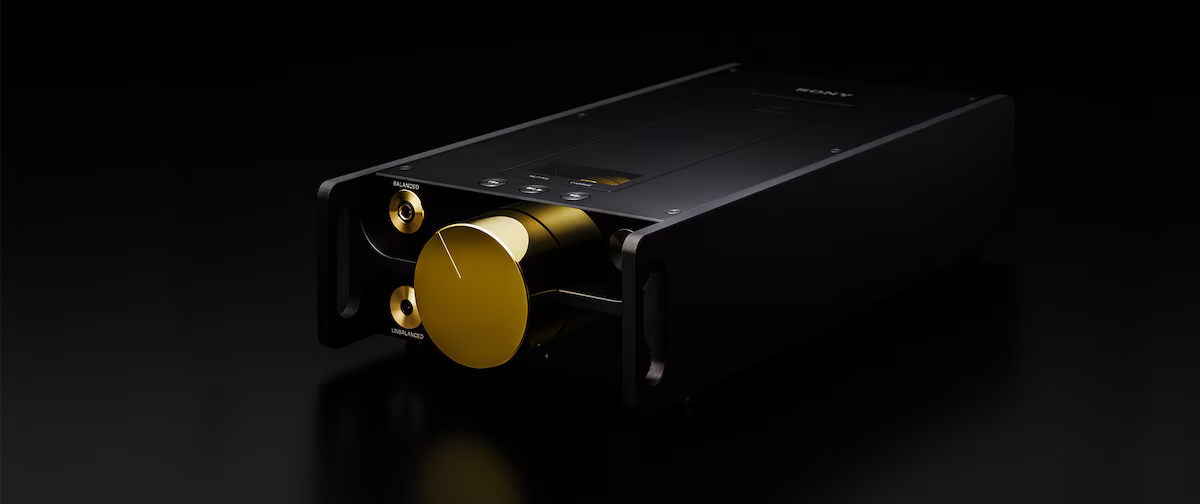
DMP-Z1: personal audio device that's neither a portable player nor a desktop one
We stuck to the most basic of basics: multi-point grounding for the digital and single-point grounding for the analogue. If this failed in even one place, noise would be introduced there. To test audio quality, you have…
以下正文同步自 Hacker News 最新,版权归原站所有,已转换为易读排版。
Matsuzaki: We stuck to the most basic of basics: multi-point grounding for the digital and single-point grounding for the analogue. If this failed in even one place, noise would be introduced there. To test audio quality, you have to actually create a prototype and trial the audio, then find ways to improve it and create another prototype. This steady process of repetition is very important. With the DMP-Z1, we continued testing the audio quality right up until the final stage, so I think we managed to achieve a sound that we're really happy with.
Tomo (S): Sometimes you thought you'd hit on a way of reducing noise, only to find you'd actually made the sound worse. There were ups and downs, that's for sure.
Matsuzaki: If you just fix lots of analogue ground points onto the digital side you won't hear any noise, but the energy flowing out will get mixed into the analogue sound and make it muddy and weak. We pored over the finest details to eliminate noise without losing out on the audio quality. I don’t know how many times I wished we could just give up on trying to make the device compatible with the AC adaptor!
Don't those problems occur when the device is running on battery power?
Matsuzaki: No, they don't. The power circuit structure for running on battery power at normal gain is very simple, so there's nothing in the power supply that can become a source of noise. However, in high-gain mode, which is used with high-impedance headphones, the voltage is increased. This means that even when the device is in battery power mode and isn't being powered by the AC adaptor, the power supply can still be a source of noise to a lesser extent. But to counter that we use high-grade switching controllers—the kind that are used in measuring instruments—so that the effects are minimal.
Tomo (S): This power source structure means that the optimum setting for the DMP-Z1 in terms of audio quality is battery-power mode at normal-gain. In this mode, the audio circuit with positive and negative power sources is driven by clean, noiseless power from the batteries, without using a DC/DC converter. This power-circuit arrangement, unique to the DMP-Z1, enables this special operation mode. Amongst audiophiles there's an urban legend that high gain gives a better sound even with ordinary headphones, but that's certainly not the case with this product, at least.
Does that mean the DMP-Z1 isn't recommended for use with high-impedance headphones?
Tomo (S): It does not mean that it is not recommended. Normal gain has output high enough to get the most out of ordinary headphones anyway, and with high-impedance headphones both driver efficiency and noise sensitivity are low, so you won't hear noise even in high gain. You can try listening in normal gain with your headphones and then switching to the high-gain setting if you feel the volume isn’t loud enough. Changing the gain setting to suit your headphones' efficiency and sensitivity in this way is an important point when trialling high-quality audio.
You mentioned earlier that the DMP-Z1 uses a dual-layer circuit board structure. What kind of consideration went into the frame used for the housing?
Tomo (S): Actually, when we started out developing the DMP-Z1, we considered a structure that involved one wide, horizontally mounted circuit board. However, that would have had a large footprint and would be less suitable for carrying around. The structure of the chassis also has a big impact on the sound.
With that in mind, we thought about how best to achieve portability, rigidity and sound quality all in one, which led us to a new development: the H-shaped aluminium chassis. We placed the H-shaped chassis, which is strengthened through aluminium milling, between the two circuit boards and connected it directly to them at the shortest possible distance, providing both high rigidity and high sound quality.
Hiro (S): One of the finer details is that all 4 leg screw holes are positioned off centre for each leg. This technique is common in desktop audio devices. Although it increases production time, these are the kinds of details we strive for.
Matsuzaki: The rubber footpads on the legs are made of Sorbothane, a material used in medical care as well as in the soles of sports shoes. We intentionally took the dual-layer structure one step further to a triple-layer structure, adding improved slip resistance to prevent vibrations from reaching the device.
正文由 探How 从来源站点 RSS 同步,内容未经改写;遇到排版缺失或需要图片、视频时请以原文为准。