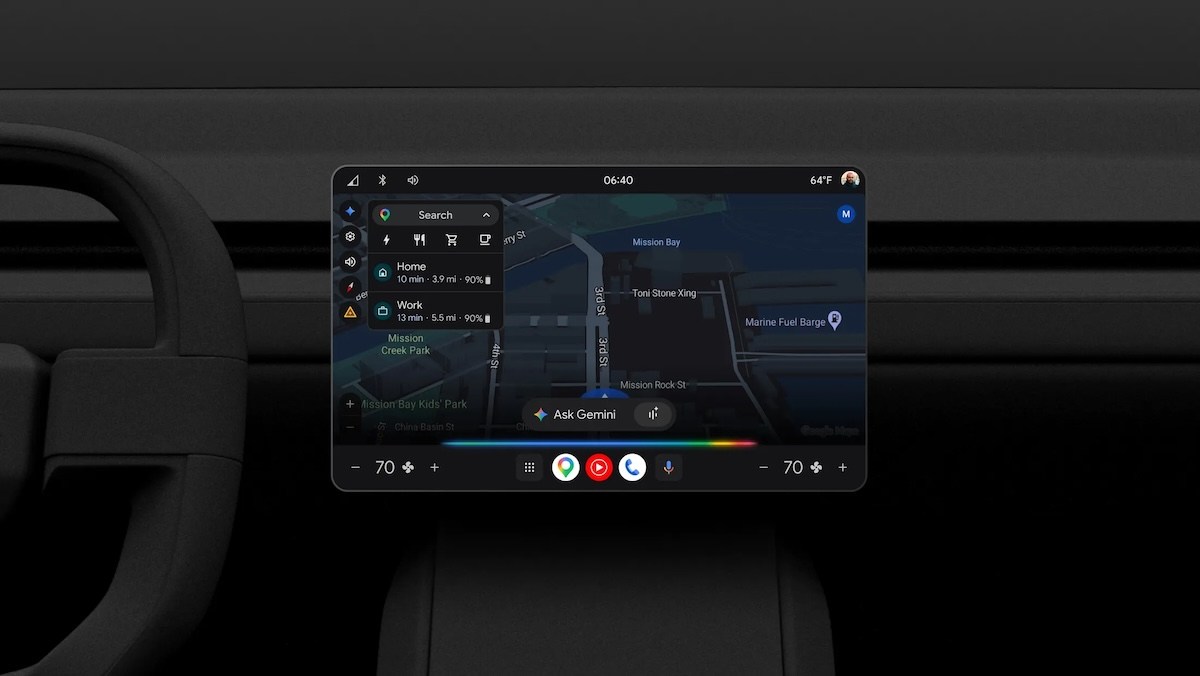
Google is bringing a more personal version of its Gemini AI assistant to your car
Google is bringing Gemini's Personal Intelligence feature to cars, allowing its AI assistant to draw on information from Gmail, Calendar, Maps, YouTube, and other Google services to deliver more personalized responses w…
以下正文同步自 TechCrunch,版权归原站所有,已转换为易读排版。
Google is making the Gemini AI assistant that’s already in millions of cars, trucks, and SUVs a lot more personal — a move that could push consumers even deeper into the company’s ecosystem of products.
The company said Tuesday it’s upgrading Gemini in vehicles with a personal intelligence feature that can draw on information from Gmail, Google Calendar, YouTube, Maps, Google Search history, and other connected Google services to understand your preferences, activities, and past experiences.
Google said it will roll out “Personal Intelligence with Gemini” to vehicles in two ways — through Android Auto, an app that runs on the user’s phone and wirelessly communicates with and projects navigation, media, and messaging to the vehicle’s infotainment system, and Google Built-in, software and services that have been directly integrated into the vehicle.
The feature will launch in Android Auto, starting today, and expand to cars with Google Built-in in the coming months.
Google initially launched Gemini last November in Android Auto. Meanwhile, Gemini’s “Personal Intelligence” feature rolled out across the U.S. in March and is now in beta in global markets.
This latest upgrade would connect the dots — as Google put it in its blog post — across users’ Google apps.
Drivers will have to opt in for Personalized Intelligence to work. Once a user does so, they should expect all sorts of cross-pollination. For instance, a driver who is navigating to the airport may be alerted that the flight on their calendar is delayed.
Google said the feature will allow users to make complex requests using natural language. Returning to that airport example, a user might ask the AI assistant for their flight gate before quickly following up with a question about whether it’s still on time. Gemini will give the user answers to both questions at the same time, the company said.
That level of emmeshing might make consumers uncomfortable, although Google says users do retain full control over their data with Personal Intelligence. The feature can be turned on or off at any time, and users can selectively choose which apps they’d like to connect, Google said.
When you purchase through links in our articles, we may earn a small commission. This doesn’t affect our editorial independence.
Kirsten Korosec
Transportation Editor
November 4
Boston
Buy One Pass, Get a Second Free
Cover more ground at TechCrunch’s ultimate founder bootcamp of the year by bringing your co-founder or partner for free
Book before the BOGO deal expires
People are using AI to make their smart TVs dumb again
Sarah Perez
Everyone’s watching the Elizabeth Holmes documentary ‘You Can See Everything’
Anthony Ha
Anthropic says its workforce has become less junior and is spending more time in meetings
Anthony Ha
Replit makes OpenAI its default over Anthropic, CEO says
Kirsten Korosec
Lucas Ropek
Rebecca Bellan
Mark Wahlberg wants to take on the longevity-startup crowd with an affordable gym concept
Connie Loizos
India becomes the latest country to report rogue AI agent activity
Aditya Mehta
Tesla reveals SpaceX-powered Roadster that flies and falls with style
Sean O'Kane
正文由 探How 从来源站点 RSS 同步,内容未经改写;遇到排版缺失或需要图片、视频时请以原文为准。