Sousveillance
Sousveillance (/suːˈveɪləns/ soo-VAY-lənss) is the recording of an activity by a member of the public, rather than a person or organisation in authority, typically by way of small wearable or portable personal technolog…
以下正文同步自 Hacker News,版权归原站所有,已转换为易读排版。
Sousveillance (/suːˈveɪləns/ soo-VAY-lənss) is the recording of an activity by a member of the public, rather than a person or organisation in authority, typically by way of small wearable or portable personal technologies.[https://ojs.library.queensu.ca/index.php/surveillance-and-society/article/view/3344 "Sousveillance: Inventing and Using Wearable Computing Devices...] {{webarchive|url=https://web.archive.org/web/20090325090745/http://www.surveillance-and-society.org/articles1(3)/sousveillance.pdf |date=2009-03-25 }}", by Steve Mann, Jason Nolan and Barry Wellman, in Surveillance & Society 1(3), 2003</ref><ref name="Sousveillance 2004, pp. 620–627">''Sousveillance: Inverse Surveillance in Multimedia Imaging'', by Steve Mann, in ACM Multimedia 2004, pp. 620–627</ref><ref>"Keeping a Close Watch", by Kingsley Dennis, Sociology Department, Lancaster University, Lancaster, UK, 2008 July 30th, in The Sociological Review</ref><ref>[http://wearcam.org/metalandflesh.htm Sousveillance, not just surveillance, in response to terrorism] {{Webarchive|url=https://web.archive.org/web/20120625100903/http://www.wearcam.org/metalandflesh.htm |date=2012-06-25 }}, 2002 March 1st, Metal and Flesh, Volume 6, No. 1</ref><ref>Vol. 31, Issue 2 – April 1998 "Reflectionism' and 'Diffusionism': New Tactics for Deconstructing the Video Surveillance Superhighway", in Leonardo, pp. 93–102</ref><ref>"Sousveillance, Media and Strategic Political Communication", by Dr. Vian Bakir, {{ISBN|978-0-8264-3009-0}}</ref><ref>Ryan, Mary. "Sousveillance as a Tool in US Civic Polity." In Spaces of Surveillance, pp. 211–227. Palgrave Macmillan, Cham, 2017.</ref><ref>university course on sousveillance\n[http://www.ischool.berkeley.edu/courses/290-sscd Home › Courses › Course Catalog › 290. Surveillance, Sousveillance, Coveillance, and Dataveillance] {{Webarchive|url=https://web.archive.org/web/20111013211220/http://www.ischool.berkeley.edu/courses/290-sscd |date=2011-10-13 }}\n290. Surveillance, Sousveillance, Coveillance, and Dataveillance</ref><ref>International conferences on sousveillance: {{cite web |url=http://www.notanalternative.net/tp-sousveillance-culture-conference-426 |title=Not An Alternative ITP Sousveillance Culture Conference – 4/26|access-date=2010-08-15 |url-status=dead |archive-url=https://archive.today/20120905210719/http://www.notanalternative.net/tp-sousveillance-culture-conference-426 |archive-date=2012-09-05 }} and [http://wearcam.org/iwis/]</ref><ref>[https://www.wired.com/magazine/2011/06/st_thompson_videomonitoaring/ WiReD magazine], Clive Thompson, "Establishing Rules in the Videocam Age", 2011 June 28</ref><ref>[http://www.vancouverobserver.com/GTA/2011/06/28/reflections-vancouver-riots-and-fragility-civilization Reflections on the Vancouver Riots] {{Webarchive|url=https://web.archive.org/web/20110701182850/http://www.vancouverobserver.com/GTA/2011/06/28/reflections-vancouver-riots-and-fragility-civilization |date=2011-07-01 }}, Vancouver Observer, 2011 June 28</ref><ref>{{cite web|url=http://cacm.acm.org/magazines/2013/11/169022-no-limits-to-watching/fulltext|title=No Limits to Watching?|first1=Katina|last1=Michael|first2=MG|last2=Michael|website=cacm.acm.org|date=November 2013|access-date=2013-11-04|archive-date=2013-11-04|archive-url=https://archive.today/20131104221647/http://cacm.acm.org/magazines/2013/11/169022-no-limits-to-watching/fulltext|url-status=live}}</ref><ref>Michael, K. (2015). Sousveillance: Implications for Privacy, Security, Trust, and the Law. Consumer Electronics Magazine, IEEE, 4(2), 92–94.</ref>"}},"i":0}}]}'>[14]
OED (Oxford English Dictionary) defines sousveillance as "close observation or recording of authorities like the government or police by the public using personal devices like smartphones, as well as the general recording of everyday activities", citing a 2001 date[15].
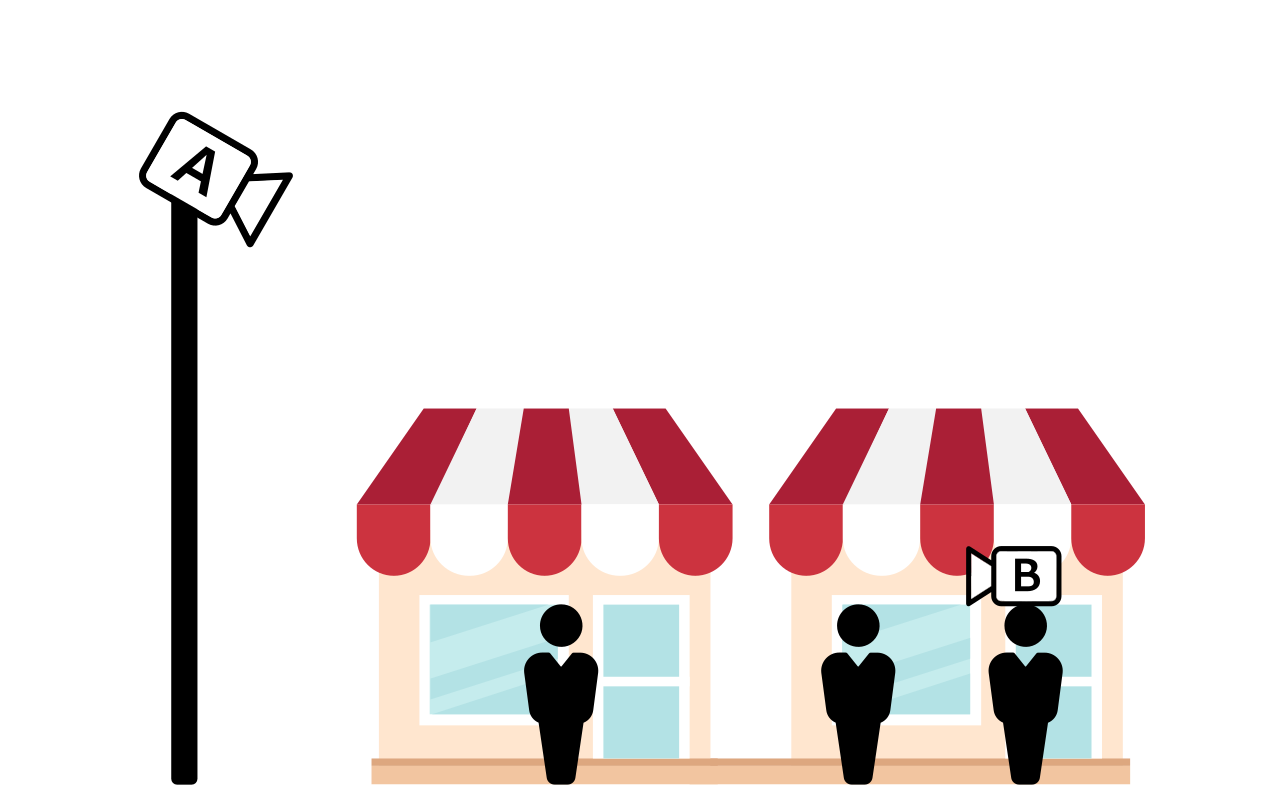
The term, coined by Steve Mann,[16] stems from the contrasting French words sur, meaning "above", and sous, meaning "below", i.e. "surveillance" denotes the "eye in the sky" watching from above, whereas "sousveillance" denotes bringing the means of observation down to human level, either physically (by mounting cameras on people rather than on buildings) or hierarchically (with ordinary people observing, rather than by higher authorities or by architectural means).[17][18]{{cite journal|title=Sousveillance: Inventing and Using Wearable Computing Devices for Data Collection in Surveillance Environments|year=2002|journal=Surveillance & Society|volume=1|issue=3|author1=S. Mann|author2=J. Nolan| author3=B. Wellman. |pages=331–355|doi=10.24908/ss.v1i3.3344|doi-access=free}}</ref><ref>K. Michael and M. G. Michael. Sousveillance and point of view\ntechnologies in law enforcement: An overview. 2012.</ref><ref>J. Bradwell and K. Michael. Security workshop brings 'sousveillance'\nunder the microscope. 2012.</ref><ref>S. Mann. [http://wearcam.org/veillance/veillance.pdf Veillance and Reciprocal Transparency: Surveillance versus Sousveillance, AR Glass, Lifeglogging, and Wearable Computing] {{Webarchive|url=https://web.archive.org/web/20131202235652/http://wearcam.org/veillance/veillance.pdf |date=2013-12-02 }}. IEEE ISTAS 2013, pp. 1–12</ref>\n* Surveillance is the veillance of the authority (i.e. the veillance that has the capacity to prohibit other veillances), whereas sousveillance is the veillance of plurality (i.e. "crowd veillance" or watching, sensing, or the like, done by non authorities)[4].\n* Sousveillance has also been described as "inverse surveillance",<ref name="Sousveillance 2004, pp. 620–627"/><ref>{{cite web|url=http://www.msnbc.msn.com/id/37560195/#45421629 |archive-url=https://web.archive.org/web/20110305130038/http://www.msnbc.msn.com/id/37560195#45421629 |url-status=dead |archive-date=2011-03-05 |title=MSNBC |publisher=MSNBC |date=2012-06-04 |access-date=2013-11-26}}</ref> based on the word [[surveillance]] (from the [[French language|French]] ''sur'', "from above", and ''veiller'', "to watch"), and substituting the prefix ''sous'', "from below"."}},"i":0}}]}'>[24]
Undersight (inverse oversight) is sousveillance at high-level, e.g. "citizen undersight" being reciprocal to a congressional oversight committee or the like.[25][26][27]
Inverse surveillance is a subset of sousveillance with an emphasis on "watchful vigilance from underneath" and a form of surveillance inquiry or legal protection involving the recording, monitoring, study, or analysis of surveillance systems, proponents of surveillance, and possibly also recordings of authority figures. Inverse surveillance is typically undertaken by those who are subjected to surveillance, so it can be thought of as a form of ethnography or ethnomethodology (i.e. an analysis of the surveilled from the perspective of a participant in a society under surveillance).[28] Sousveillance typically involves community-based recording from first person perspectives, without necessarily involving any specific political agenda, whereas inverse surveillance is a form of sousveillance that is typically directed at, or used to collect data to analyze or study, surveillance or its proponents (e.g., the actions of police or protestors at a protest rally).[29][30][31]
Inverse surveillance is a type of sousveillance. The more general concept of sousveillance goes beyond just inverse surveillance and the associated twentieth-century political "us versus them" framework for citizens to photograph police, shoppers to photograph shopkeepers, or passengers to photograph taxicab drivers. Howard Rheingold commented in his book Smart Mobs that this is similar to the pedestrian−driver concept, i.e. these are roles that many of us take both sides on, from time to time. Many aspects of sousveillance were examined in the general category of "reciprocal accountability" in David Brin's 1997 non-fiction book The Transparent Society, and also in Brin's novels. The first International Workshop on Inverse Surveillance, IWIS, took place in 2004,[32] chaired by Dr. Jim Gemmell, (MyLifeBits), Joi Ito, Anastasios Venetsanopoulos, and Steve Mann, among others.
Some research has explored why the perpetrators of surveillance are suspicious of sousveillance.[28]
Copwatch is a network of American and Canadian volunteer organizations that "police the police." Copwatch groups usually engage in monitoring of the police, videotaping police activity, and educating the public about police misconduct. Fitwatch is a group that photograph Forward Intelligence Teams (police photographers) in the United Kingdom.[33]
In 2008, Cambridge researchers (in the MESSAGE project) teamed with bicycle couriers to measure and transmit air pollution indicators as they travel the city.[34]
In 2012 the Danish daily newspaper and online title Dagbladet Information crowdmapped the positions of surveillance cameras by encouraging readers to use a free Android and iOS app to photograph and geolocate CCTV cameras.[35][better source needed]
"Hierarchical sousveillance" refers, for example, to citizens photographing the police, shoppers photographing shopkeepers, or taxicab passengers photographing cab drivers.[36]
The unanticipated 2013 Russian meteor event was well documented from a dozen angles via the use of dashcam devices.[37] Similarly, in February 2015, dashcams caught valuable footage of the crash of TransAsia Airways Flight GE235.[38]
Alibi sousveillance is a form of sousveillance activity aimed at generating an alibi as evidence to defend against allegations of wrongdoing.[39]
Hasan Elahi, a University of Maryland professor, has produced a sousveillance for his entire life, after being detained at an airport because he was erroneously placed on the US terrorist watchlist. Some of his sousveillance activities include using his cell phone as a tracking device, and publicly posting debit card and other transactions that document his actions.[40]
One specific use of alibi sousveillance is the growing trend of police officers wearing body cameras while on patrol. Well-publicized events involving police-citizen altercations (such as the case of Michael Brown in Ferguson, Missouri) have increased calls for police to wear body cameras and so capture evidence of the incidents, for their benefit and the criminal justice system as a whole.[41] By having officers use sousveillance, police forces can generate hours of video evidence to be used in cases like that of Michael Brown, and the video evidence can act as an important alibi in the judicial proceedings in regards to who is truly at fault.[41] Regardless of the outcome of such events, contemporaneous audio-video evidence can be extremely valuable in respect of compliance- and enforcement-related events.
Use of wearable cameras by police officers combined with video streaming and recording in an archive may produce a record of the interactions of the officer with civilians and criminals. Experiments with police use in Rialto, California from 2012 to 2013 resulted in a reduction of both complaints against officers and a reduction in the use of violence by officers. According to Jay Stanley, a senior policy analyst at the American Civil Liberties Union, "the public is shielded from police misconduct and the police officer from bogus complaints."[42]
Because these body cameras are turned on for every encounter with the public, privacy issues have been brought up with specific emphasis on special victim cases such as rape or domestic violence.[43] Concerns include both potential for video of victims to be released publicly and that being recorded may make victims uncomfortable revealing all the information that they know. There have been two case studies done in the United States that have revealed that police officers who have cameras have fewer encounters with citizens than officers who do not have cameras, due to fear of being reprimanded for committing a mistake.[41]
Prior to contemporary sousveillance cultures,
正文由 探How 从来源站点 RSS 同步,内容未经改写;遇到排版缺失或需要图片、视频时请以原文为准。