Software Finds Its Natural Size
I am a big believer in the role of democratizing software creation. The dream of HyperCard and its vision of giving everyone the power to build bespoke software feels closer than ever due to AI turbocharging this proces…
以下正文同步自 Hacker News 最新,版权归原站所有,已转换为易读排版。
1
Share
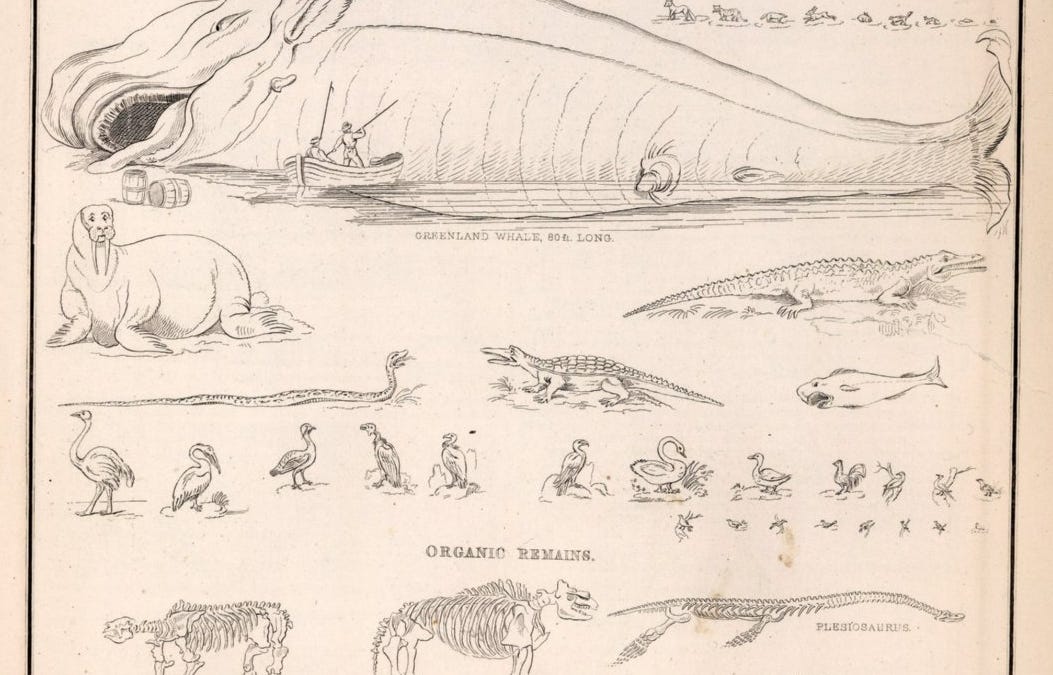
Nature’s diversity.
I am a big believer in the role of democratizing software creation. The dream of HyperCard and its vision of giving everyone the power to build bespoke software feels closer than ever due to AI turbocharging this process, allowing you to make anything for yourself. Years ago, the novelist Robin Sloan wrote about apps as home-cooked meals and recently wrote a kind of sequel, showing how AI makes this democratization that much easier. As Robin advocates, you just “ask for what you want.”
As a result, the business of software is likely changing. Does it make sense to build a venture-backed startup in the software world? On the one hand, the trends of software democratization and vibecoding fit with the whole SaaSpocalypse: maybe bespoke programs can just be spun up at will? But it also seems that software produced by professionals and for a large audience of users can still be relevant. Making this software still requires craft and taste.
But I think this is not the right thing to concentrate on. Instead we should be focusing on how to think about the very many scales and markets that are now available for different kinds of software. Specifically, it no longer means than every piece of software needs to raise venture capital funds, scaling to the moon. Rather, software can now find its natural size.
If that means making a product that should reach everyone, wonderful. But if you are building something that has a niche audience, it can be prototyped rapidly, and perhaps even become cash-flow-positive pretty quickly. One no longer needs to tell the story that a giant TAM is everything.
Similarly, with the low cost of prototyping, sunken costs are significantly reduced. You can learn whether or not your idea is feasible easily and rapidly. The days of the finely polished gem of a program that required years and large amounts of resources but that no one actually wants is over.
What does this mean for financing and investment? I don’t think it means the end of VC. But there can now be an explosion of possible corporate forms and financing models. For example, there can be the “Silicon Valley Small Business” that “intertwines small business values and discipline with big tech know-how and ambition.” [italics in original]
Charles Broskoski, the cofounder and CEO of Are.na, has written about the importance of making businesses—even software businesses—personal: “My motivation throughout the ups and downs was not that Are.na would one day make me rich, it was that we had to keep Are.na alive because it, the service itself, was part of how I understood (and still understand) myself.”
Part of what prevents people from starting their own software company is the pervasiveness of a singular popular narrative: the idea that money is the primary reason to do so. That the way to make software profitable is to scale, and the way to scale is to get investment from VCs. Software, for better or for worse, plays an increasingly primary role in determining how we view the world, which in turn determines how the world actually works. There should be more than just one prominent funding model facilitating those experiences. There should be more businesses that represent a diversity of people and potential outcomes. It would be a much better internet if there were.
And while we need more kinds of these funding models (I want so much more creativity here!), Anil Dash actually wrote an essay about ways to fund a startup without using venture capital fifteen years ago that is not only still reasonable but in many ways even more doable today when it comes to software creation.
Kinopio, a canvas for “spatial thinking,” is one of these successes. And a similar kind of point is made by its creator, Piri, in an essay about “organic software,” which is defined this way:
So maybe we should have ‘organic’ software as well, made by companies that:
Are not funded in such a way where the primary obligation of the company is to chase funding rounds or get acquired (so bootstrapping, crowdfunding, grants, and angel investment are okay)
Disclose their sources of funding and sources of revenue
Similarly, when software finds its natural size, whatever results from it is a more natural form, perhaps even a more resonant kind of computing. An organization built on this is more sustainable, one that might last for decades with only one or two people, but is deeply committed to a mission.
Take Ptable, a web-based periodic table that has been around since 1997. As per its about page:
Ptable is the creation of and is solely owned, designed, programmed, and maintained by Michael Dayah. Despite monthly buyout offers for decades from ad companies and multinational edtechs, it will always remain free and independent.
We need more Ptables. Or Buttondowns (take a look at their about page). Or companies like Bare Bones Software, which has been working on its Macintosh text editor BBEdit for over thirty years.
As Paul Ford recently wrote, “The future may not be a few huge apps running on a few huge platforms, generating tons of revenue; it could instead be tons of little ones, purpose-built for the church, mutual aid group, company department or softball league.”
So don’t feel the pressure to build for everyone, or the need to take on lots of funding. Let your software find its natural size. You’ll feel better. And so might the world. ■
Here are some links worth checking out that touch on the complex systems of our world (both built and natural):
🜸 A Brief History of the Bloomberg Terminal: “It gave Wall Street traders and analysts an unprecedented window on global markets”
🝤 The Bizarre, Murky History of Soviet-Born Tetris: “Behind the beloved game lies a struggle over mathematical ideas, erased collaborators, offshore millions, and copyright power.”
🜚 Using Opus 5.5 to discover a new eyewitness record of the dodo: “Frontier models can now produce novel historical knowledge, but in a really weird way”
🝳 Prince Was One of the First Players of The Oregon Trail
🝤 Pete Millspaugh does a deep dive on ICANN and TLDs: “Soon, hundreds of new top-level domains, including .meow and .fart, could be added to the internet. WIRED goes inside the backroom shenanigans of ICANN, the organization at the helm.”
🜹 The Slow Formation of Durable Software: “How a group of historians took years to imagine Zotero, the research application that would eventually be used by millions”
🝊 An Antikythera Field Trip: “The knowledge behind a 2000 year old computer keeps getting lost”
🝖 The Tragedy of AI Coding: “AI-assisted software development could have liberated programmers. Instead, it has become the latest way for Big Tech to confine us.”
正文由 探How 从来源站点 RSS 同步,内容未经改写;遇到排版缺失或需要图片、视频时请以原文为准。