Why Were Victorian Elites So Effective?
Books about successful people often make success sound rather unappealing. Education should be intense and rigorous, focused on driving up IQ and on the ‘STEM’ quaternity of science, technology, engineering, and mathema…
以下正文同步自 Hacker News,版权归原站所有,已转换为易读排版。
Books about successful people often make success sound rather unappealing. Education should be intense and rigorous, focused on driving up IQ and on the ‘STEM’ quaternity of science, technology, engineering, and mathematics. Once adulthood is reached, life follows an austere pattern, with a 5am start, cold baths, daily visits to the gym, little or no alcohol, a Huel-rich diet, and Stakhanovite working hours. This last point generates particular excitement, and descriptions of powerful people dwell with eager fascination on how many hours they devote to their labors.
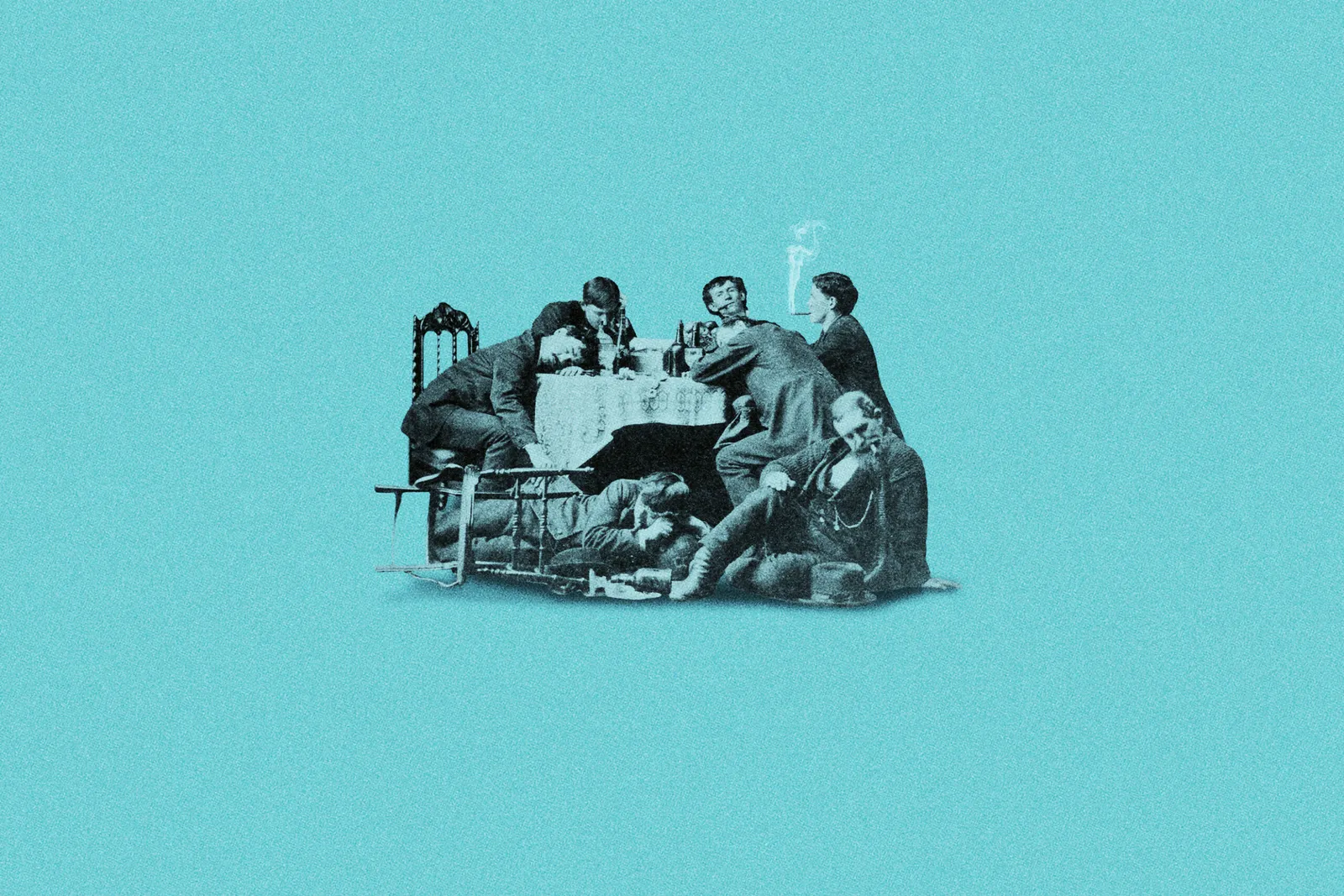
The elites of Victorian Britain operated differently. Their schools and universities were not terribly academic and had very little STEM. As adults, they got up late, drank a lot, and spent a remarkable share of their waking hours partying. They loved feasting, sports, holidays, dancing, and dressing up. Contrary to their stodgy reputation, they were probably a lot of fun.
Maybe the Victorian elite succeeded in spite of being feckless and incompetent: the Industrial Revolution created great wealth, which they enjoyed passively and parasitically. We cannot run controlled experiments on Victorian Britain, so this thesis is hard to test. But I want to explore the possibility that a relentless focus on soft skills, team building, and intra-elite networking actually worked rather well. Huel, STEM, and cold baths have their merits. But the example of the Victorians should make us hesitate before concluding that there is only one way to rule the world.
Caricaturing a little, we can distinguish two groups in modern educational debates: traditionalists and progressives. Traditionalists think that education should prioritize acquiring knowledge, that it should focus on ‘hard’ subjects like science, mathematics, and foreign languages, and that it should take place in a highly structured environment, where students’ time and behavior are tightly regulated. Progressives think that education should prioritize acquiring skills, that it should embrace ‘soft’ subjects beyond the supposed academic core, and that students should be given wide freedom in which to develop personally and socially.
One might assume that Victorian education was at the extreme traditionalist end of the spectrum, and modern educational progressives would indeed be horrified by the rote learning and corporal punishment of Victorian schooling. But in respect of all the controversies listed above, elite Victorian schools lean curiously toward the ‘progressive’ side of the spectrum.
Most socially elite Victorian boys began formal education at the age of seven or eight, spending about five years in a ‘preparatory school’ before passing on to a ‘public school’ (which, to the enduring confusion of international observers, is a kind of elite private school). There was a hierarchy of public schools, with the nine ‘Clarendon schools’ at the top, and just one, Eton College, clearly at the apex. About 30 percent of nineteenth-century cabinet ministers and 40 percent of prime ministers were Old Etonians.
Most students at both preparatory and public schools were boarders, meaning that elite Victorians were generally sent away from home by the age of eight and spent their childhoods more with peers than with family. In this respect they were distinctive even in their own time: elite families in continental Europe and the United States were far more likely to keep their children at home and educate them at small local private schools. It is plausible that this contributed to the lack of subnational loyalties in the British elite, in contrast to the distinct elites of, for example, the Southern United States, Catalonia in Spain, or Hungary in the Austrian Empire.
The public schools were of course single-sex, generating a somewhat febrile atmosphere in which intense quasi-romantic (or sometimes actually romantic) relationships between boys were common. Perhaps the powerful ties of nostalgia and loyalty that students felt for their former schoolmates were linked to this. The writer Jan Morris said that ‘the whole of English upper-class life…was shot through with bisexual instinct’ and that ‘the public school system…meant that male relationships were full of emotional nuance and undertone’. Demonstrative affection remained normal in adult life, and it was completely standard for pairs of Victorian men to walk arm-in-arm in public.
Academic life was dominated by Latin and, to a lesser extent, Greek. The exact share varied, but the classical languages took up generally at least half of teaching hours, and sometimes as much as 80 percent, especially earlier in the century. Trailing in third and fourth places were mathematics and modern languages. There was resistance to the teaching of science, not because Victorians were hostile to science in principle, but because they thought it irrelevant to the kind of moral and cultural formation that a school for gentlemen was supposed to provide. Thomas Arnold, headmaster of Rugby School and the leading educationalist of Victorian Britain, remarked that ‘rather than have physical science the principal thing in my son’s mind, I would gladly have him think that the sun went round the Earth, and that the stars were so many spangles set in the bright blue firmament’. (By contrast, girls were not usually taught classics, meaning that, rather surprisingly, affluent Victorian girls generally followed a more modern curriculum than their brothers.)
Victorian adults had little occasion to use their classical languages, so they tended to forget them. ‘I have gladly forgotten all my Latin, and don’t ever want to remember it again’, wrote the war poet Charles Sorley, one year after leaving school; at least he did better than Winston Churchill, who remarked that ‘In all the twelve years I was at school no one ever succeeded in making me write a Latin verse or learn any Greek except the alphabet’. The most that can be said for Victorians’ classical education is perhaps that, like schooling in any difficult subject, it trained students in self-discipline, memorization, and applying rules.
The Victorians themselves occasionally hinted that they regarded the official curriculum of school as something of a MacGuffin. In the hugely influential 1857 novel Tom Brown’s School Days, Tom’s benevolent father muses, ‘I don’t care a straw for Greek particles… What is [Tom] sent to school for? … If he’ll only turn out a brave, helpful, truth-telling Englishman, and a gentleman, and a Christian, that’s all I want’. In a similar spirit, Thomas Arnold wrote that ‘what we must look for here is, first, religious and moral principles; second, gentlemanly conduct; thirdly, intellectual ability’.
Under such circumstances, it is perhaps unsurprising that the share of time spent in the classroom was relatively modest. At Rugby School, weeks were divided into three ‘full days’, three ‘half days’, and Sunday. On a full day, students spent about five hours in the classroom, compared with maybe two hours on a half day. Other schools varied, but nearly all left many hours unfilled. In general, classroom hours were certainly not longer, and probably rather shorter, than those in normal schools today. They also tended to be shorter than those of contemporary elite schools in France, Germany, or Italy, where the curriculum was normally more academically rigorous.
The focus on character formation led to increasing interest in how students spent their time outside the classroom. In the early decades of the nineteenth century, they were still mostly left to their own devices: their preferred pastime seems to have been roaming the local countryside and generally making a nuisance of themselves. During the Victorian period, school authorities introduced programs of organized sports, chiefly cricket in summer and various forms of ‘football’ (including what became rugby) in winter. Many schools ultimately had four, five, or even six afternoons of sports per week: a student would certainly spend ten hours a week on the sports field, and might well spend twenty.
The Victorians thought extremely highly of sports, believing that they instilled team spirit and endurance, fostered mutual loyalty, channeled energy and competitiveness, and taught men how to win and lose graciously. An extreme but not entirely unrepresentative example was Hely Hutchinson Almond, headmaster of Loretto School, who described his school’s priorities as ‘First – character, second – physique, third – intelligence, fourth – manners, fifth – information’. The cult of team sports was generally not shared in continental Europe, and European visitors were often bewildered by how seriously the English took schoolboy ballgames. But it spread across the Anglophone world, and it is still embodied in the traditions of American high school and intercollegiate sports today.
Another distinctive feature of the public schools, relative both to modern education and to other nineteenth-century school systems, was student self-government. The Victorians thought that close supervision by schoolmasters would inculcate servile habits in boys, compromising what one headmaster called ‘the great glory of an English public school – its free development of character, its social expansiveness, in short its liberty’. As a result, a system of prefects was developed in which, in theory, the more benevolent and mature boys were given extensive pastoral and disciplinary responsibilities over the others. The prefects would receive an apprenticeship in leadership, while the student body as a whole would come to see authority as something emanating from their peers rather than imposed upon them by an alien entity.
It is not hard to imagine how a self-governing oligarchy of teenage boys might go wrong. Victorian educationalists were themselves concerned about the potential for abuse, and various checks and balances were developed, like jury systems and rights of appeal before punishment. It is hard to say how often the prefect system operated unjustly, reliant as we are on the impressionistic evidence of personal memoirs, but it is beyond doubt that it was sometimes brutal. It is important to understand, however, that it was intended not simply as a system of domination, but almost as one of ‘elite liberalism’, whereby students would not only be subjects of authority, but also to some extent its legislators and executors.
From school, most elite Victorian men went on to Oxford or Cambridge (‘Oxbridge’). Oxbridge was not necessarily a big step up academically. Virtually everyone who applied was accepted. Once you were in, you could pursue one of two tracks: either an ‘honors’ degree, which involved at least some serious study, or a ‘pass’ or ‘ordinary’ degree, which involved sitting only some very easy exams in classics and religion. In the early Victorian period, most Oxbridge students were ‘pass men’; this changed gradually as the century drew on, but there were still plenty of pass men around as late as 1914. The pass degree was particularly popular among aristocratic students, who tended to prioritize rowing, feasting, and social polish over disciplined study.
Many honors students took their studies more seriously. But even they were not very practical in orientation. Oxbridge tutors believed overwhelmingly that the purpose of an undergraduate degree was not training for work nor even preparation for academic research, but rather a general moral and intellectual formation that would fit students for any professional role they might later pursue. ‘No man will be a first-rate physician or engineer who is not something more than either, who has not some taste for art, some feeling for literature, or some other interest external to his profession’, said Benjamin Jowett, the influential master of Balliol College. Jowett aimed to convey this ‘something more’ to his undergraduates, leaving them to acquire specific technical knowledge late
正文由 探How 从来源站点 RSS 同步,内容未经改写;遇到排版缺失或需要图片、视频时请以原文为准。