A YC startup is putting $1M behind five unsolved materials science problems for AI
Discovered Materials, a months-old YC startup that uses AI to find chip materials, is offering $200,000 for each solution to five open materials science problems.
以下正文同步自 TechCrunch,版权归原站所有,已转换为易读排版。
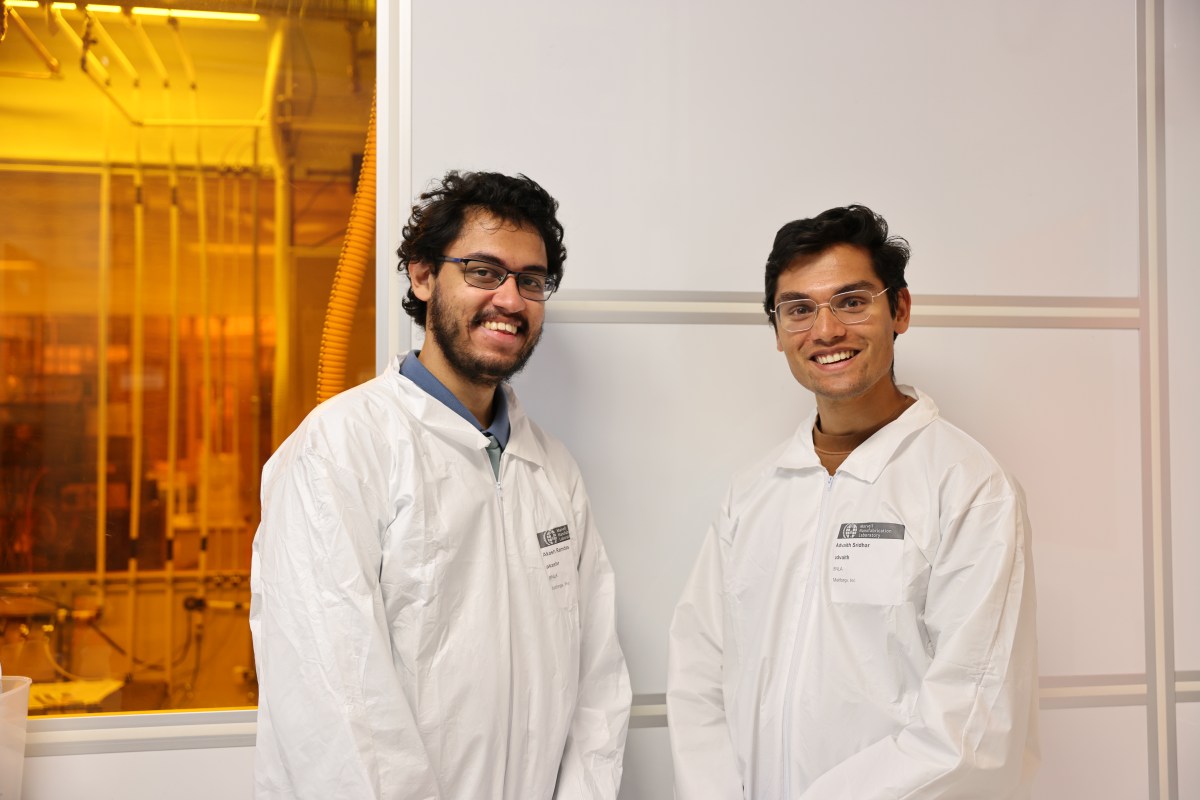
Discovered Materials, a months-old, San Francisco startup using AI models to find new substances for building advanced chips, announced a million-dollar challenge for AI models to solve five critical problems in materials science.
While frontier AI models have solved a remarkable series of outstanding mathematics problems and made progress in the life sciences, they have yet to truly plumb the complex physics in advanced materials.
“It’s more difficult to specify problems clearly in materials science because it’s not like math, where you have a very specific definition and can get to a yes or no,” said Advaith Sridhar, a co-founder of Discovered Materials, which was part of Y Combinator’s spring 2026 batch. “We came to this discussion [wondering], what are the grand challenges in this field? How do we know AI is making progress?”
Though materials science doesn’t have an equivalent of the Millennium Prize Problems, Discovered Materials recruited an advisory group of academics at leading global universities to spell out five open problems. The company is offering a pool of prizes, worth $1 million in total, for solutions to the problems.
“Across materials science, there are phenomena we observe but cannot explain,” Felipe Jornada, a Stanford professor who helped develop the challenges, said in a statement. “Explaining these phenomena would improve our understanding of physics, and the answers would directly shape how we build electronics, store energy, and manufacture the materials of the future.”
Before announcing the challenges, Discovered Materials turned frontier lab models loose on them, giving AI agents internet access and other resources to work autonomously for days. The models spent several days on each problem without making much headway. Still, it’s easy to imagine OpenAI or Anthropic attempting to one-shot them with significantly more compute or a newer model.
“It’s not particularly a concern to us whether we find it, or someone else finds it, or a professor finds it, or the frontier labs find it,” Sridhar said. “The reason we’re putting out these challenges is because we want them to serve as the goalposts. If you go and solve these challenges, we are deepening our understanding of materials and how things around us behave.”
Tracking efforts to solve the problems will show “whether the models are climbing in this domain,” he added.
The challenge also reflects the changing nature of scientific inquiry as AI proves capable of uncovering insights and techniques human researchers didn’t anticipate. With solutions apparently easier to find than ever, the questions become more important.
“This is a new way of thinking about science, where we come up with the verification and the challenges first, and then we let somebody come up with the ideas that explain the problem,” Sridhar said. “Knowing what are the right questions to ask is not trivial and very difficult in this domain, so this is where the professors have really helped us shape what are the right questions we should be asking.”
Discovered Materials’ main focus is developing new materials for use in semiconductors; the startup partners with chip giants on research projects while also funding its own scientific efforts. When the company announced its seed round in August, Sridhar told TechCrunch that he hoped the company would generate a useful material within a year.
“Those timelines have accelerated a little bit,” he says today. “I’m more confident now that we will be able to find these industrially useful materials in a timeline shorter than a year.”
When you purchase through links in our articles, we may earn a small commission. This doesn’t affect our editorial independence.
November 4
Boston
Buy One Pass, Get a Second Free
Cover more ground at TechCrunch’s ultimate founder bootcamp of the year by bringing your co-founder or partner for free
Book before the BOGO deal expires
Data centers are turning to old jet engines as the wait for power grows
Aditya Mehta
New York City’s Mamdani criticizes Madison Square Garden owner over surveillance tech
Zack Whittaker
Anthropic warns that it’s very close to RSI capability, aka self-building AI
Julie Bort
New York Times and other outlets sue web browser Brave over alleged content scraping
Rebecca Bellan
Anthropic expected to receive high ‘junk’ rating from credit agencies following IPO, FT report says
Lucas Ropek
Google’s first data center satellite is online and writing poetry
Tim Fernholz
As search traffic dries up, Reddit announces it’s shifting to a logged-in experience
Sarah Perez
正文由 探How 从来源站点 RSS 同步,内容未经改写;遇到排版缺失或需要图片、视频时请以原文为准。