Binance Hack: Tracing the $6.4B Theft to North Korea
ReactorInvestigate and trace funds across blockchains
以下正文同步自 Hacker News 最新,版权归原站所有,已转换为易读排版。
Products
Crypto Investigations
Investigations Solutions
ReactorInvestigate and trace funds across blockchains
Wallet ScanCheck recovery seeds for seizable crypto
RapidInstant crypto triage with AI-powered insights
Crypto Compliance
Compliance Solutions
KYTMonitor transactions in real-time
SentinelUnderstand a stablecoins’s risk profile
Address ScreeningAssess a wallet’s risk exposure
VASP RiskingUnderstand the risk profile of a VASP
Fraud Prevention
AlteryaAI-powered fraud prevention
Crypto Data
Chainalysis Data Solutions (DS)Proactive threat intelligence and alerting
AI
Chainalysis agentsAI agents for blockchain intelligence
Platform
Blockchain IntelligencePower your blockchain technology needs with industry-leading intelligence
PlatformEnterprise ready infrastructure for blockchain analysis solutions
Chainalysis LabsOur R&D hub for the latest innovations
Industries
Law EnforcementDetect, disrupt, and deter crypto crime
Centralized ExchangesOptimize crypto exchange operations
Consumer BrandsStart your seamless transition into web3
CybersecurityProactive threat hunting and prevention
Financial InstitutionsGenerate new revenue opportunities with digital assets
National SecurityTarget and disrupt threat networks
Tax AgenciesAdminister and enforce digital asset tax policy
Stablecoin Risk ManagementCompliance-led growth for the stablecoin economy
RegulatorsProtect consumers and ensure market stability
Decentralized FinanceReduce risk and grow faster
Services
Global ServicesTailored, expert-led solutions to navigate crypto challenges and drive actionable results worldwide
Training & CertificationsEquip yourself with the knowledge needed to navigate cryptocurrency confidently
Chainalysis AcademyGet started with short training courses
Insights
Blog
Chainalysis Blog
Crime
Policy & Regulation
Crypto Basics
Markets
Company News
Research
ReportsResearch reports on crypto crime, regulation, and global activity
· 2026 Crypto Crime Report
· 2026 Geography of Crypto Report
Glossary
Events
WebinarsView upcoming and on-demand webinars from our experts and industry leaders
Chainalysis LinksThe digital asset event where the public and private sectors meet
Customers
CustomersHear why 1500+ customers trust Chainalysis
Podcast
Company
About
CompanyChainalysis is the blockchain data platform
Why ChainalysisTurn blockchain transactions into insights and risk into compliance
Careers
Careers at ChainalysisChainalysis is growing fast – join us today
US Government
Chainalysis Government SolutionsExpert crypto investigation and analytics for the US government
Network
PartnersEcosystem collaboration with industry partners
Login
Request a demo
This site requires JavaScript to function correctly.
Blog
Crime
Markets
Crypto Basics
Policy & Regulation
Company News
Search
Crime The $6.4 Billion Binance Hack: Tracing the North Korea Link
October 30, 2026 | Chainalysis Team
Key takeaways
Around 4:20 p.m. ET on October 29, 2026, funds began leaving Binance hot wallets across multiple blockchains. Unauthorized transfers totaled approximately $6.4 billion, the largest theft in crypto history.
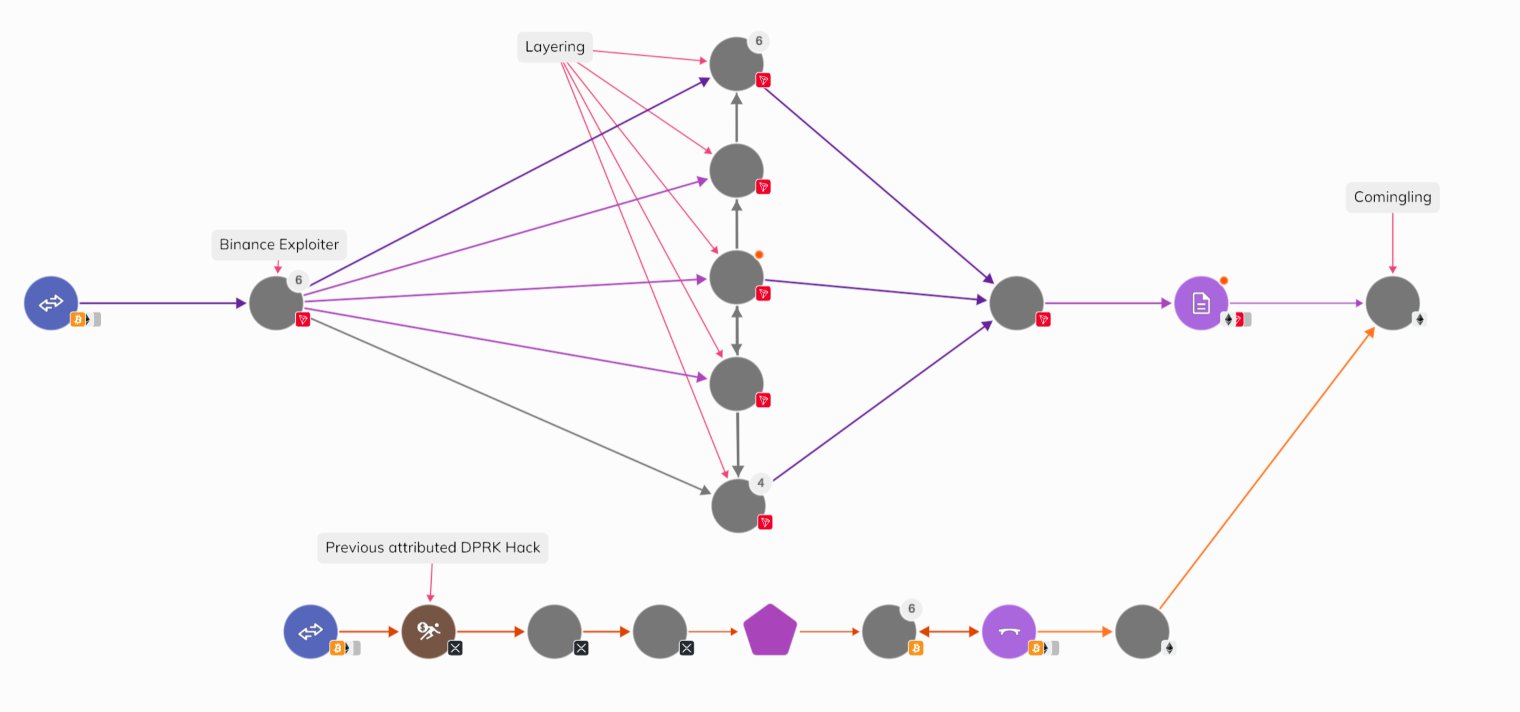
Chainalysis attributes the hack to TraderTraitor, a North Korean cybercrime group. Stolen Binance funds commingled on-chain with funds from last month’s Bitget theft, which was attributed to North Korea.
Freezes began by 5:14 p.m. ET. About $2.8 billion has been frozen as of [time] ET.
The attacker swapped $325 million in stablecoins for $285 million in ETH over nearly 20 minutes to stay ahead of freezes.
Laundering shows signs of automation: thousands of transactions, with many addresses first receiving exactly 1 TRX.
How the Binance hack unfolded
Chainalysis investigators assess the $6.4 billion hack of Binance — the largest in the history of crypto, and one of the single-largest financial crimes of all time — to be the work of North Korean cybercrime group TraderTraitor. This group has repeatedly targeted the cryptocurrency industry, exchanges, DeFi protocols, and investors, to raise funds for the regime.
We base our intelligence assessment on on-chain activity observed in the hours following the hack.
From the beginning: Around 4:20 p.m Eastern Time on October 29, funds began leaving Binance hot wallets across multiple blockchains. On Ethereum, the attacker used an operational wallet funded through Tornado Cash to submit valid signed authorizations that allowed a Binance hot wallet to run attacker-deployed code. The attacker then called that wallet to sweep its assets into attacker-controlled addresses, while other affected Binance wallets appeared to send funds through ordinary signed transfers. Across the affected blockchains, the unauthorized transfers totaled approximately $6.4 billion USD.
正文由 探How 从来源站点 RSS 同步,内容未经改写;遇到排版缺失或需要图片、视频时请以原文为准。