Mother Bats' Hearts Quicken When They Hear Baby's Cries
Like humans, bat moms are primed by evolution to spring into action
以下正文同步自 Hacker News 最新,版权归原站所有,已转换为易读排版。
Like humans, bat moms are primed by evolution to spring into action
Add Nautilus to Google
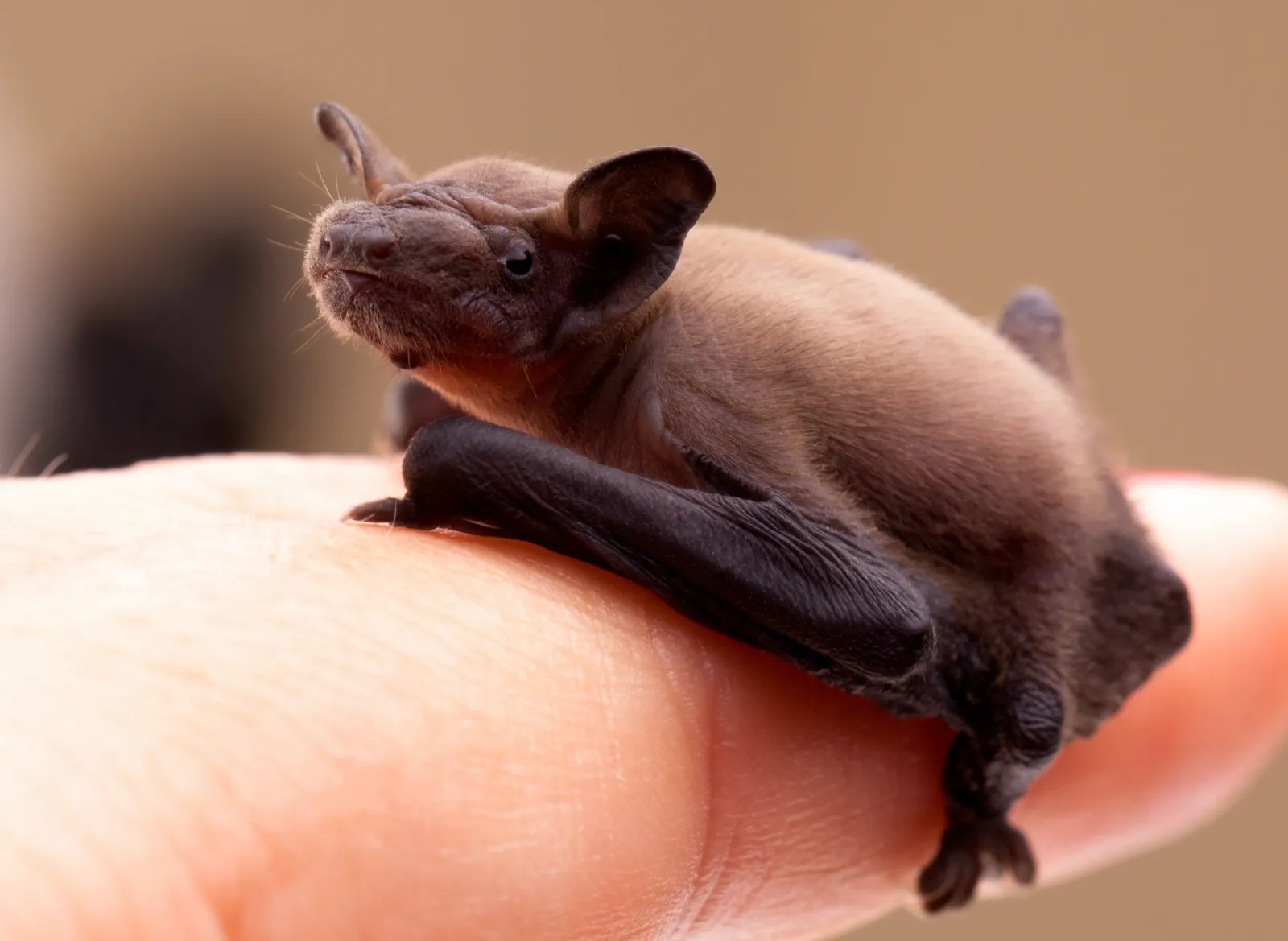
Sweet baby bat on my finger.
The cries of babies are not just a nuisance. They are calls for help, honed by evolution to spur an immediate, ingrained response. When a human mother hears her baby crying, her brain elicits a “do-or-die” response in neuronal activity in the midbrain’s survival region.
A new study published this week in Frontiers in Ethology reported that it’s not just human mothers that react physiologically to their baby’s cries; some bat mothers do too.
Neuroethologists from Japan studied the responses of captive Japanese house bats (Pipistrellus abramus) to their pup’s “isolation” calls—squeaky clicks that warn the mother that it’s lost or needs help.
“The inspiration for our study began with a striking observation in our laboratory colony,” said lead study author Kazuki Yoshino-Hashizawa from Doshisha University. “When a pup was separated from their roosting area, only the biological mother immediately rushed over to bring it back.”
The study started with four pregnant bats, which each gave birth to a litter of three pups. When the pups were just two days old, the researchers used ultrasonic microphones to record their isolation calls. At 30 days old, when they’d become independent and transitioned to the echolocation calls used for hunting, those were recorded too. The two types of calls were then played back to the mothers shortly after the pups had matured.
The results showed that a bat mother reacted exclusively to the recorded isolation calls of her own pups. Based on ECG recordings, her heart rate increased by as much as 70 beats per minute, showing that she was physiologically stirred by the baby’s unique sound. Her responsiveness undoubtedly helps a Japanese house bat find her own offspring among the hundreds of bats in a colony by priming her body for action.
Surprisingly, a mother’s physiological response to the echolocation calls of her mature offspring was even stronger, perhaps because she’d gotten to know the pup’s sounds better. The calls of bat pups change daily as they mature, leading the study authors to hypothesize that “mothers’ recognition abilities may undergo continuous adaptation,” as they wrote in the paper.
Unexpectedly, the study authors also detected a heart rate response of mothers to calls of unfamiliar adult males. While this shows additional complexity in bat social behavior, it was impossible to determine whether it was a positive arousal reaction or a negative reaction to a perceived threat.
Regardless, mother bats’ hearts are beating to the sounds of their colony.
Lead Image: CorinaDanielaObertas / Adobe Stock
Share on Facebook
Share on X (formerly Twitter)
Share on Reddit
Share on Email
Share on Bluesky
DR
Devin Reese
Devin Reese is the executive editor of Natural History and a science writer based in Alexandria, Virginia.
Remarkably like us with cycles of wakefulness and REM
Weather apps generally modify their default settings to remove such scenes from Doppler radarviews. Otherwise, live-feed watchers would think a torrential downpour is imminent
Red isn’t the only color when it comes to blood—critters produce the vital fluid in a variety of hues
By the Cretaceous, they’d already tried on several different lifestyles and sensory styles
They knew the most important rule in real estate
正文由 探How 从来源站点 RSS 同步,内容未经改写;遇到排版缺失或需要图片、视频时请以原文为准。