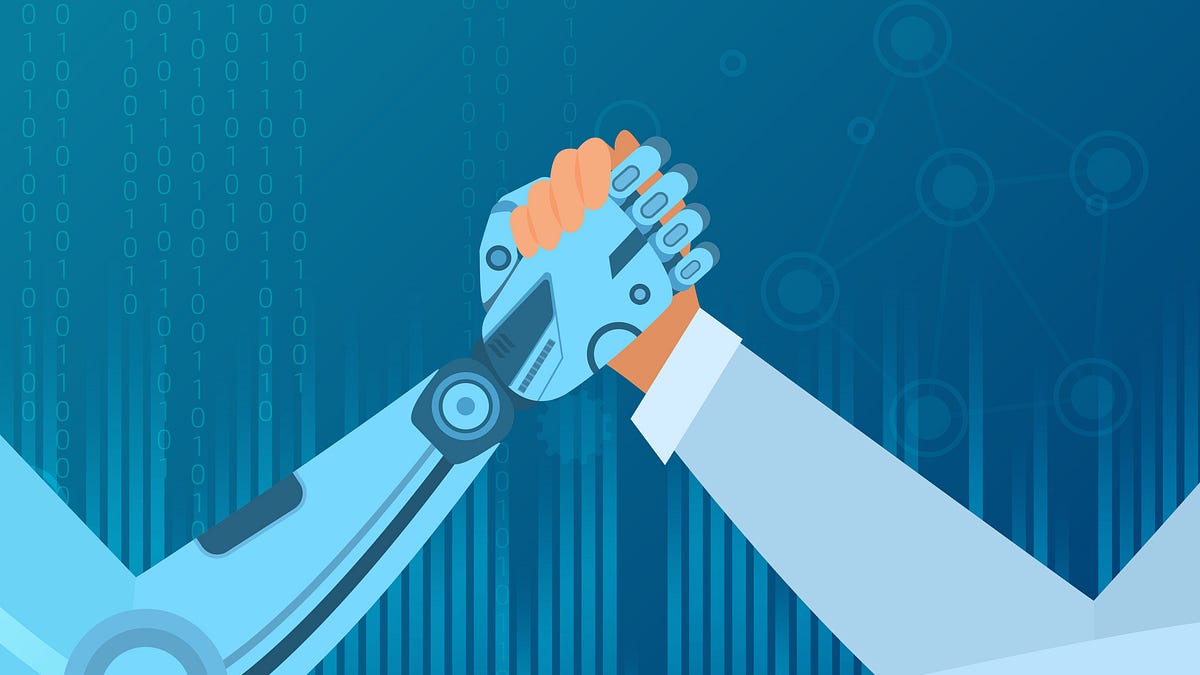
Work, Art, and Study: AI and Ownership
When Donald Trump says something strange, nobody blames the speechwriter. When a senior consultant’s proposal has a mistake in it, nobody blames the intern who drafted it. We don’t even ask who drafted it. The consultan…
以下正文同步自 Hacker News 最新,版权归原站所有,已转换为易读排版。
When Donald Trump says something strange, nobody blames the speechwriter. When a senior consultant’s proposal has a mistake in it, nobody blames the intern who drafted it. We don’t even ask who drafted it. The consultant put his name on the document and sent it to the client, so the mistake is his.
This is so obvious it’s easy to miss what it tells us. Work has always been done by proxy. The person accountable for an output is very often not the person who produced it, and we’re fine with that, because with work the output is what matters. The method of creation is nobody’s business. All we ask is that someone stake their reputation on the result and take the time to understand what they’re putting out into the world.
That’s the whole standard, and AI doesn’t change it. If you use ChatGPT to write a memo, the memo can be yours. It becomes yours at the moment you read it, understand it, and decide to send it. If you skip that step, you’re not using a tool. You’re forwarding something you haven’t read and making it someone else’s problem.
So, as plainly as I can put it: if you use ChatGPT, read the output. Do at least that.
Art is different, and the difference is instructive. If I pay someone to write a novel and publish it under my name, the novel isn’t mine. I might agree with every word. I might have read it ten times. Doesn’t matter. A novel is supposed to be an expression of the person who wrote it, and you can’t sever creation from creator without defeating the purpose of the thing. The same is true of an LLM. If a model generates a good novel and I like it, I’ve become a reader, not an author. If a robot produces a striking sculpture, it doesn’t become my sculpture because I approve of it.
There are edges to argue over. Spellcheck. A good editor. A ghostwriter who worked from your outline and your voice. I don’t think the edges undo the principle. With work, the output is the only thing that matters. With art, it isn’t, because art is a statement about the person who made it.
Which brings me to schoolwork, where most of the confusion lives.
Say a student uses AI to write an essay on The Great Gatsby. She reads it carefully before turning it in. She understands it. She could defend every claim in it. By the standard I set for work, it’s hers. So is it fine?
No. Schoolwork isn’t work. It’s much closer to art. An essay on Gatsby has no value to anyone as an output; nobody needs another one. The essay only matters as evidence of what the student knows and can do. Its entire purpose is to represent something about her. The moment the method of creation stops saying anything about the student, the output is worthless, no matter how good it is.
A friend of mine learned this the hard way after spending the Summer vibe coding a bunch of apps. He created a whole portfolio of websites, games, and tools via Claude Code. It was so impressive it scored him an interview for a senior software engineer job with a big company. Then when he showed up to the interview and they started asking him about what he had built, he completely froze up. He didn’t get the job. The company saw clearly that though he had the output, he did not have the skills.
This is why AI in schools is a real problem and not a panic. It’s also why the easy answers are wrong.
One easy answer is to ban it. But students will need to use AI when they leave school, and a school that pretends otherwise is failing at its job. The other easy answer is to stop teaching the skills AI can do. Why learn to write an essay from scratch if all composition will be done by machine? I think this is a terrible idea, and not for sentimental reasons. If you can’t write, you can’t evaluate writing. You have no way to tell a good draft from a plausible one, and you’ll accept whatever the model hands you. That applies in every discipline. The foundation isn’t there so you can do the work by hand forever. It’s there so you can judge the work when you don’t.
There’s a larger version of this worry. LLMs aren’t innovative. They recombine what they’ve ingested. A world where most human expression is generated by them is a world with less imagination in it, and school is where the imagination is supposed to get built.
None of this means AI has no place in a classroom or a studio. It can help a writer develop the skills to draft her own novel, check her grammar, tell her where the second act sags. It can help a painter or a musician structure their practice. It can let a student chase a question past the end of the syllabus with a lesson plan built for her. The role is the same in each case: help the person get better at the thing, rather than do the thing for them.
The condition is accountability. Whatever a worker, a student, or an artist does with AI, they have to remain answerable for what it produced, and there has to be some way to tell that they are. That’s what we’re building at Ninchi. A record that a person understood the work before it went out the door. In the office, that’s enough. In the classroom, it’s the whole point.
正文由 探How 从来源站点 RSS 同步,内容未经改写;遇到排版缺失或需要图片、视频时请以原文为准。