Ambrosia Energy will build a 10 GWh factory in Texas to make batteries for off-grid data centers
Startup Ambrosia Energy will build a massive factory to crank out batteries to augment solar panels, creating a round-the-clock clean power plant.
以下正文同步自 TechCrunch,版权归原站所有,已转换为易读排版。
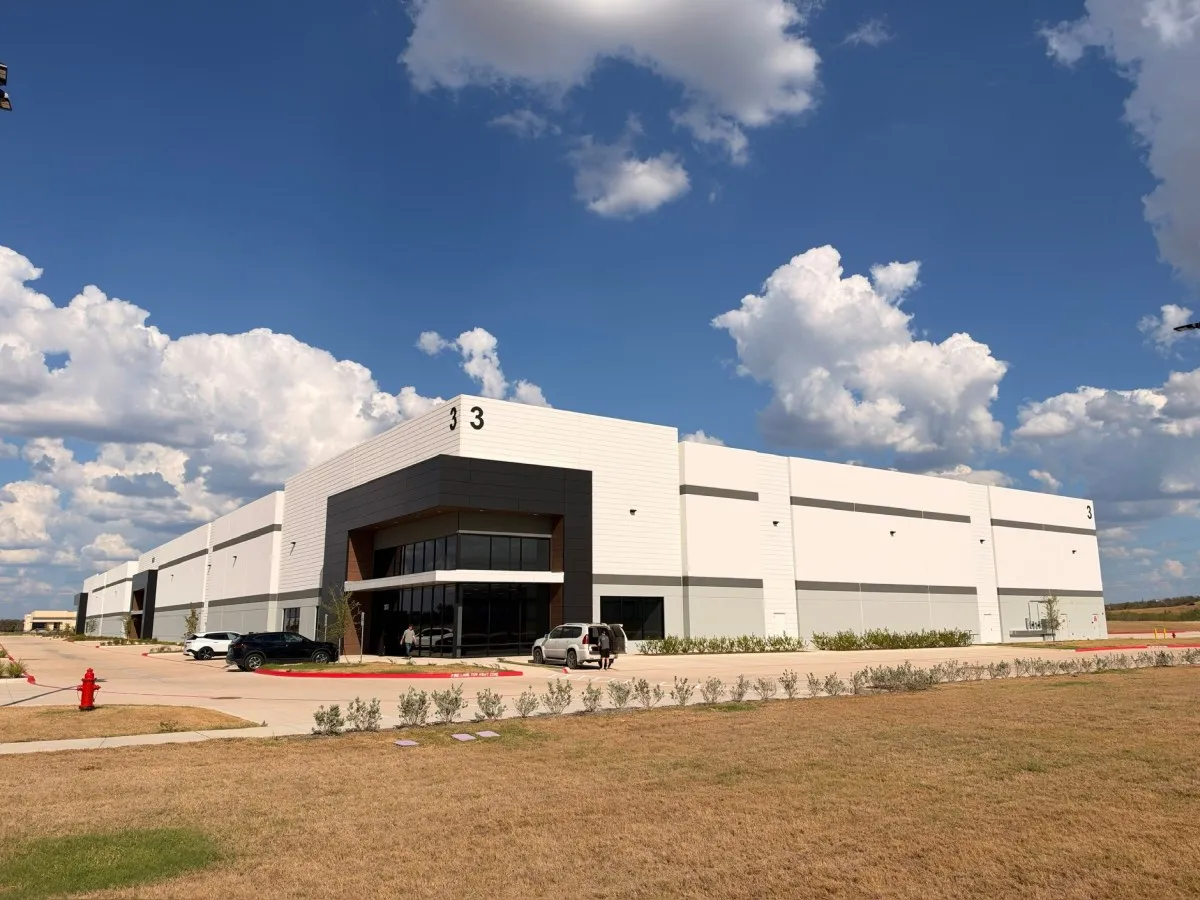
Ambrosia Energy has begun work on a massive, 10 gigawatt-hour battery factory near Austin, Texas, co-founder and CEO Ben Longmier announced onstage Tuesday at TechCrunch Disrupt in San Francisco.
“That allows us to build about a 300 megawatt power plant per year out at our field sites,” he said.
The factory will occupy 150,000 square feet, and Longmier said that Ambrosia plans to reach full production in two to three years.
The startup emerged from stealth in June to build power plants for data centers at a cost of $100 per megawatt hour. Longmier and his co-founder, Sara Spangelo, had settled on solar plus batteries as the cheapest option that’s the fastest to deploy. Solar panels power the load during the day and charge the batteries, which discharge at night and on cloudy days to keep the data center operating round the clock.
Longmier and Spangelo previously founded the satellite constellation startup Swarm, which they sold to SpaceX.
Ambrosia is also beginning work on its first commercial power plant in West Texas later this year, Longmier said. The facility will pair 300 megawatts of solar panels with 660 megawatt-hours of batteries to deliver 30 megawatts of continuous power, with a goal of 99.3% uptime.
Even with “overbuilding” solar and batteries to deliver continuous uptime, Longmier said the company can be profitable at $100 per megawatt-hour, making it competitive with natural gas turbines that many hyperscalers are planning to use to power their data centers.
Sections of Ambrosia’s first pilot-scale power plant have been operating continuously for more than 100 days, Longmier said. The pilot is capable of generating 200 kilowatts of electricity 24/7.
To hit its cost targets, Ambrosia has been finding ways to simplify its components, including solar mounts and battery packs. By reducing part counts, and manufacturing many components in a factory, the startup has been able to reduce costs relative to buying from outside suppliers.
“We buy existing cells and we make our own pack in-house, and it has the fewest parts by a factor of about 100 compared to any other competitor we’ve seen,” Longmier said. ”We’ve been able to get to about 1.3x the cost of the bare cell compared to about a 5- or 7x for most stationary storage systems.”
When you purchase through links in our articles, we may earn a small commission. This doesn’t affect our editorial independence.
Tim De Chant
Senior Reporter, Climate
Tim De Chant is a senior climate reporter at TechCrunch. He has written for a wide range of publications, including Wired magazine, the Chicago Tribune, Ars Technica, The Wire China, and NOVA Next, where he was founding editor.
De Chant is also a lecturer in MIT’s Graduate Program in Science Writing, and he was awarded a Knight Science Journalism Fellowship at MIT in 2018, during which time he studied climate technologies and explored new business models for journalism. He received his PhD in environmental science, policy, and management from the University of California, Berkeley, and his BA degree in environmental studies, English, and biology from St. Olaf College.
You can contact or verify outreach from Tim by emailing [email protected].
October 13 – 15
San Francisco
Get 50% off a second pass
The Disrupt experience is meant to be shared. Get your pass and bring a colleague, partner, or peer at 50% off. Cover more ground by making connections, building momentum, and discovering what’s next in the startup ecosystem.
This AI startup says it can generate permit-ready blueprints in minutes
Kirsten Korosec
Elon Musk intensifies attack on Ambani over Starlink India launch delay
Jagmeet Singh
Remember Orkut? Its founder wants to bring it back
Jagmeet Singh
US bars Microsoft, Adobe, and major IT firms from green card program for skilled foreign workers
Aisha Malik
Elon Musk questions Ambani’s influence as Starlink India launch stalls
Jagmeet Singh
Cal AI’s 19-year-old founder just raised $10M for his new AI startup
Julie Bort
Google releases a new local-first Granola competitor
Ivan Mehta
正文由 探How 从来源站点 RSS 同步,内容未经改写;遇到排版缺失或需要图片、视频时请以原文为准。