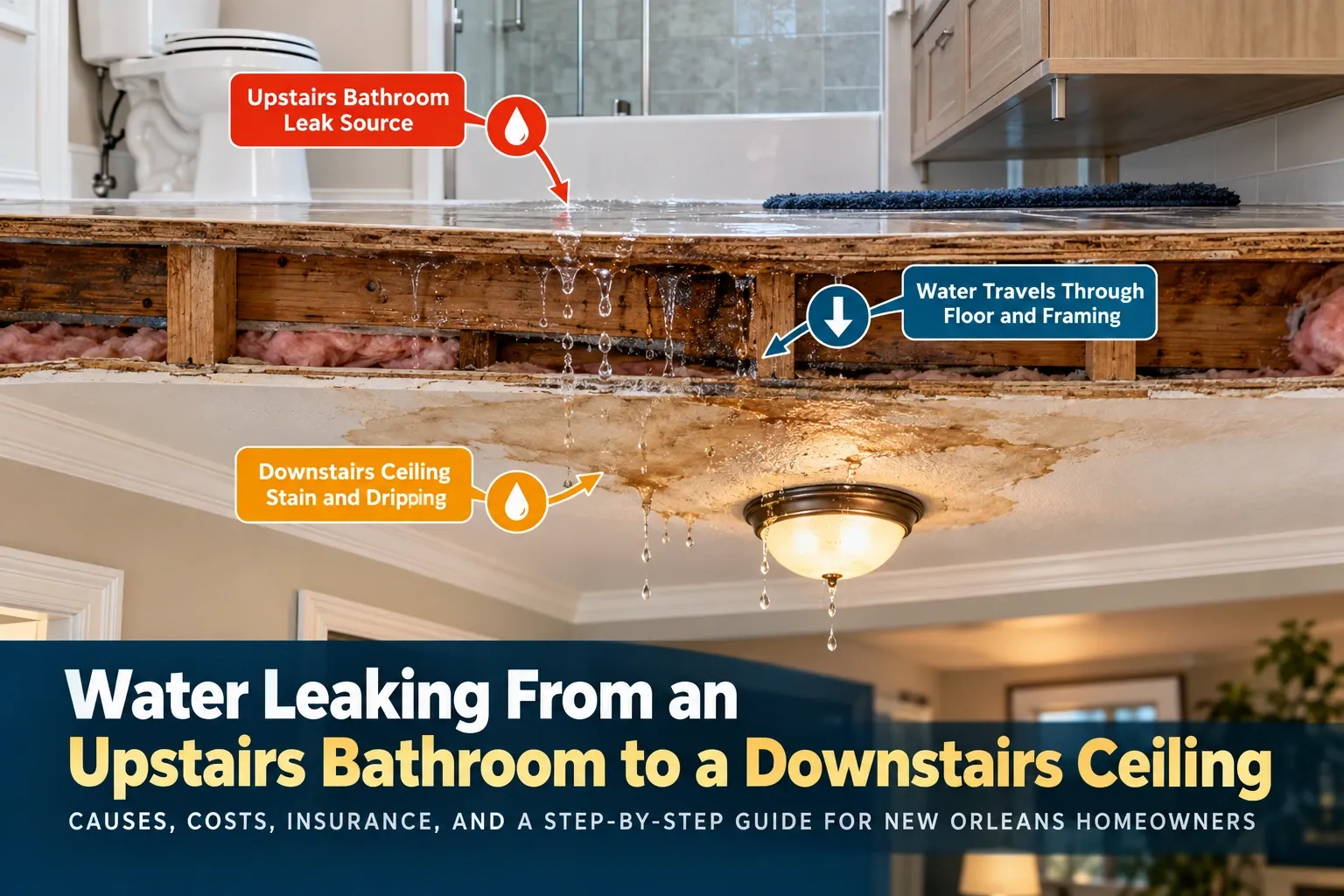
Water Leaking from Upstairs Bathroom to Downstairs Ceiling? What to Do
If water is leaking from an upstairs bathroom to
以下正文同步自 Hacker News 最新,版权归原站所有,已转换为易读排版。
If water is leaking from an upstairs bathroom to the downstairs ceiling, stop using the suspected fixture, keep people away from sagging ceilings, and avoid wet electrical equipment.
Common causes include toilet seals, bathtub drains, shower waterproofing, and concealed plumbing. Finding the leak is essential, but hidden moisture may also require drying and repairs.
Before you repaint that ceiling: Fixing the plumbing problem doesn’t automatically dry the insulation, subfloor, framing, or ceiling materials that became wet. Both the leak and the water damage need appropriate attention.
Not every bathroom ceiling stain becomes a major loss. However, published insurance and housing data provide context for why investigating hidden water damage matters.
Sources:
Insurance Information Institute / ISO
and
City of New Orleans planning data . Figures describe broader insurance and housing conditions, not specifically upstairs bathroom leaks.
An active leak can wet drywall, plaster, insulation, wood framing, subflooring, and electrical components between floors. The first priority is protecting people and avoiding further exposure.
Stop showers, baths, toilet flushing, and sink use in the affected area. If a pressurized pipe is leaking, use an accessible shutoff valve when safe.
Move people and pets away from bulging drywall, separating plaster, or falling material. Do not puncture a water-filled ceiling yourself.
Do not touch wet lights, fans, switches, outlets, or wiring. Seek a qualified electrician when electrical components may have been exposed.
From a safe location, photograph the damage and record when it began, which bathroom fixture was being used, and whether similar leaks occurred before.
Water emerging from a light fixture, significant ceiling sagging, falling plaster, or rapidly expanding damage requires immediate caution. Keep clear and arrange appropriate professional assistance.
The
U.S. Environmental Protection Agency
recommends drying water-damaged areas and materials within 24–48 hours when possible to reduce the likelihood of mold growth. This is preventive guidance rather than a guarantee of when mold appears.
A ceiling stain does not always reveal which bathroom fixture failed. These are common possibilities a qualified professional may investigate.
A toilet’s seal or connection to the waste pipe can fail. Water may enter the subfloor during flushing without leaving a noticeable puddle around the toilet base.
Loose fittings, deteriorated gaskets, or damaged drain piping can release water when the bathtub drains. An intermittent problem may not appear during every use.
A damaged overflow seal may leak when the tub is filled high enough for water to enter the overflow opening. The same tub might appear fine during a short shower.
A compromised waterproofing layer, damaged shower assembly, or opening around an enclosure may allow water into concealed spaces.
Grout and caulk can help manage surface water, but they should not be the only waterproof barrier in a properly constructed shower.
A damaged pipe or fitting may leak even when the bathroom is not in use. If a pipe failure causes additional property damage, our
burst pipe water damage guide
explains relevant restoration considerations.
A loose trap, cracked pipe, or concealed bathroom vanity connection may direct wastewater into the floor assembly before water becomes visible downstairs.
Overflow water can spread across the bathroom floor and pass through joints, pipe penetrations, or openings in the floor assembly.
Where water remains pooled,
water extraction services
may be relevant before drying begins.
One of the most useful observations is when the leak appears. This can help a professional narrow the investigation without assuming the nearest fixture is responsible.
Do not deliberately recreate an active leak. Use this table to organize observations already made. Running additional water through a damaged ceiling may increase hazards and property damage.
A recent homebuyer reported water dripping from a downstairs bathroom ceiling beneath another bathroom. The leak stopped, returned, and then could not be reproduced during a plumber’s inspection.
The homeowner described frustration with the uncertainty. In a follow-up, the poster reported finding an open HVAC condensation line in the ceiling that was dripping when the air-conditioning system ran.
Water does not always travel vertically. It can follow the underside of a pipe, spread along the subfloor, move across framing, or collect inside a cavity before dripping into the room below.
That means a kitchen ceiling stain directly beneath the shower does not automatically prove the shower drain is responsible. A toilet connection, sink pipe, supply line, or another source may be involved.
The illustration at the beginning of this article shows how water can move through the floor assembly before becoming visible downstairs.
A professional may investigate accessible plumbing, evaluate the floor layout, take moisture measurements, and assess whether concealed materials were affected.
A two-story condo resident described water leaking from an upstairs shower-tub combination into the downstairs ceiling.
The household reported repeated caulking and grout work, visits from plumbing and repair professionals, and the use of drying equipment. However, moisture readings continued to indicate a problem after shower use.
The discussion did not establish a final professionally confirmed leak source.
Not every ceiling stain means an entire ceiling needs replacement. However, a surface that appears dry can conceal damp insulation, framing, or subflooring.
Where water has entered structural materials,
structural drying in New Orleans
may be relevant. Appropriate drying decisions are based on material condition and moisture measurements, not appearance alone.
EPA humidity guidance: Indoor relative humidity should generally remain below 60%, ideally between 30% and 50%. Controlling humidity helps manage moisture, but it does not replace assessment of wet building materials.
EPA source .
New Orleans homes vary in age, construction, and interior finishes. Some properties contain modern drywall, while others retain plaster-and-lath ceilings or other older assemblies.
These materials do not always respond to water in the same way. Some plaster may be retained when its condition is suitable, while detached or unstable material may require removal.
A
U.S. Department of Energy ceiling repair guide for Gulf States homeowners
explains differences in evaluating damaged plaster, lath, and drywall.
Do not assume every plaster ceiling stain requires demolition. Equally, do not leave unstable, separating, or persistently wet material in place without appropriate evaluation.
Where a leak has contributed to visible or suspected mold, see our
mold remediation guide for New Orleans .
Water traveling near lights and electrical fixtures can make a bathroom leak more hazardous. Homeowners may also worry about moisture hidden above the ceiling.
A Reddit user described a guest using an upstairs bathtub that had not been filled for years. The poster heard dripping and discovered water reaching the kitchen ceiling below.
The visible flow stopped when the bathtub drained. The resident worried about concealed moisture and a nearby ceiling light fixture, and expressed fear about attempting repairs without the appropriate tools.
A bathroom ceiling leak can involve more than one type of work. The original plumbing failure, possible electrical hazards, concealed moisture, and ceiling repairs may require different qualified professionals.
If you’re a New Orleans homeowner dealing with water-damaged ceiling materials after a bathroom leak, call to check availability with independent local providers for eligible residential restoration requests.
Repair costs depend on the water source, accessibility, damage extent, materials involved, and whether drying or reconstruction is needed.
Plumbing repairs and ceiling restoration are different components of the overall job.
As a national reference,
Angi’s water damage cost guide
reports approximately $450–$1,600 for certain ceiling water-damage repair projects.
This range is not a New Orleans estimate and does not necessarily include plumbing diagnosis, extensive drying, or reconstruction.
Cost distinction: A small, dry ceiling stain and a saturated floor assembly with wet insulation can require very different work. Avoid comparing quotes unless they include similar services and repair scopes.
For more detail, see our
New Orleans water damage restoration cost guide .
Coverage depends on the policy and the cause of the loss. Sudden accidental plumbing damage may be handled differently from long-term seepage, recurring leakage, maintenance-related problems, or other exclusions.
Repairing the failed plumbing component and repairing the resulting water damage may also receive different treatment under the policy.
Our
Louisiana water damage insurance guide
explains common distinctions, documentation considerations, and useful questions to ask an insurer.
Insurance reminder: Only the insurer and the relevant policy terms determine whether a specific loss is covered. This website does not provide insurance adjusting services or guarantee claim approval.
A recurring stain or drip may indicate that the original source was not fully repaired, another water source is involved, or moisture remained in concealed materials.
Before repeating cosmetic repairs, review what has already been done.
This information can help the next professional investigate the cause without unnecessarily repeating unsuccessful work.
Possible causes include a failed toilet seal, shower waterproofing, bathtub drain, sink connection, overflowing fixture, or concealed supply pipe. Other building systems may also be involved.
Yes. Water may enter concealed spaces through plumbing connections or failed waterproofing without collecting on the visible bathroom floor.
The pattern may suggest a shower-related water pathway, plumbing connection, or waterproofing problem. Timing alone does not confirm the source.
Stop using the bathtub, keep people away from unsafe ceiling areas, avoid water-affected electrical equipment, and arrange appropriate damage assessment.
It can be. Do not touch water-affected lights or wiring. Keep clear and seek qualified electrical assistance.
Yes. A failed toilet connection may allow water into the floor assembly even when the upstairs floor looks dry.
Not necessarily. Material condition, moisture levels, contamination, and structural integrity affect repair and replacement decisions.
Yes. Water may move through a floor-ceiling cavity before becoming visible above a kitchen, hallway, or another downstairs room.
Costs depend on the source, access, materials affected, amount of water damage, and whether drying or reconstruction is needed. Property-specific estimates are more useful than generic national averages.
Possibly. Coverage depends on the cause, policy terms, exclusions, and other factors. Contact your insurer for a policy-specific determination.
Water leaking from an upstairs bathroom can leave damage beyond the visible stain. Fixing the original source and checking water-affected materials are separate tasks.
Our website helps New Orleans homeowners check availability with independent participating local service providers for eligible residential water damage restoration requests.
Service availability depends on ZIP code, request type, and participating provider
正文由 探How 从来源站点 RSS 同步,内容未经改写;遇到排版缺失或需要图片、视频时请以原文为准。