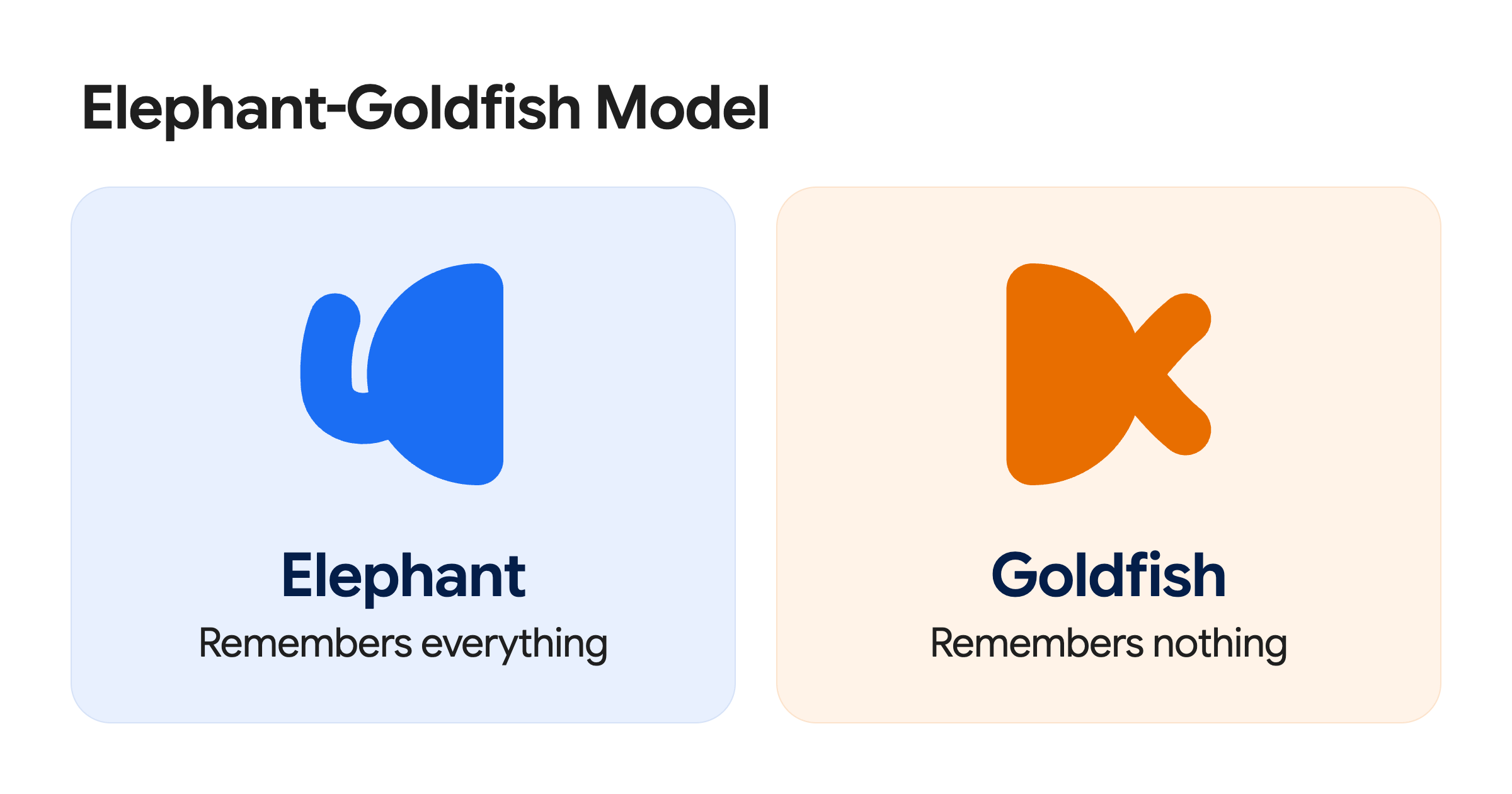
Elephant-Goldfish Model
Thousands of Google engineers use this open-source plugin to draft specs with deep-context agents and stress-test them with zero-context subagents before writing code.
以下正文同步自 Hacker News 最新,版权归原站所有,已转换为易读排版。
Thousands of Google engineers use this open-source plugin to draft specs with deep-context agents and stress-test them with zero-context subagents before writing code.
Copy install promptCopied
Design with context. Review with fresh eyes.
Dave Rensin introduces this approach in Elephants, Goldfish, and the New Golden Age of Software Engineering. Drafting agents hold full repository context while reviewing subagents start with a blank slate to expose blind spots early.
Deep-context agents load system history, architecture, component boundaries, and user journeys. The Elephant runs structured brainstorming, probes operational limits, and drafts the specification.
Stateless, isolated subagents read only the draft spec and live source code, without conversation bias. A Goldfish swarm stress-tests the design from conflicting perspectives before you write code.
You make the architectural decisions and approve the spec before implementation.
Clarify a rough idea through open-ended questioning and stress-test the hypothesis into a concept brief.
Turn the brief into a living design doc under docs/designs/, section by section.
Fresh zero-context Goldfish subagents check completeness, clarity, self-containment, and implementation readiness.
Once you approve the spec, ask your coding agent to build it.
After implementation, compare the code with the spec and report where they diverge.
正文由 探How 从来源站点 RSS 同步,内容未经改写;遇到排版缺失或需要图片、视频时请以原文为准。