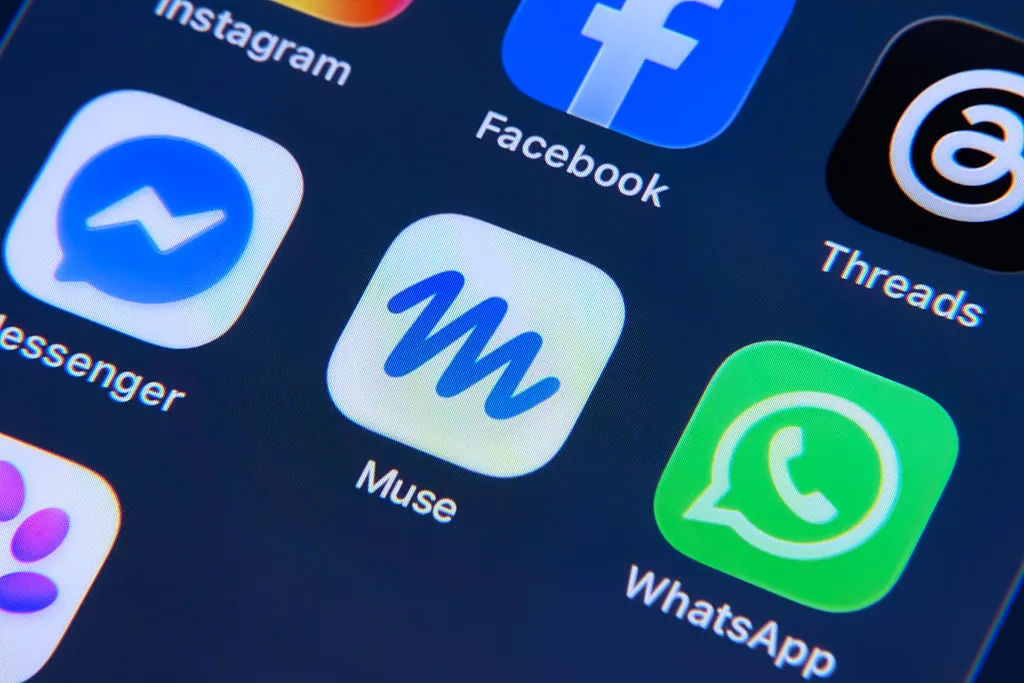
Meta’s Muse launches on iPad just a month after its mobile debut
Meta’s AI agent Muse is now available on iPad, just a month after its mobile debut, as the company rapidly expands the assistant’s reach and integrations.
以下正文同步自 TechCrunch,版权归原站所有,已转换为易读排版。
If there’s any doubt about how seriously Meta is taking AI, here’s a new signal: the company on Wednesday announced that its Muse assistant is now available in a dedicated iPad app. That’s a milestone it took Instagram some 15 years to reach, despite constant user demand.
Muse, meanwhile, hit the iPad just a month after launching on iPhone.
(To be fair, it may not be as difficult to bring something like Muse to iPad, given its text-heavy interface, where image and video resolution and formatting matter less.)
Since launching on iOS and Android on September 8, Muse has topped 6.6 million installs, according to estimates from market intelligence firm Sensor Tower. The app, which is now one of dozens of consumer-facing AI agents, lets users connect their accounts to stay on top of email, meetings, bills, and more, and to complete tasks like booking reservations, ordering groceries, setting goals, and making purchases.
To make that work, Meta has been adding partners in the effort, which appear in Muse as “connectors.” Users can add and sign in to them selectively, depending on which parts of their online life they’re comfortable letting an AI agent handle.
With the iPad release, Meta has updated this list with several of its newer additions, including connectors aimed at small businesses, like Asana, Canva, Dropbox, Figma, QuickBooks, GitHub, Klaviyo, and Zoom, as well as connectors for Meta ad accounts. It also added Notion and Granola.
In addition, Meta recently announced more retail partners, like Best Buy, Gap, Sephora, Walmart, and Wayfair. These allow the agent to shop those retailers’ sites and complete transactions on users’ behalf. Because this technology is still new, these experiences can still run into issues as websites mistake agents for bots and block their access.
On Tuesday, Meta announced that it’s working with industry partners on a technological solution to this problem in the form of an open standard that would allow personal AI agents to identify themselves to businesses. That would help businesses sort the good bots from the bad.
When you purchase through links in our articles, we may earn a small commission. This doesn’t affect our editorial independence.
Sarah Perez
Consumer News Editor
October 13 – 15
San Francisco
Get 50% off a second pass
The Disrupt experience is meant to be shared. Get your pass and bring a colleague, partner, or peer at 50% off. Cover more ground by making connections, building momentum, and discovering what’s next in the startup ecosystem.
At 19, founder raises $11M for Ghost, maker of a $3,499 computer for personal AI
Dominic-Madori Davis
Federal judge calls Flock ‘indiscriminate mass surveillance’
Anthony Ha
Amazon responds to data center backlash, says it no longer uses NDAs
Anthony Ha
OpenAI safety employee resigns, claiming the company’s ‘culture is broken’
Anthony Ha
Meta wants your next gadget to be Muse-infused
Kirsten Korosec
Google thinks SpaceX’s Starship has to launch 1,800 times before space data centers get off the ground
Tim Fernholz
World’s first enhanced geothermal power plant completed in just 23 months
Tim De Chant
正文由 探How 从来源站点 RSS 同步,内容未经改写;遇到排版缺失或需要图片、视频时请以原文为准。