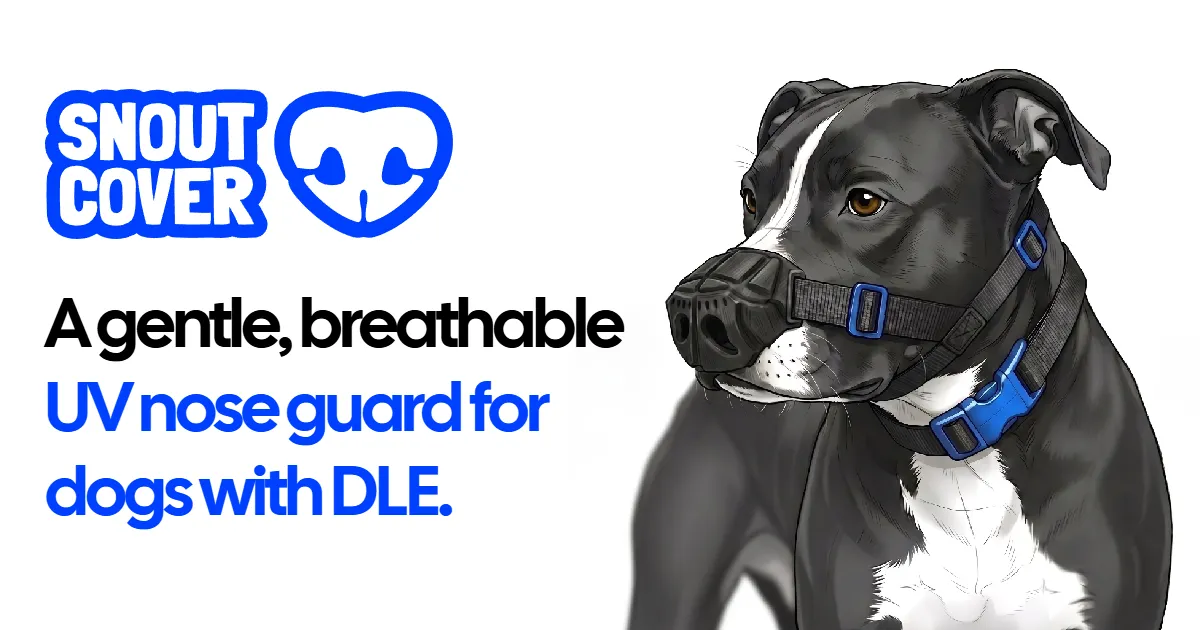
I designed a nose guard for my dog and gave it away. Now 500 dogs wear one
Not much about how it's made has changed. I still print every SnoutCover myself, on one printer in my studio shed. I still cut and assemble every strap, pack every envelope, and hand each week's batch to the Sunday pick…
以下正文同步自 Hacker News,版权归原站所有,已转换为易读排版。
Not much about how it's made has changed. I still print every SnoutCover myself, on one printer in my studio shed. I still cut and assemble every strap, pack every envelope, and hand each week's batch to the Sunday pickup. What's changed is how far those envelopes travel. As of today, SnoutCover has helped more than 500 dogs. Most of them wear a cover I made myself - 395 orders, to 16 countries - and the rest wear covers their owners printed and assembled themselves. I still find that hard to believe.
It wasn't all smooth. Getting parcels across the world turned out to be the hardest part of the whole thing, and when some got stuck along the way, I sent them again at my own cost. I know how stressful it is to watch a tracking page that won't move while your dog's nose needs help, so sometimes I just sent a second one while the first was still on its way.
The first year was also one long round of fixes. Every email, every photo of a dog in a cover that didn't sit quite right, went straight back to the bench.
The straps changed the most. A cover that slid up on every lick looked like a sizing problem, but it almost never was. The real fix was where the collar fasteners sat, so I kept reworking the strap design and the way I assemble it, until the cover stayed put without being pulled tight against a sensitive nose.
The model changed too. When enough dogs got a paw under the Shield and pulled until it tore, I stopped treating it as a training issue and reinforced it where it flexes and where the straps pull.
And some dogs simply don't fit a standard size. A Bull Terrier's long, curved nose needs coverage much further along the bridge than any stock cover gives, so I designed one from scratch, shaped from photos of that one dog. Custom models like that have become part of the work: when the standard sizes don't fit a dog's needs, I build one that does.
And some of it wasn't about the product at all. Plenty of dogs freeze the first time they wear one - head down, waiting it out. That's normal, and it passes with a lick mat and a week of short, easy sessions. So I wrote it all down: tutorials for fitting, for training, for those first few days.
None of it is finished, and I don't think it ever will be. The goal hasn't changed since the first prototype: every cover a little better, and a little more reliable, than the last.
In late May, a shipping issue put everything on hold for about two weeks.
It felt like terrible timing. It turned out to be the best thing that happened to the product, because for the first time since launch, I had nothing to pack. Just a bench, a printer, and a problem that had been quietly piling up in my inbox.
Some dogs needed something for the other twenty-two hours of the day. Not sun protection, just a gentle barrier during ointment time, or for noses so sensitive they couldn't be licked at all and had to stay protected while fully ventilated. The clearest case came from Stephanie and her husky, Iris. Iris's nostrils sat low compared to the openings on her cover, so every lick knocked it out of place. Her nose was raw enough that any movement hurt, and in the videos Stephanie sent I could hear that a fully covered nose was stressing her out. We tried every strap position and size. Two other owners were writing to me about the same thing.
Eventually I understood that Iris didn't need a better rigid cover. She needed less cover.
Getting there was a slog. The first versions simply wouldn't come out the way I pictured them. Then came the balance: too much material and it may as well be solid, too little and it stopped being a barrier at all. Then shapes that looked perfect on the bench and gave up the moment they met a warm nose. Breathing room came last, and it's the whole reason the model exists.
And then, after a long stretch of nothing, the idea just arrived - a completely different way of thinking about how the whole thing comes together. It solved most of those problems at once, and turned out far more durable than the original, too.
Billie tested it first, on a walk home from the vet. She wore it the whole way without a fuss. Not a formal test, but after a year of watching her reject things, I know what yes looks like on her.
In the first week of June, I sent Stephanie an early unit for Iris. In July, she wrote back: it lined up better on Iris's snoot, it was easier to clean, and Iris seemed happier in it. The Care went on sale at the end of June.
One thing I tell everyone who asks, and I'll tell you too: the Care filters UV in proportion to how much of its surface the mesh covers. It isn't a full block. For real sun, that's the Shield. The Care is for indoors, for ointment time, for the sensitive stretches. Most people who have both use both, and that's exactly the idea.
The Shield I make today isn't quite the one I started with, and I want to be clear about why. The original was never the problem. It's the design Billie has worn for almost two years - the same unit, with no problems - and the one hundreds of dogs are wearing right now.
What changed was everything around it. One printer making a few covers a week is a hobby. One printer making covers for dogs in 16 countries needs every single unit to come off the plate the same way, every time. So this year's work on the Shield was about reliability - a design that prints consistently at volume, fits the same from the first unit to the hundredth, and holds up where paws pull.
正文由 探How 从来源站点 RSS 同步,内容未经改写;遇到排版缺失或需要图片、视频时请以原文为准。