The Afterlives of Literary Reputation
Literary reputations are continually revised through political conflict, changing tastes, and rediscovery. What can contemporary disputes about writers tell us about that process?
以下正文同步自 Hacker News 最新,版权归原站所有,已转换为易读排版。
Translate
The afterlives of literary reputation
Literary reputations are continually revised through political conflict, changing tastes, and rediscovery. What can contemporary disputes about writers tell us about that process?
Christian Lorentzen
Oct 30, 2026
84
3
20
Share
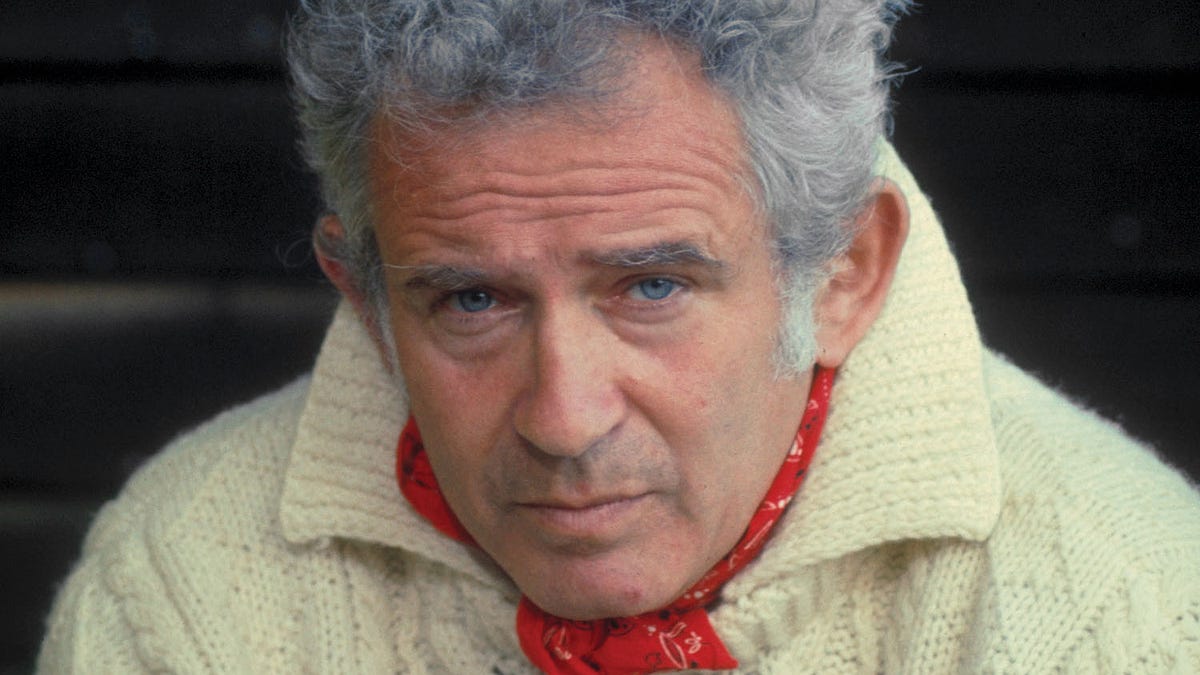
Norman Mailer (Getty Images)
The status of literary reputation is in a funny place. On the one hand, we inhabit a necrophiliac literary culture. Lost classics, never-before-translated classics, and unjustly forgotten geniuses are exhumed every month, and laurels are placed on their authors’ skeletons. “The proper response to this is surely celebration,” the critic Madeleine Schwartz wrote in a 2019 review of Elsa Morante’s 1957 novel Arturo’s Island. “But I can’t help feeling a bit depressed that so many of the cool new writers are dead.”
On the other hand, a new anxiety has attached to the already famous dead: the specter of oblivion as a casualty of culture war. Of course, oblivion is the natural state of things for most writers and artists, and it usually sets in before they die, if they were lucky enough for things ever to be otherwise. But recent controversies over posthumous reputations, all putatively being argued on moral grounds, seem to me something else entirely: the language of morality enlisted for the purposes of marketing, publicity, and literary consumerism.
On January 4, Alexandra Alter and Elizabeth A. Harris reported in the New York Times that Random House, Mailer’s principal but not sole American publisher since the 1950s, had not canceled the collection but merely declined to contract it. It would be published instead by Skyhorse, recently home to other “controversial” titles such as Woody Allen’s memoir Apropos of Nothing, shelved by Little, Brown after staff objections on the grounds of allegations of sexual abuse by Allen’s adopted daughter Dylan Farrow, and Blake Bailey’s biography of Philip Roth, recalled by W. W. Norton after multiple allegations of rape against its author. Mailer’s youngest son, John Buffalo Mailer, said he knew nothing of the objections of the junior staffer nor those of Roxane Gay, who herself denied having anything to do with the matter. Random House remains the publisher of Mailer’s extensive backlist, including multiple books that contain “The White Negro,” which is anyway available to read in the archive of Dissent.
Norman Mailer, pictured with his wife Adele Morales, whom he had stabbed twice with a penknife one month earlier, at court, December 1960.
Whatever the inner workings of Random House, the Wylie Agency, and the Mailer estate, the one-two punch of reported cancellation and denial of cancellation was the biggest publicity Mailer had received in years. Since Mailer’s death in 2007, the four biggest publishing events around him have been the publication of his wife Norris Church Mailer’s memoir A Ticket to the Circus in 2010; the concurrent release of J. Michael Lennon’s biography Norman Mailer: A Double Life and Mailer’s Mind of an Outlaw: Selected Essays in 2013; the Selected Letters of Norman Mailer in 2014; and the Library of America’s Norman Mailer: Four Books of the 1960s in 2018. I happen to be among the critics who wrote on these books, and as far as I can tell, none of them sparked a major Mailer revival. So the new Mailer volume and the either ginned-up or accidental controversy around it constitutes a rebranding of Mailer for “the era we’re living in,” to use John Buffalo Mailer’s phrase.
Nobody ever needs an excuse not to read a book.
According to the Times, he put the collection, which includes both published and unpublished writings, together “in the wake of growing partisan division in America and the Jan. 6 riots.” No doubt Mailer’s writings on the March on the Pentagon, his dispatches from the Democratic and Republican national conventions beginning in the 1960s, and his various other political interventions up through the George W. Bush administration will continue to have resonance. He was an excellent student of the psychology of politicians and a sharp anthropologist of rank-and-file American right-wingers. Those who choose not to read him — because he stabbed his wife Adele Morales with a penknife in 1960; or because he headbutted Gore Vidal on The Dick Cavett Show in 1971; or because he supported the 1981 release of the convicted murderer Jack Henry Abbott, who went on to kill Richard Adan, a waiter and playwright in the East Village, six weeks into his parole — will be free to continue not reading him. Nobody ever needs an excuse not to read a book. (One could as easily cite the quality of his writings on sex, race, and plastics.) But his “cancellation” has the feeling of a false flag operation.
Norman Mailer and Gore Vidal set aside a legendary — and occasionally violent — feud to jointly criticize President Ronald Reagan, the arms race, and American plutocracy to raise money for PEN International, November 1985.
Writing on Mailer in March for the Nation, Darryl Pinckney mounts a vivid reading of “The White Negro” within the context of Mailer’s life and career, his rivalry with James Baldwin, and the essay’s status as “an update on an American fetish” for black primitivism. “As a historical document,” he concludes in part, “ ‘The White Negro’ does not need to be defended.” Pinckney goes on to make some provocative points about “the era we’re living in”:
What separates the chaff from the wheat these days, and who decides and by what criteria? In print culture, the change in who gets to say what is grounds for expulsion from cultural memory signals a shift in power, a creation of new powers. The offended are not merely heard, they are enthroned.
It’s a chilling phrase, “expulsion from cultural memory,” but also a vague one. Culture and literature are hard, if not impossible, to contain. What’s repressed tends to return — if it was indeed repressed and not merely forgotten, the way most things are.
“The market loves what are deemed icons,” Pinckney writes, “while the culture has come to suspect individualism.” Yet these propositions also admit their converse: the market loves to destroy icons, and however suspicious the culture has become of individualism, it (or its journalistic and scholarly avatars) has not yet found a way to talk about writers and artists so powerful as talking about them as individuals. Otherwise, why would some of them occasionally need to be expelled or exhumed? “The age of auteurism is over,” Pinckney concludes. “We all can be stakeholders in the fantasy that culture should be a safe place and that talent must be democratic, not a mystery.” The auteur theory, as it was invented in France in the 1950s, was a response to the notion that the movies of the golden age of Hollywood were mostly the products of a system. The elevation of film directors may have involved a degree of overcompensation — see Pauline Kael’s case for Herman Mankiewicz’s contribution to Citizen Kane — but somebody does the directing, somebody does the writing, and somebody paints the paintings. Books and artworks may seem to be symptoms of the moment of their production, but they are never merely symptoms. Every virus requires a host.
Here another example is instructive. After Joan Didion’s death in December 2021, the eulogies were mostly in unison, perhaps best represented by Zadie Smith’s tribute to Didion as “a woman who did not so much express opinions, or emotions, as interrogate both.” Smith continues: “If this still strikes us as unusual, it seemed unprecedented to me, when reading her for the first time in the late eighties. That she was a woman mattered, very much.” But one woman’s feminist trailblazer is another’s “archpriestess of cool — possessed of a corrosive sense of irony and an overriding habit of condescension,” as Daphne Merkin put it in the New York Times in January 2022, also citing Didion’s “un-self-conscious snootiness.” Of Didion’s late-twentieth-century heyday, Merkin writes:
It was a time before the indictment of the blindness of white privilege, the justifiable outrage of Black Lives Matter, the score-settling of #MeToo and the prim judgments of woke culture. Many of her views, especially her obsession with class indicators such as dress, décor, name brands and status, would not fly today.
But surprise! “Oddly, for all her insistent elitism, young readers have embraced Didion.” It may be that Merkin and these “young readers” are paying attention to different things in Didion’s work, that the accidental details of Didion’s obviously upper-middle-class lifestyle are just those: accidental details. And that underneath the layers of irony, she was attuned to states of suffering (see her essay on Terri Schiavo), to miscarriage of justice (see her essay on the Central Park Five), and to elite betrayal of democratic values (see her essay on the 1988 presidential campaign, where her sympathies were with Jesse Jackson). “ ‘Privilege’ is an accusation,” Didion wrote in Blue Nights, her 2011 memoir on the long coma and death of her daughter, Quintana. “ ‘Privilege’ remains an area to which — when I think of what she endured, when I consider what came later — I will not easily cop.” Does this still “fly” today?
Merkin is attempting to enlist the other side of the culture war in her long-running “stand against the adulation” of Didion. But it proves a flimsy ally, just as the “cancellation” of Mailer, with any scrutiny, can be seen as little more than a counterintuitive marketing maneuver. The emphasis in each instance on biographical details and anachronistic imposition of pieties misses the point of why any writer acquires a readership in the first place. As Pinckney writes of Mailer and Baldwin: “Baldwin said he wanted to die in the middle of writing a sentence. Time has obscured what he and Mailer once had in common, their love of purely literary qualities.” But time only obscures this fact if “time” means “not opening their books,” in which case the common commitment to “purely literary qualities” is obvious. Was talent ever a “mystery”? Artistic and literary production is better understood as a dialectical process artists and writers undertake between the formal conventions they inherit and the liberties they take, as Jed Perl argues in his book Authority and Freedom. As such, writers’ politics and personal behavior are what time not only obscures but renders irrelevant.
The works of avowedly reactionary writers later become fodder for critics who would have been their political opponents
The sides of the political feud that got Dante expelled from Florence are the last things anyone remembers about The Divine Comedy. The works of avowedly reactionary writers later become fodder for critics who would have been their political opponents: think of Karl Marx and Friedrich Engels on Honoré de Balzac or Perry Anderson on Anthony Powell. “What is being canceled is the status of art as sacrosanct, and that of the artist as belonging to an elect,” Pinckney writes, but that status was always an illusion.
All writers will be buried, but try to bury their books, and somebody will always dig them up again.
Christian Lorentzen’s writing has appeared in the London Review of Books, Harper’s Magazine, Bookforum, Artforum, n+1, the Times Literary Supplement, the New Republic, the Paris Review, the Baffler, the New York Times, Slate, the Literary Review, and the New Leader. From 2015 to 2018, he was the book critic for New York Magazine.
正文由 探How 从来源站点 RSS 同步,内容未经改写;遇到排版缺失或需要图片、视频时请以原文为准。