Europe’s EV Market Puts China’s Carmakers to a New Test
Chinese brands captured 12.7% of Europe’s new-car market in Q3 2026, overtaking Japanese brands (11.9%) for the first time in a full quarter, according to Dataforce. In Norway, their share reached 22.5% in October, acco…
以下正文同步自 动点科技 TechNode,版权归原站所有,已转换为易读排版。
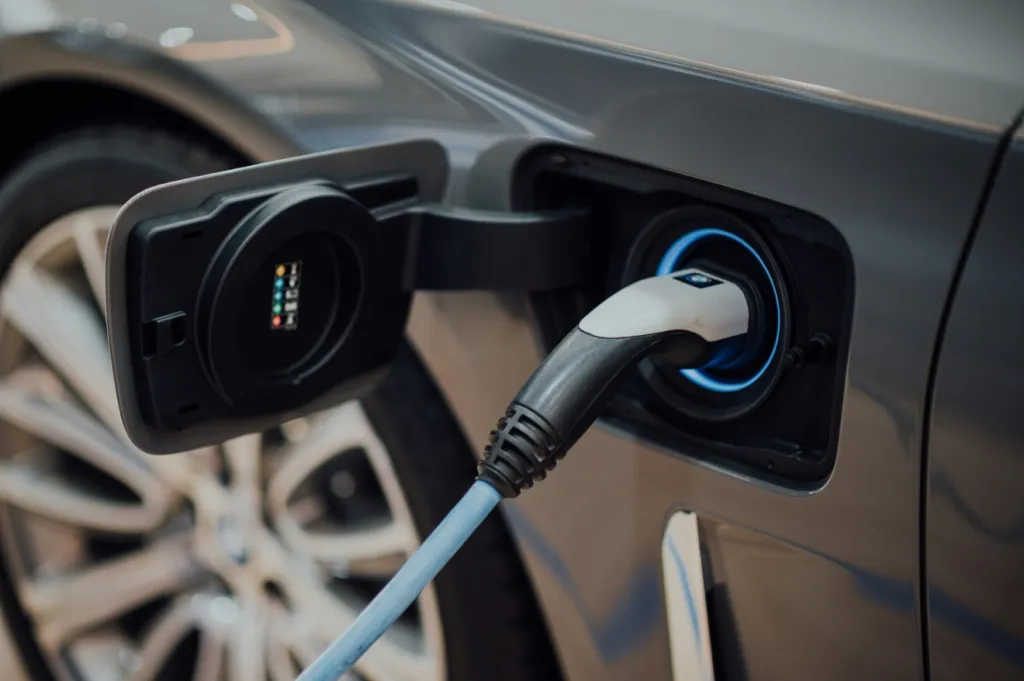
Chinese brands captured 12.7% of Europe’s new-car market in Q3 2026, overtaking Japanese brands (11.9%) for the first time in a full quarter, according to Dataforce. In Norway, their share reached 22.5% in October, according to the Norwegian Road Traffic Information Council (OFV). The activity spans several automakers: XPeng’s G9L completed its first production trial at Magna’s Austrian plant on October 7, while Leapmotor and Stellantis began B10 production at Stellantis’ Spanish plant on October 16, with plans for the B05 announced three days later. Most recently, on October 27, Great Wall Motor announced an agreement to produce the Ora 5 in Bulgaria, with production scheduled to begin in early 2027 and planned annual capacity of 50,000 vehicles. Photo by Zaptec on Unsplash The factory plans offer a glimpse into Chinese automakers’ European ambitions: tougher competition at home, the pull of overseas growth and Europe’s changing trade rules.
Technology moves beyond the price tag
China produced nearly 75% of the world’s electric cars and more than 80% of its battery cells in 2025, giving its automakers significant scale and cost advantages. The International Energy Agency (IEA) estimates that making a small SUV in China costs over 30% less than in advanced economies. The cost gap has caught suppliers’ attention, too. Japan’s Koito Manufacturing is dismantling BYD and Aito headlights to study their design and materials, with one engineer warning it must cut costs to stay competitive, Nikkei Asia reported on November 9. Yet low costs have not eased domestic pressure: EV production exceeded demand by 20% in 2025, while a price war squeezed margins and pushed automakers to look overseas. Some are also competing on technology, developing driver-assistance systems, cockpit software and chip adaptation in-house. “Hardware manufacturing can be replicated, but an intelligent architecture that evolves continuously across vehicle lines requires sustained, long-term investment,” an XPeng insider told TechNode.
From exports to a local foothold
Chinese electric-car exports more than doubled in 2025 to a record 2.5 million. Sales of Chinese-made electric cars in Europe rose nearly 50% to about 940,000. Still, more than half of Chinese electric cars sold overseas went to markets beyond Europe and the US, according to the IEA. Shipping cars from China can mean higher tariffs, added logistics costs, and longer delivery times. Local assembly helps address these challenges while making it easier to adapt vehicles to local markets. Photo by Z on Unsplash “Local manufacturing improves delivery efficiency, mitigates trade risks and brings us closer to end users,” the XPeng insider said. But local production is not viable everywhere. The choice between exports, contract assembly, and local factories depends on market size, trade rules, supply chains, and regulations, the insider added.
Europe sets new conditions
The EU’s proposed Industrial Accelerator Act would tie some public incentives and procurement to “Made in Europe” rules, potentially raising costs for Chinese exporters. The proposal would require eligible small EVs and company cars to be assembled in the EU, with 70% EU-sourced non-battery components in specified cases and separate battery-origin rules, according to the IEA. It remains under debate. An October Beijing-Brussels understanding could cut Chinese hybrid and plug-in hybrid exports to the EU by more than half over four years, Reuters reported, while China-made battery EVs remain subject to EU countervailing duties. Looking back on XPeng’s 2020 entry into Norway, its first overseas market, the insider said the company may have underestimated differences in European consumer preferences, sales channels and subsidies, as well as the pace of trade-policy changes. XPeng now weighs long-term demand, policy stability, compliance costs and local-production feasibility when assessing markets. XPeng favors exports in smaller or policy-volatile markets, while considering completely knocked-down (CKD) assembly or local factories where market size, trade rules, supply chains, and regional strategy support local production. Its Magna partnership in Austria is one example. XPeng’s choices may reflect a broader calculation facing Chinese automakers in Europe: how much to produce locally, how much to source within the region and whether the economics still add up as trade rules change.
正文由 探How 从来源站点 RSS 同步,内容未经改写;遇到排版缺失或需要图片、视频时请以原文为准。