Barcelona unrest: how to fabricate a protest in the age of TikTok
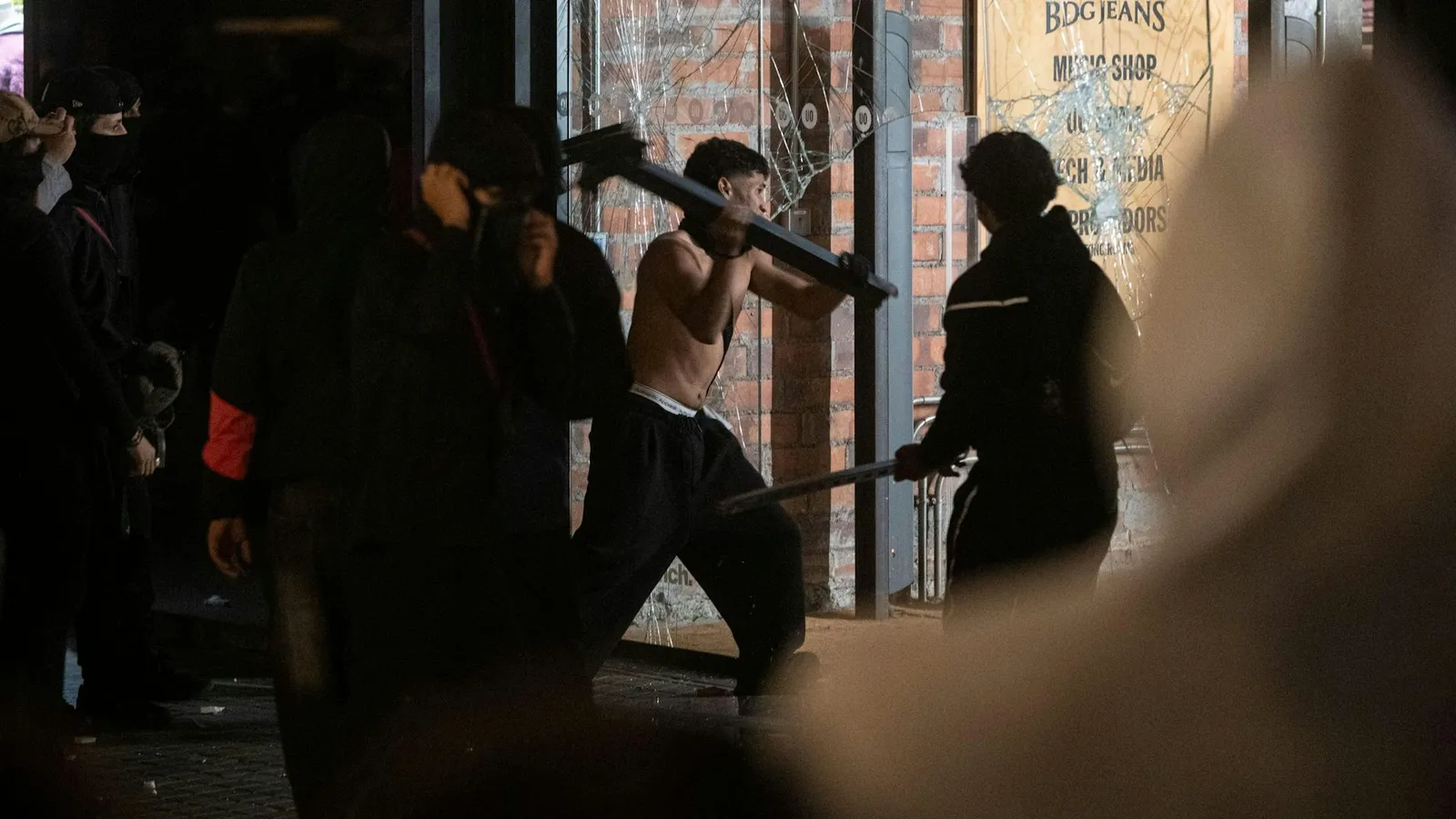
Dozens of students gathered on October 24 in Plaça Catalunya in Barcelona, looting shops and fighting police.
以下正文同步自 Hacker News 最新,版权归原站所有,已转换为易读排版。
Dozens of students gathered on October 24 in Plaça Catalunya in Barcelona, looting shops and fighting police. RTVE
Barcelona unrest: how to fabricate a protest in the age of TikTok
Published: October 28, 2026 8.01am GMT
https://theconversation.com/barcelona-unrest-how-to-fabricate-a-protest-in-the-age-of-tiktok-295263
https://theconversation.com/barcelona-unrest-how-to-fabricate-a-protest-in-the-age-of-tiktok-295263
Link copied
Share article
Share article
Copy link
Bluesky
Messenger
X (Twitter)
Print article
Imagine coming across a TikTok post calling you to protest for better public schools. You scan a QR code to get more information, and find yourself in a private chat where the instructions are not about education or political organising, but about looting.
This was the picture that emerged in Barcelona on October 24. Around 20 TikTok accounts linked to the anonymous Blocus platform had promoted gatherings across Spain, inviting young people to mobilise.
The public accounts echoed the French student movement and called for similar action in Plaça Catalunya, right next to the city’s housing rights encampment. Yet no evidence links the two movements – a fact that Barcelona’s mayor Jaume Collboni has explicitly acknowledged.
The gathering quickly descended into masked youths smashing shop windows and confronting the police. The night ended with 130 young people arrested, 76 of them underage, and 14 police officers injured.
The TikTok accounts that spurred these particular protests have since been deleted, along with all of their posts and content.
New profiles are now reusing the Blocus label across Spain and Europe, organising further gatherings for October 31. Spanish fact-checking site Maldita has identified Halloween calls in multiple cities across nine European countries, including Germany and the Netherlands. Some posters advertise peaceful demonstrations, while others invoke The Purge, a 2013 horror film in which all crime becomes temporarily legal.
Barcelona’s October 24 “protest” was fabricated, presenting itself as a legitimate mobilisation while obscuring different goals. But the violence was real – and in Spain’s already heated pre-electoral environment, it quickly has taken on a political life of its own.
There are common trends across Blocus-linked accounts, which use AI-generated posters with similar slogans and dark images of burning streets across national borders.
Such imagery echos the far-right anti-immigration mobilisations in Spain after the Ceuta crisis: the Spanish flag features heavily, often alongside the regional flags of Catalonia and the Basque Country.
The shared aesthetics, timing and modus operandi across countries point to a wider ecosystem of online mobilisation. However, it is unclear whether this is just digital mimicry or the work of a single common orchestrator.
Regardless of who coordinated the protest, Barcelona’s images have been weaponised and turned into political ammunition.
Politicians have supplied competing explanations. The conservative opposition leader Alberto Núñez Feijóo has accused President Pedro Sánchez of “violently resisting a handover of power”, declaring: “Having lost the streets, they want to set them on fire”. The far-right party Vox has also blamed Sánchez’s “militias” and framed the disturbances as “Islamo-leftism”, pinning the violence on first and second-generation immigrants.
Government spokesperson Elma Saiz and several progressive leaders have accused the right of benefiting from the turmoil, as it steers attention away from – and could potentially undermine – the real protests and encampments.
Left-wing Catalan leader Gabriel Rufián has gone even further, directly suggesting that the disturbances were orchestrated by the far right
The debate has quickly taken a geopolitical turn, leading to political and press speculation about possible foreign interference by Israeli or Russian forces.
On October 26, Foreign Minister José Manuel Albares said there was no indication of Russian interference in Barcelona.
However, the European Union has warned of hybrid campaigns involving “malicious cyber activities”, foreign information manipulation and election interference. In France, an independent investigation found no evidence that a foreign actor ignited violent protests, but documented Russian-linked networks amplifying anger and exploiting the unrest.
In Italy, Defense Minister Guido Crosetto called riots in Milan and across the country a form of “hybrid warfare”, though Interior Minister Matteo Piantedosi said there was no evidence that young rioters had been manipulated from abroad.
While a clearer picture may emerge on foreign interference, the overall result in the here-and-now is one of chaos, confusion, and distrust.
The main outcome of a fake, fabricated protest is not the disorder itself, but the narratives that follow. Images of looting can be presented as evidence of immigration-driven insecurity, government failure or Europe slipping into chaos. As they circulate online, protests become associated with violence, while legitimate demands around housing and education disappear from the headlines.
In Barcelona, the posters promised a cause, and the ensuing chaos supplied a wealth of alarming images that spread like wildfire across social and news media. This is now fuelling a wider climate of fear that could decisively reshape public opinion at a politically decisive moment, just five weeks away from general elections.
Social media
Protest
Barcelona
The Conversation Europe
Sara García Santamaría, Universitat de València
Author
Sara García Santamaría
Assistant Professor in Journalism Studies, Universitat de València
Sara García Santamaría is the Principal Investigator of the VIBE-POL project, funded by the Generalitat Valenciana, grant reference CIGE/2026/271.
Universitat de València provides funding as a founding partner of The Conversation ES.
Universitat de València provides funding as a member of The Conversation CATALAN.
Universitat de València provides funding as a member of The Conversation EUROPE.
正文由 探How 从来源站点 RSS 同步,内容未经改写;遇到排版缺失或需要图片、视频时请以原文为准。