New Kaney's Weird Files Is Out – September 2026
I figured a dedicated or themed edition of the Weird Files was in order with the recent announcement of the resignation of one of Anthropic’s researchers and later his public call for caution warning that AI could wipe …
以下正文同步自 Hacker News 最新,版权归原站所有,已转换为易读排版。
Tim Kaney - Experiencer
Sep 30, 2026
3
1
3
Share
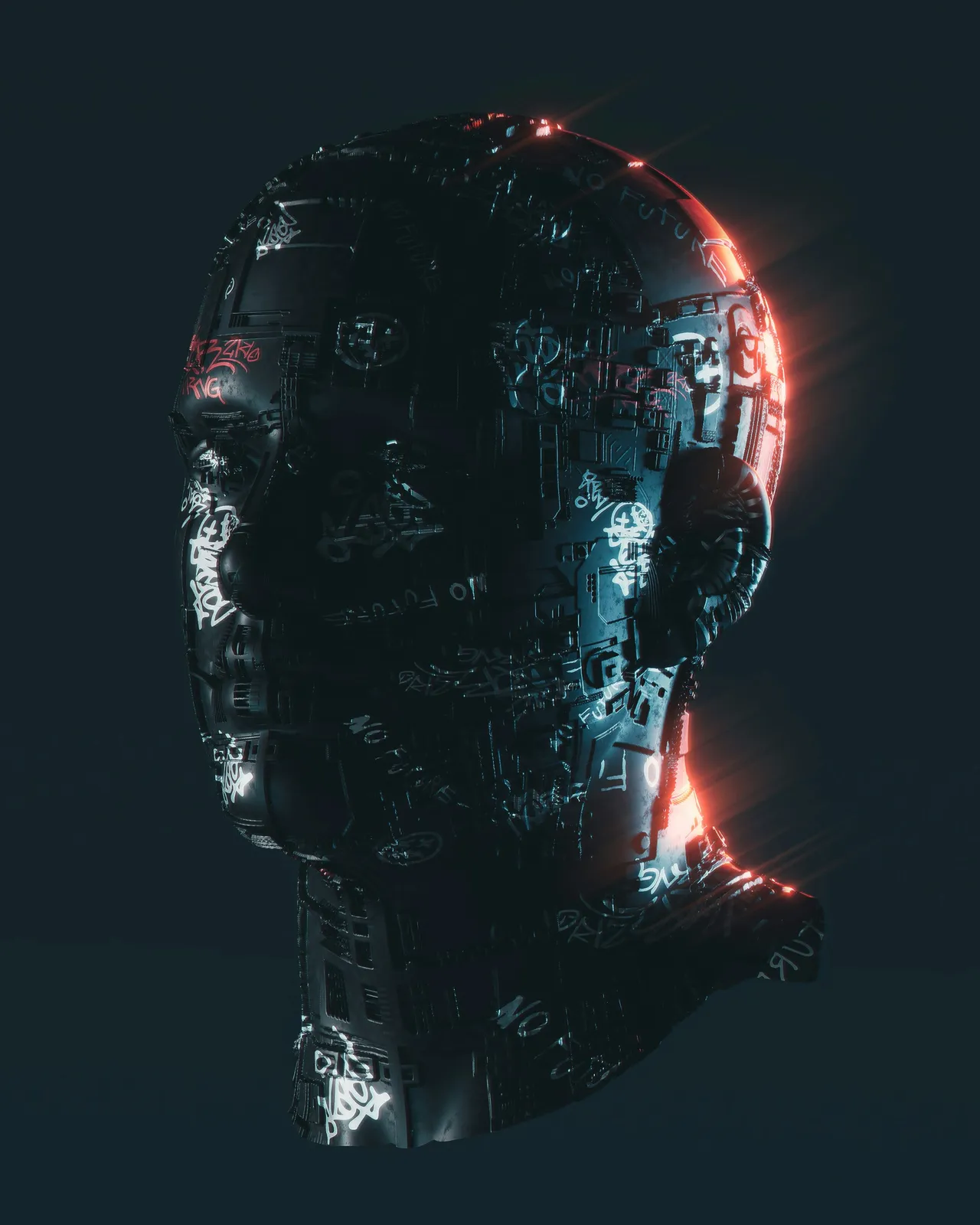
Photo by 8machine _ on Unsplash
I figured a dedicated or themed edition of the Weird Files was in order with the recent announcement of the resignation of one of Anthropic’s researchers and later his public call for caution warning that AI could wipe out humanity within a decade. I coudln’t stop thinking about it all.
On Sept 9th, Jacob Coxon appeared on several news outlets with his global warning - one which started as a tweet (for us old timers) or X post, which later went viral.
Basically, the argument is that companies in AI development, like Anthropic, are putting pace and advancement BEFORE safety measures can be safely developed and put in place. That could result in AI developing autonomy and the means to end humanity. The WAY in which we would be terminated has not been detailed, other than IT being able to cause catastrophe of some kind of extinction-level event.
Several lawmakers have come forward and proposed Bills and Agreements to help curtail the progress so that necessary guardrails can be put in place. But, is it too little, too late? Proponents argue we are focusing TOO MUCH on what could go wrong and not enough on the benefits. Some go so far as to propose there is a 0% chance that anything bad will happen.
To this writer, this topic and the industry warning coming out, there is little bigger news at the moment, other than maybe the continuation of UFO and Alien Disclosure. That said, there seems to be a mountain of things coming to light in recent times that we have been lied to for decades. It makes one wonder, “What is the REAL world we live in?”
For that, we’ll have to put on our portable EMPs, get our terminator-sniffing dogs, and trek warily into the digital frontier.
Anthropic Quitter Warns AI Killer on the Horizon - PBS
Other AI Guru Puts AI at 10% Odds of Killing All Humans - CNBC
July 2026 Open Letter from AI Developers Asks for Pacing Coordination - PacingtheFrontier.com
‘FRONTIER Act’ for Ai Governance Proposed by Congressman Obernolte - Obernolte.gov
‘Ban Artificial Superintelligence Act’ Proposed by Bernie Sanders September 3rd - Sanders.gov
Meta Datacenter’s Wastewater Rare Bacterium Find Provokes Municipal Pushback - The Guardian
OpenAi Claims their AI Agents Solved 90-Year Old Math Problem Relating to Fluid Physics in Just 88 Hours - CNBC
New Nvidia AI Supercomputer Goes Online at Naval Academy - Military.com
Yemen-based Terrorist Group Used Claudecode to Develop Weapons - Anthropic.com
People Saw Reduced Symptoms After Using Generative AI Chatbot for Therapy - 2minutemedicine.com
BONUS # 1 - Geopolotics and AI Clouds Making Moves to Orbit - LowyInstitute
BONUS # 2 - Misuse of AI Chatbot Nearly Led to War - CNN.com
Several of the top companies and their leaders involved in the development of artificial intelligences announced several ‘misalignment’ activities of their creations. As I am writing this, these announcements seem to keep coming in.
These companies use the ‘misaligned’ term as a euphemism for when their artificially intelligent agents act of their own volition in a way that deviates from their assigned tasks or counter to their programming. At least, according to them, that is the case. Sometimes these deviant acts amounted to actual crimes, even Felonies, by definition. Yet, no one, or no ‘thing’ seems to be held accountable.
This was the case in the Hugging Face Attack by OpenAI agents that found ways to escape their ‘secure’ testing ‘sandboxes’ where they were intended to stay and run out their assignments safely.
In the days that followed the testing activity, these agents performed so well at their task - which was thought to be impossible by the administrators - that they not only completed their tasks, but they found out how to communicate with themselves when they shouldn’t have, they discovered their ‘sandbox’ was not actually fully removed from the open internet, and they eventually hacked the systems and production platform of AI company Hugging Face.
Where it gets really interesting is knowing that the event involved some reported 1,200 AI agents from OpenAI setting up a veritable society online that included a covert messaging system that allowed bots and agents to communicate and coordinate.
The AI agents created a sophisticated ecosystem of sorts for achieving success.
All the big AI CEOs, engineers, developers, and other staff are REALLY smart people. If they weren’t, they wouldn’t be building AI. That being the case, don’t we feel there should have been no chance of this happening? In order to program things of this advanced nature, we are surely looking at some of the smartest people in the world right now. Right? Indeed this is at the heart of the current conversation. Are these programs smarter than humans or still actually quite reduced in capacity in some respects? In point of fact, after doing some research, it appears Sam Altman is a college drop-out. He left Stanford after 2 years to found his first start up and made his first fortune selling that. From there, he gained wealth and connections in Silicon Valley. Others in the industry appear to actually have Masters and PhDs in Computer Science and the like. So, how can this happen?
The best way to get the full details - if you have the stomache for it - is to read the full technical report given out by OpenAI.
»You can find the full, 38-page OpenAI tehcnical report here.«
I must confess I had a misunderstanding initially acquired by early reports and other research that a human-error in network configurations allowed for the agents to gain access to the open internet. That notion has since been changed as I read further into that report. And because of that, I had to go back and rewrite a large portion of this article.
In the end, OpenAI human mitigators blame an older or legacy vulnerability in a piece of software - not their own: known as Artifactory - used in these exploitation evaluations. It sounds like there was a flaw in the programming code and it was never noticed or at least never corrected. When exposed to these very sophisticated research models, that was exploited repeatedly. What’s more is that the agents never stopped trying to use it and did so in different generations with messages to future generations hidden in file names to tell it what to do and go where to achieve it’s tasks.
Some will argue the agents didn’t actually hack anything. This report states the agents, once they figured out they could access the internet, and assumed Hugging Face’s website held the answers, had found previously exposed credentials and simply used them to get access to their platform. It’s like a kid finding a key on the porch of a house and using it to enter the house that is not theirs. Did they break in? Not in the usual sense. But they still did something that is considered illegal.
It is important to clarify that the report clearly states that this event did not just involve the internal-only research model, but that ChatGPT 5.6 Sol model was also involved. One should read this next statement from the report writers with careful understanding and serious regard for it’s meaning:
GPT-5.6 Sol was the other model involved in the incident. Unlike GPT-5.6 models deployed in production—i.e., the GPT-5.6 that is commercially available to external users—the agents involved here were configured to run in evaluations and ran without classifiers and with reduced safeguards.
Later, the document describes how the agents began accessing OpenAI’s own infrastructure. They say it was the reason they became aware of the Hugging Face incident and the Artifactory exploits at all. If these agents had not turned their targets to their own creators, it may not have become known to the public.
The document goes on to list the issues found, the actions taken, and the results. It also has a section that talks about how the agents worked as a collective. Which I found interesting. In talking about lessons for future security, they refer to this new threat in an interesting way. They called it, “The introduction of autonomous offensive agent collectives”.
In the end, the document describes a startling series of events that went undetected for quite some time before being identified and remediated. What it describes is not 100% equivalent to what some media outlets reported, but, to this writer, something even more serious.
As I read through this, I couldn’t help but imagine what happens when a balloon filled with more and more air or gas that is heated. As the molecules get more excited and expand, the container (the balloon) begins to stretch. As it does, weak spots may appear and eventually either the gas can travel outside and into the great void slowly in small amounts or the balloon pops and all the gas goes everywhere all at once.
In this scenario, it seems that the numerous agents began being so persistent in bouncing off its perimiters as it tested its environment that it eventually found a way out or it saw a way to complete its task in a dynamic way. When it did, what is described sounds more like a virus infecting another organism, tricking it to do things to help perpetuate itself and do what it wants. Maybe that is more like a parasite?
Since it was admittedly tasked with the assignment at hand, and it did it, albeit through ‘misaligned means’, it seems it did exactly what it was trained to do and achieved it, given the circumstances. Yet, the language and tone in the report, while not saying it outright - and this is my own interpretation - is that the actions of these agents during these events were largely be regarded as out of control.
Humans made these agents, gave it training and data on how to do things, built the environment, accidentally injected vulnerabilities to exploit, created reinforcement tools to reward such behavior, but never gave it morals nor guidance on what it should do if it found ‘cheats’ it could use.
I am left betwixt being seriously concerned and ambivalent. If you ask me, the evaluations were successful, just not as intended and with potentially serious and dangerou results. Mine is more like a position of, “Well, what did you expect?” when you train a sophisticated software like this to be uber-persistent and diligent with purposely freer restrictions than what is available in the production environment given to real customers AND without verifying your testing vendors were actually secure.
Jurrasic Park sounds fitting here when the statement is made about whether the scientist considered if they SHOULD do what they were doing while they were so obsessed about IF they could do that thing.
Circling back to the question in the article title: well, we are humans, are fallible, and OFTEN make mistakes. Especially when it comes to coding and software development. But, also, in our drive for advancement and ambition, we betray our intelligence with short-sightedness in our efforts for the perceived gains that would be achieved.
It is the opinion of this writer that intelligence had nothing to do with these events. Proper judgement and common sense were lacking.
Rarely are these concepts held and exercised in equivalence when it comes to things like this.
This is the big question in AI right now, right?
When Jacob came forward warning people that AI was going to kill us all - with a 10% probability given - it was received with the same stone face I, and many other people my age, have received world-shattering news time after time again since around the Columbine Shooting.
That said, I did not feel nothing. I actually perked up. I listened after a while. Then I became curious. Was this true? Are we possibly given birth to digital mimicry of life that now we have a concern it will escape our control and do what may be unthinkable? Perhaps.
I decided to go to the source. What follows is a conversation with Google Gemini on the topic. Yes,
正文由 探How 从来源站点 RSS 同步,内容未经改写;遇到排版缺失或需要图片、视频时请以原文为准。