SpaceX's Starship goes orbital, deploying first next-gen Starlinks
Starship had already flown 99 percent of the way to low-Earth orbit. Monday's flight added the last bit.
以下正文同步自 Ars Technica,版权归原站所有,已转换为易读排版。
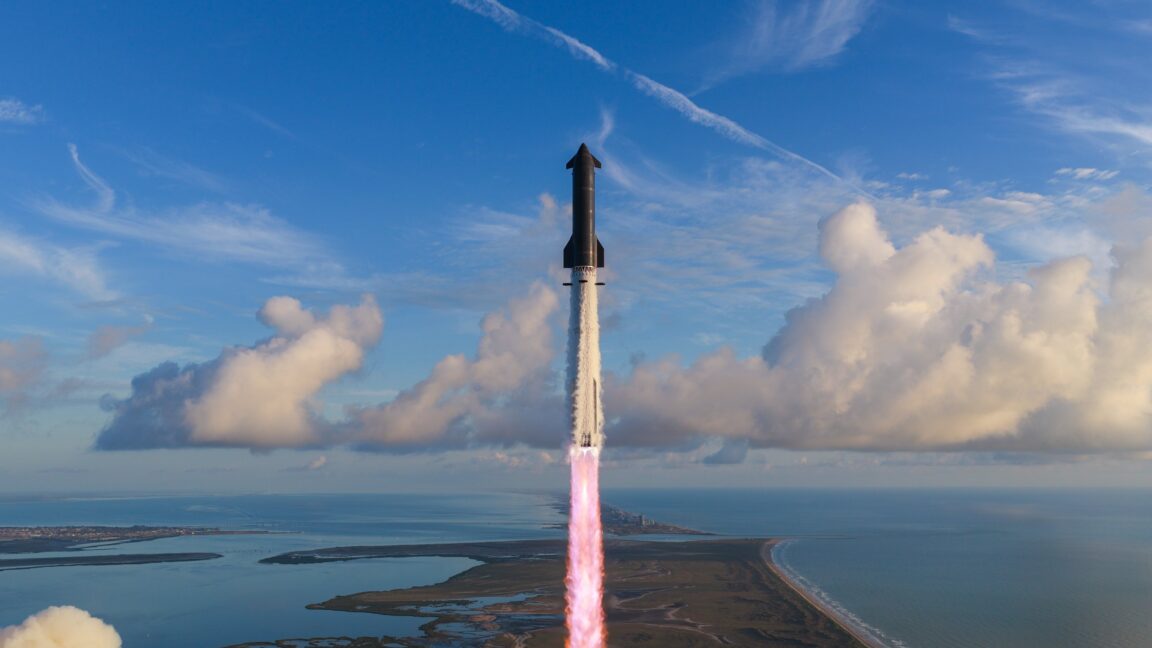
SpaceX's Starship rocket thundered into the sky over South Texas early Monday. It was the 14th test flight of the world's most powerful launch vehicle. This time, however, the rocket's massive upper stage squeezed out some extra oomph from its Raptor engines and accelerated to orbital velocity. On all of Starship's previous flights, SpaceX intentionally dialed back the full capability of the rocket to fly a suborbital trajectory, slow enough for Earth's gravity to pull the vehicle back into the atmosphere before it could complete a full lap around the planet. After several successful suborbital flights in a row, SpaceX officials decided this launch should go all the way to low-Earth orbit. And it did. What's more, SpaceX packed 26 of the company's newest generation of Starlink broadband satellites into the rocket's cargo bay. One by one, the flat-packed satellites—too large to fit inside SpaceX's workhorse Falcon 9 rocket—were released from Starship's payload deployer using a system of pulleys and cables to eject the satellites overboard like a Pez dispenser spits out candy. Read full article Comments
正文由 探How 从来源站点 RSS 同步,内容未经改写;遇到排版缺失或需要图片、视频时请以原文为准。