Supercapacitor cement is key to buildings that store their own power
Supercapacitor cement is key to buildings that store their own power
以下正文同步自 Hacker News 最新,版权归原站所有,已转换为易读排版。
Supercapacitor cement is key to buildings that store their own power
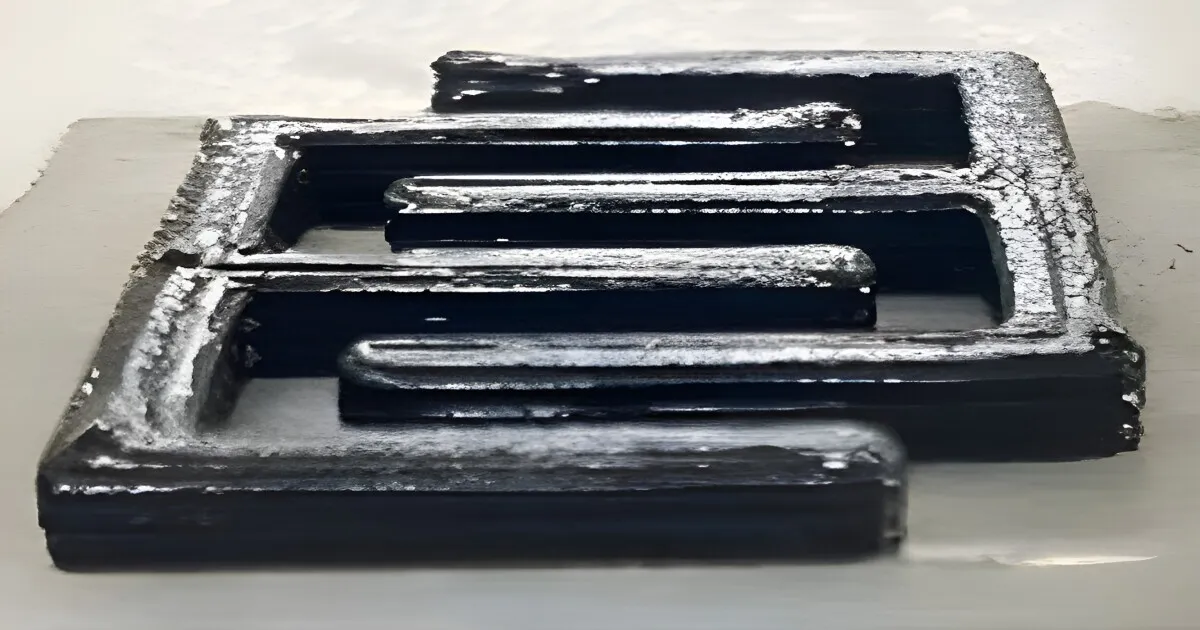
The 3D-printed cement-based supercapacitor, which is claimed to have a compressive strength similar to that of conventional concrete slabs utilized in the construction industry
Adapted from ACS Nano 2026, DOI: 10.1021/acsnano.6c09927
View 1 Image
1/1
The 3D-printed cement-based supercapacitor, which is claimed to have a compressive strength similar to that of conventional concrete slabs utilized in the construction industry
Adapted from ACS Nano 2026, DOI: 10.1021/acsnano.6c09927
In the not-too-distant future, a building's emergency lighting, fire alarms, sensors and other features could be powered not by fuel-burning generators or bulky battery packs, but by the actual material that the structure is already made of. That's because scientists have developed an experimental cement-based supercapacitor.
First of all, just what is the difference between batteries and supercapacitors? Well, whereas batteries utilize chemical reactions to store energy, supercapacitors do so electrostatically.
In practical terms, the result is that batteries have a much higher energy density than supercapacitors – plus they can store their charge for much longer periods of time – but supercapacitors have much faster charging and discharging speeds. The latter comes in handy when quick, powerful bursts of energy are required.
Additionally, supercapacitors last for many more charge/discharge cycles than batteries.
With these selling points in mind, a team of scientists from the Harbin Institute of Technology and the Chinese Academy of Sciences set out to develop a cement-based supercapacitor.
Paralleling research conducted by MIT, they started by combining carbon nanotubes, carbon black, and cement to form a printable electrode ink. Utilizing a 3D printer, that ink was then printed onto a small slab of concrete, in a pattern resembling interlocked fingers. When that ink was subsequently hydrated, its pores filled with water, allowing charged ions to easily travel between the printed electrodes.
When three of the supercapacitors were printed onto one slab and wired together, they were able to power a small array of LEDs. And although the device did function under moderate temperatures, it ceased to operate when the temperature dropped to about 0 ºF (-18 ºC). Future research will focus on improving cold-weather performance.
For its part, the cement itself was found to have a compressive strength comparable to that of commercial concrete commonly utilized in slabs and stairs.
And because supercapacitors do not hold a charge for very long, it is envisioned that the cement-based supercapacitor could be wired to a solar panel or some other renewable energy source, which would continuously keep it charged up and ready to go.
"If building materials could not only support structures but also store energy, sense their surroundings, and even interact with people, buildings would become more than passive shelters," says the Harbin Institute of Technology's Prof. Jing Zhong, corresponding author of the study. "They could become truly smart environments."
A paper on the research was recently published in the journal ACS Nano.
正文由 探How 从来源站点 RSS 同步,内容未经改写;遇到排版缺失或需要图片、视频时请以原文为准。