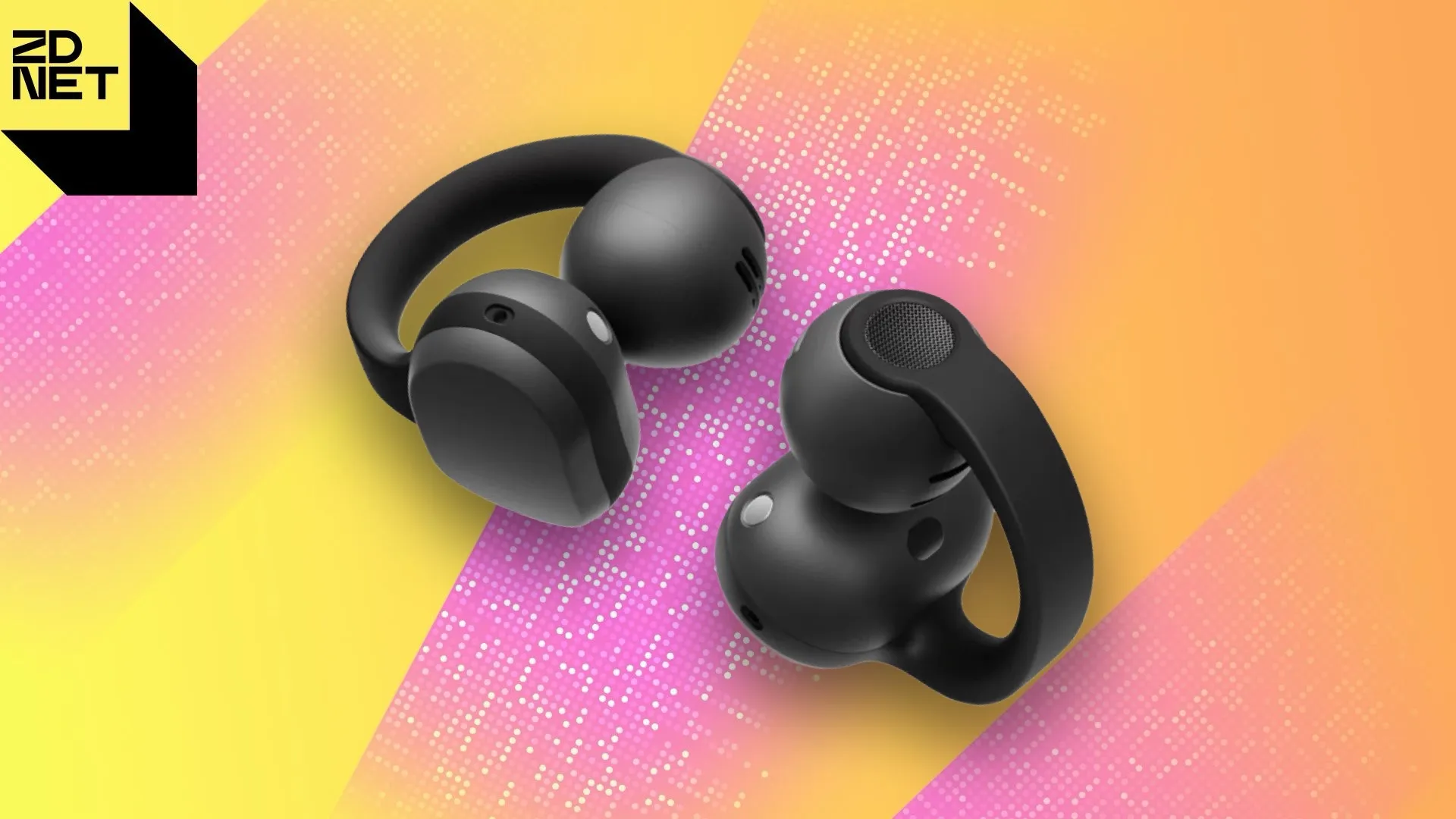
Samsung’s new clip-style Galaxy Buds On have a major advantage over Sony and Bose
Advanced audio features are great, but ecosystem integration is better. Here’s how Samsung’s newest clip-on Buds compare to its rivals.
以下正文同步自 ZDNet AI,版权归原站所有,已转换为易读排版。
Advanced audio features are great, but ecosystem integration is better. Here's how Samsung's newest clip-on Buds compare to its rivals.
Read full bio
October 28, 2026, 11:09 am ET
Samsung/ZDNET
ZDNET’s key takeaways
Samsung’s Galaxy Buds On debut in the US.
They’re fitted with advanced AI and connectivity features.
Samsung is capitalizing on a shift toward clip-style earbuds in the US.
Samsung’s new Galaxy Buds On may be about to take open-ear earbuds beyond a music-playing vessel for the hyper-aware listener. With smart features like summoning Gemini Live chats and accepting or declining calls via Head Gestures, Samsung’s clip-style buds are actually smart, and competitors will need to take note.
Also: We put 8 pairs of earbuds to the test in our lab – this pair won best ANC
The Galaxy Buds On are built for the Galaxy ecosystem, with features like Head Gestures, Quick Voice Memo, and Auto Volume reserved for Samsung phones running up-to-date One UI and compatible with Galaxy AI. Samsung released the Galaxy Buds On in Korea earlier this month and announced their US availability on Wednesday for $229, beginning in early November.
The Galaxy Buds On feature two of Samsung’s proprietary Bluetooth codecs: SSC and SSC UHQ, which deliver audio quality up to 24-bit/48kHz and 24-bit/96kHz, respectively, when connected to compatible Galaxy devices.
Samsung’s new clip-style earbuds promise up to nine-and-a-half hours of continuous playtime, and their charging case promises an additional 38 hours. Samsung also fitted the Galaxy Buds On with Bluetooth 6.2, which may set them up for future Channel Sounding support via a firmware update.
Also: Your Bose headphones are getting a major Bluetooth upgrade
Finally, the Galaxy Buds On sport an IP54 durability rating, making them dust and water protected, not waterproof. So, you can take the Galaxy Buds On with you on a brisk walk in light rain or wear them during a particularly sweaty workout, but they’re not fit for water submersion.
Samsung’s clip-style earbuds’ durability rating is stronger than Bose’s Ultra Open Earbuds (2nd Gen), which sport an IPX4 rating, meaning Bose’s buds weren’t tested for dust ingress but offer as much water protection as Samsung’s.
However, Shokz’s clip-style Open Dots 2 have an IP57 rating, offering the same level of dust protection as the Galaxy Buds On, but their stronger water protection makes them waterproof.
Also: Frustrated with your Bluetooth? How multipoint works – and why it sometimes won’t
Still, one thing Samsung has over all of its competitors is access to an ecosystem, which allows the Galaxy Buds On to be smarter than their counterparts from Sony, Shokz, or Bose. Given that Samsung controls its hardware and software ecosystem, it can grant the Galaxy Buds On unique access to AI-powered features, making the earbuds a stronger asset to one’s device ecosystem.
You’ll find features similar to Samsung’s Audio Leakage Reduction, Intelligent Clear Call, and Voice Pickup Unit in many premium open-ear earbuds, but these earbuds’ real strength is that they operate like the flagship Galaxy Buds 4 Pro without the intrusive in-ear design.
Samsung releasing the Galaxy Buds On in Korea before the US isn’t surprising; not only is Korea its home country, but Asian consumers took to open-ear earbuds — especially the clip-on variety — long before American consumers. Many open-ear earbuds made by Asian manufacturers for domestic markets already have smart features, such as AI-powered live translation and note-taking.
Also: How I share audio from my Android phone to multiple earbuds
There are two reasons why American consumers seem so far behind in this tech category: the heavy hitters are banned or scaling back in US markets, and use cases vary across cultures. Asian tech giants like Xiaomi, Huawei, and Oppo face bans and market troubles in the US and often focus on high-value local markets instead. Plus, Asian consumers exhibit greater demand for fashion-forward clip-style earbuds, such as the Moto Buds Loop, which are available in the US, while Americans seem more interested in earbuds for exercise features.
However, there’s a market in the US for clip-style earbuds suited for exercise that offer advanced, everyday, useful features, and Samsung is taking advantage of the opportunity.
Log In to Comment
Log Out
Community Guidelines
Please accept cookies to view the comments powered by Disqus.
正文由 探How 从来源站点 RSS 同步,内容未经改写;遇到排版缺失或需要图片、视频时请以原文为准。