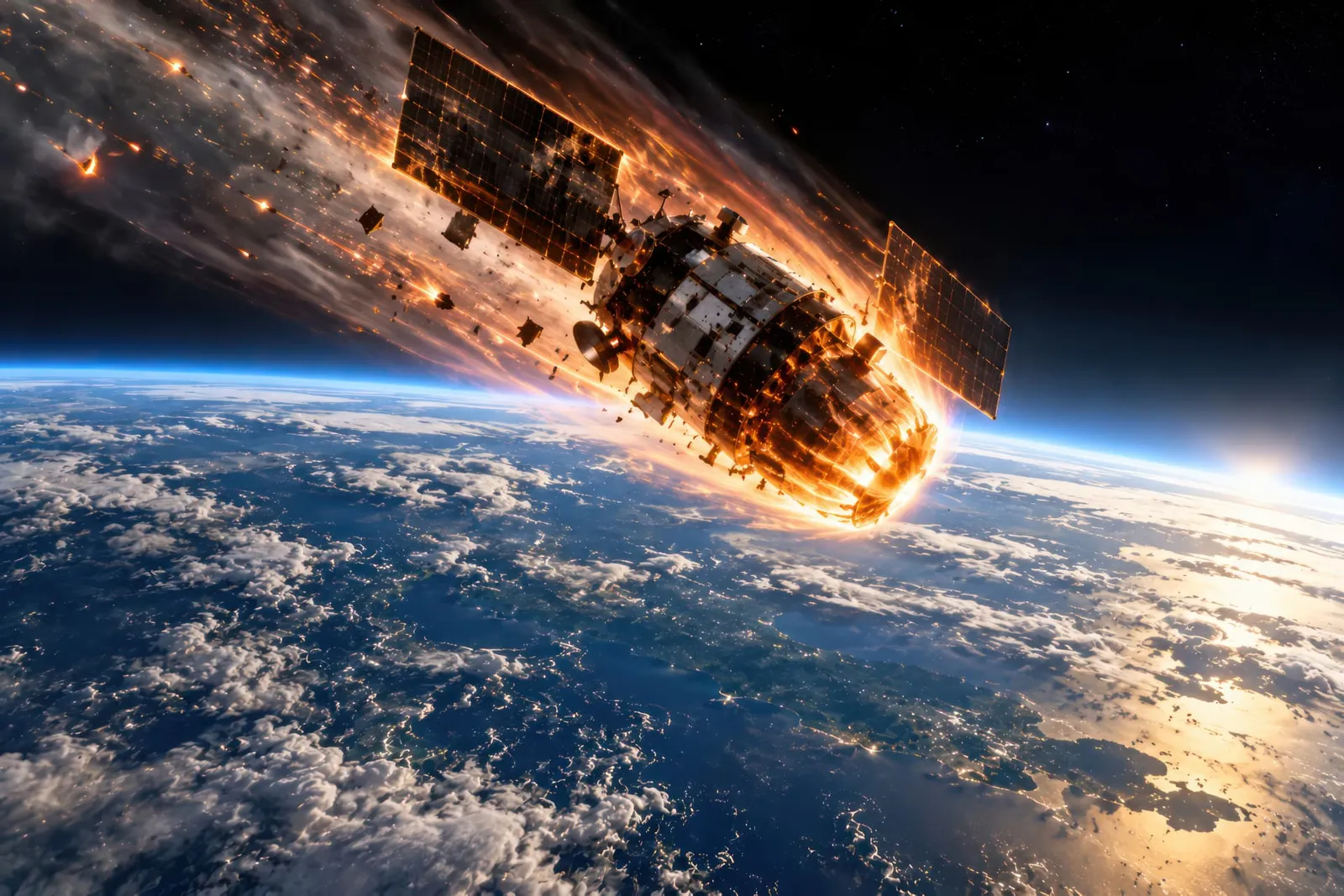
We are raining spacecraft into the ocean
We built an elaborate body of law for what falls into the ocean. Then we started raining spacecraft into it.
以下正文同步自 Hacker News 最新,版权归原站所有,已转换为易读排版。
We built an elaborate body of law for what falls into the ocean. Then we started raining spacecraft into it.
WatchWelcome to Point NemoListenAudio VersionTranslate
Adobe Stock CGI.
Somewhere in the South Pacific, at 48°52.6′ south, 123°23.6′ west, a point on the ocean’s surface lies farther from dry land than any other point on Earth. Sailors call it Point Nemo, after Jules Verne’s fictional captain, a man who went to sea specifically to escape the reach of law. The name fits for a second reason nobody planned.
Since 1971, nearly 300 dead spacecraft have come down in the waters around it. Russian engineers have nicknamed it the Spacecraft Cemetery. Mir is down there. So are dozens of Progress cargo haulers (uncrewed Russian spacecraft used to deliver food, fuel, water, and supplies to space stations), European and Japanese resupply vehicles, and debris from a half-century of orbital housekeeping. If the plan holds, the International Space Station will join them in 2031: adding the remnants of the four-hundred-ton, quarter-century-old structure, deliberately broken apart by yet another purpose-built space vehicle and scattered across thousands of square miles of open water where the ocean is 2.5 miles deep.
Mark J. Spalding is the President & CEO of The Ocean Foundation.
FacebookXRedditBlueskyCopy link
Recommended stories
EarthThe Pond Keeper's Problem
From Honolulu to Boston, knowing what the water is doing at one particular place.
David Gruber wants to know what sperm whales are saying. He thinks it might actually be possible.
The quest to bridge the greatest language barrier on Earth.
正文由 探How 从来源站点 RSS 同步,内容未经改写;遇到排版缺失或需要图片、视频时请以原文为准。