Computer Chips Are the Most Magnificent Things Humanity Has Ever Made
This strikes almost all of us as ridiculous. A microchip is a bauble of metal and refined sand. It doesn’t appear to have epic proportions. Upon close examination, however, the epic proportions are there in miniature. I…
以下正文同步自 Hacker News 最新,版权归原站所有,已转换为易读排版。
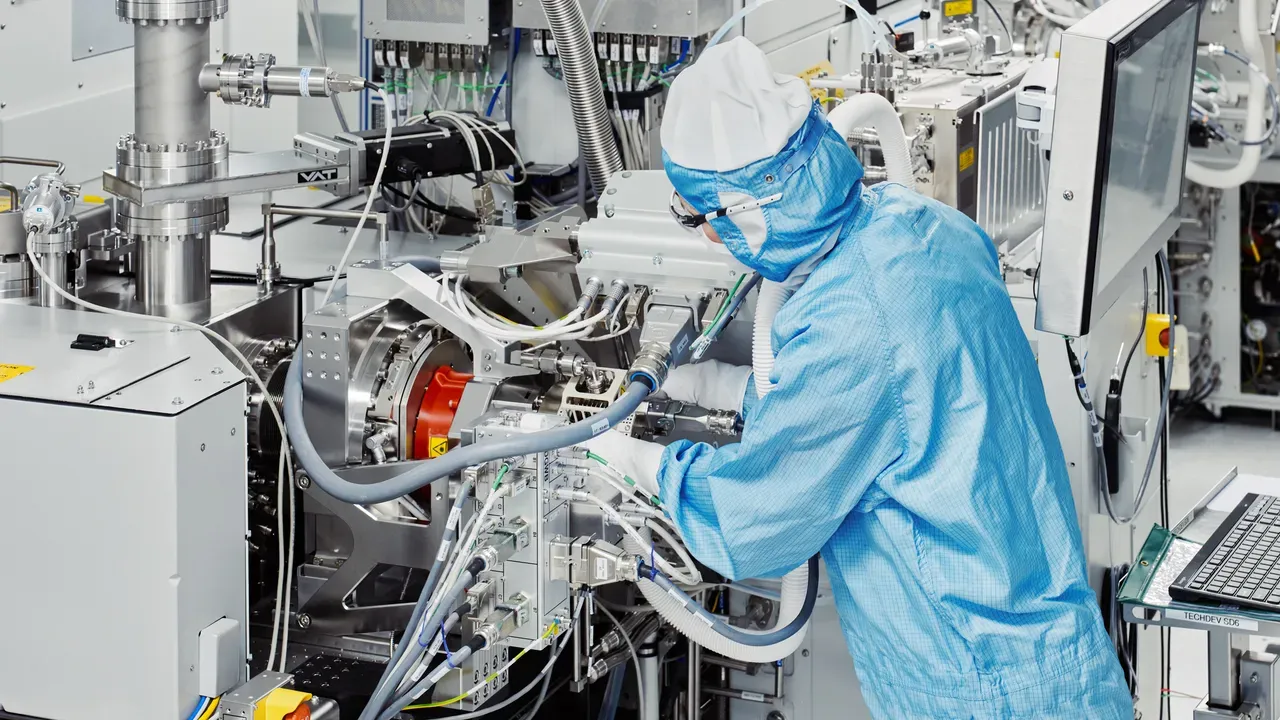
This strikes almost all of us as ridiculous. A microchip is a bauble of metal and refined sand. It doesn’t appear to have epic proportions. Upon close examination, however, the epic proportions are there in miniature. Imagine a perfect replica of a sprawling metropolis, a Tokyo or a São Paulo, engraved at atomic dimensions on a tile the size of a fingernail. The urban details would be faithfully rendered to the last golf ball or egg—each reduced to approximately the bulk of a hemoglobin molecule, or the distance grown by a human fingernail every five seconds. If a chip were merely a sculpture, this chiselling would represent a considerable achievement. But a chip is, in fact, a functional city for a population of busy electrons. They buzz about, flying our airplanes, powering the stock market, and, increasingly, thinking on our behalf. Unlike rockets, which are produced in relatively meagre quantities, microchips are stamped out by the billion. This is the most impressive thing about them. Or, maybe, about us. Microchips are mass-produced, like any tchotchke, at factories. Most of these factories, and the best of them, were once situated in the United States. By the nineteen-eighties, that began to change. American semiconductor firms were threatened by the emergence of Japanese rivals. Our domestic industry petitioned the government to intervene. Economists shrugged. The consensus at the time was in favor of free trade. If a good could be inexpensively produced elsewhere, everyone benefitted. American consumers deserved bargains on digital watches, pocket calculators, and primitive computers. The most legendary, if apocryphal, expression of this attitude was credited to a George H. W. Bush Administration factotum: “Potato chips, computer chips, what’s the difference? They’re all chips.” This wasn’t entirely a joke. A columnist for the Los Angeles Times pointed out that the largest domestic chipmaker, Intel, was “roughly the same size as PepsiCo’s Frito-Lay Inc. subsidiary, the largest potato chip maker.” (An executive at Utz got defensive, complaining that “there’s quite a bit of technology in modern potato chip manufacturing.”) Widgets were widgets, was the point. If we didn’t care about where salt-and-vinegar chips came from, why should we care about their silicon-flavored cousins? Today, we very much care. Chips are the foundation of A.I., among other things, and A.I. is propping up our entire economy. The most valuable company in the world is the chip designer Nvidia. Last year, the company’s stock single-handedly accounted for about fifteen cents of every dollar returned by the S. & P. 500. From an economic perspective, the problem with chips nowadays is that there are never enough. A car might contain two thousand of them. When the pandemic caused supply-chain issues, automotive manufacturers found that they’d neglected to reserve a sufficient number. The government pressured chipmakers to reprioritize order fulfillment, safeguarding the birthright of Americans to buy new trucks. The chips that make Claude and ChatGPT talk are more specialized than those in a Chevy, and the chip industry has responded by reallocating its resources to these product lines. If basic chips grow scarce, it will not be long before the average homeowner cannot afford a dishwasher, let alone a phone. If the A.I. backlash seems fervent now, just wait until the dishes pile up. But the financial interests pale in comparison with the geopolitical ones. The vast preponderance of the world’s most advanced chips are made in Taiwan, a tropical island best known in America for its bubble tea, the Din Tai Fung restaurant chain, and its tense proximity to a superpower that regards it not as an independent nation but as a temporarily lost belonging. The prospect of a Chinese invasion has long loomed over Taiwan’s horizon. If China were to invade, or even throw up a naval blockade, life as we know it would continue for about the time it takes to manufacture a chip—a season or two. Then the inventory would thin out. The sticker price of an iPhone might be confused with that of a luxury watch. Not that anyone would care. Stocks of Wi-Fi routers, insulin pumps, pacemakers, and credit-card readers, along with cars and dishwashers, would dwindle and perhaps vanish. Tech equities—for all intents and purposes, the stock market itself—wouldn’t be worth the paper they’re printed on. Bloomberg Economics has estimated that just the first year of a war over Taiwan could cost the world economy $10.6 trillion, or roughly a tenth of global G.D.P. Pat Gelsinger, a former C.E.O. of Intel, said to me, “You think the closure of the Strait of Hormuz was frightening? That was trivial. It’s twenty per cent of the oil. Taiwan is eighty per cent of the supply chain of the world. A three-week brownout there would have a larger economic impact than the Great Depression.” At stake, in a longer term that might not be so long, is the global balance of power. Chinese chipmakers remain about five years, if not more, behind their Western counterparts. Should American A.I. companies find themselves restricted to alternative outputs—to the small fraction of suitable chips produced in Korea or at home—our current lead in the arms race would almost instantly totter. It might not be the worst thing if our college students resumed writing their own essays. But a lack of chips might also spell the end of our military advantage. As a result, Washington has recently come around to the idea that the provenance of semiconductors matters more than the provenance of Pringles. A nostalgic consensus has emerged in favor of their domestic production. To a casual observer, the construction of a chip factory might seem straightforward: you buy some land and throw some money at a contractor to build a huge room to house some machines. It is, alas, not so simple. Taiwan Semiconductor Manufacturing Company, or T.S.M.C., makes almost all of the world’s advanced chips, and has a market capitalization of around two trillion dollars. Of the ten most valuable companies globally, it is one of only two that are not American tech giants. (The other is Saudi Aramco.) Unlike T.S.M.C.’s peers—household names such as Apple, Google, and Amazon—the company has never cultivated much of a public-facing brand identity. Its fabs, as the factories are called, are only begrudgingly opened to clients, and even they are afforded a look only at their own production lines. The extreme reticence is by design. Some of the chip designs that the company executes, like those which animate an iPhone or a Mac, are inestimably precious trade secrets. Others, like the patterns for Nvidia’s top of the line, are treated like national-security assets, and are subject to American export controls. T.S.M.C. is headquartered in the Hsinchu Science Park, a manicured enclave on the outskirts of a coastal city about an hour from Taipei. Its hulking fabs are neither hardened nor hidden. Some of them have panoramic views of white windmills, which dot the coastline of the Taiwan Strait like slender sentries. China lies a hundred miles or so over the water. The corporate nerve center is clad in the company palette of muted grays and bright-red accents. When I first approached the lobby, just before seven o’clock one humid morning in June, a maintenance man was showcasing the firm’s attention to detail. He stood knee-high in a decorative pond, carefully pushing a waterlogged broom along its floor to sweep away invisible dirt from between elevated plinths bedecked in artificial roses. The interior décor consisted in its entirety of an oil portrait of Morris Chang, the company’s founder. He appeared with his signature pipe, in an untidy study surrounded by piles of books and lit by a luminous silicon wafer. A senior receptionist stood stern and unblinking behind an enormous desk, presiding over narrow entry turnstiles. Various items are prohibited across the complex, including phones, smartwatches, recording devices, and, curiously, blank double-sided pieces of printer paper. Given that I had yet to proceed beyond the lobby, I ventured to ask permission to photograph the painting. The answer was an immediate, polite, and decisive no. After the war, at Bell Labs, the physicist William Shockley and two colleagues invented a switch that was smaller, faster, and didn’t explode. The transistor, as it was called, exploited the peculiar disposition of a kind of element known as a semiconductor: it could be flipped on to conduct electricity, the way a metal would, and it could be turned off to block the current, like glass. The little gizmo earned its inventors a Nobel Prize and almost immediately improved lives. The portable transistor radio, which appeared just in time for Christmas in 1954, became a consumer blockbuster. The computers of the future would no longer need to be enormous things that caught on fire. Their potential seemed limitless. There was, however, a devilish obstacle. Computing relies on circuits, or transistors that have been wired together with other electrical components. The cleverness of a circuit depends on two factors: how many transistors it contains and how densely they are interconnected. Transistors, unlike light bulbs, could be added to circuit designs in promiscuous quantities. Unfortunately, they still needed to be soldered together by hand. This process took time and money and tended to be flaky. One little miswiring could ruin everything. As circuits got larger, the difficulty of the interconnective task increased exponentially. This was called the “tyranny of numbers,” and it was demoralizing. By the nineteen-fifties, we knew that getting to the moon would require computer guidance. A circuit that could do it, with ten million components, could be sketched on paper. But no one could actually build it. In the winter of 1958, two men independently figured out how these paper circuits could be made flesh. The old method assembled circuits from individual transistors, as if a jumble of disconnected body parts were stitched together. The new method took a monolithic piece of semiconducting material, as if it were a block of marble, and carved a figure out of it. Had the initial choice for substrate prevailed, the patch of cherry orchards around Palo Alto would be called Germanium Valley. The origin story of Silicon Valley contains two contradictions. The first is about where it happened. One of its godfathers, Jack Kilby, was based not in California but in Dallas, at Texas Instruments. Silicon Valley was an idea, not a place. The second relates to the role of competition in innovation. The other godfather, Robert Noyce, began his career under Shockley, the transistor pioneer (and famed scientific racist). Fed up with Shockley’s managerial despotism, Noyce—along with seven colleagues, who became known as the Traitorous Eight—defected to found a rival firm, Fairchild Semiconductor, and then defected again to found Intel. In the ensuing decade, lawyers at Texas Instruments and at Fairchild fought a bitter court battle over the patent. Subsequent generations of founders drew from these tales the moral lesson that every great company originates in betrayal and is sustained by combat. In fact, this wasn’t at all how Kilby and Noyce felt. They cared more about solutions than about heroics, and were delighted to share the credit. The first integrated circuits on the market were compact, trustworthy, and completely unaffordable. The only plausible customer was the one organization with the desire and the budget to pursue an irrationally difficult goal at any cost: the federal government. For the nascent chipmakers, the military-industrial complex was a godsend. Aerospace and defense contracts paid for the capital-intensive installation of a manufacturing base. But executives chafed at the limitations of Washington’s monopsony: their engineers didn’t like answering to bureaucratic brass;
正文由 探How 从来源站点 RSS 同步,内容未经改写;遇到排版缺失或需要图片、视频时请以原文为准。