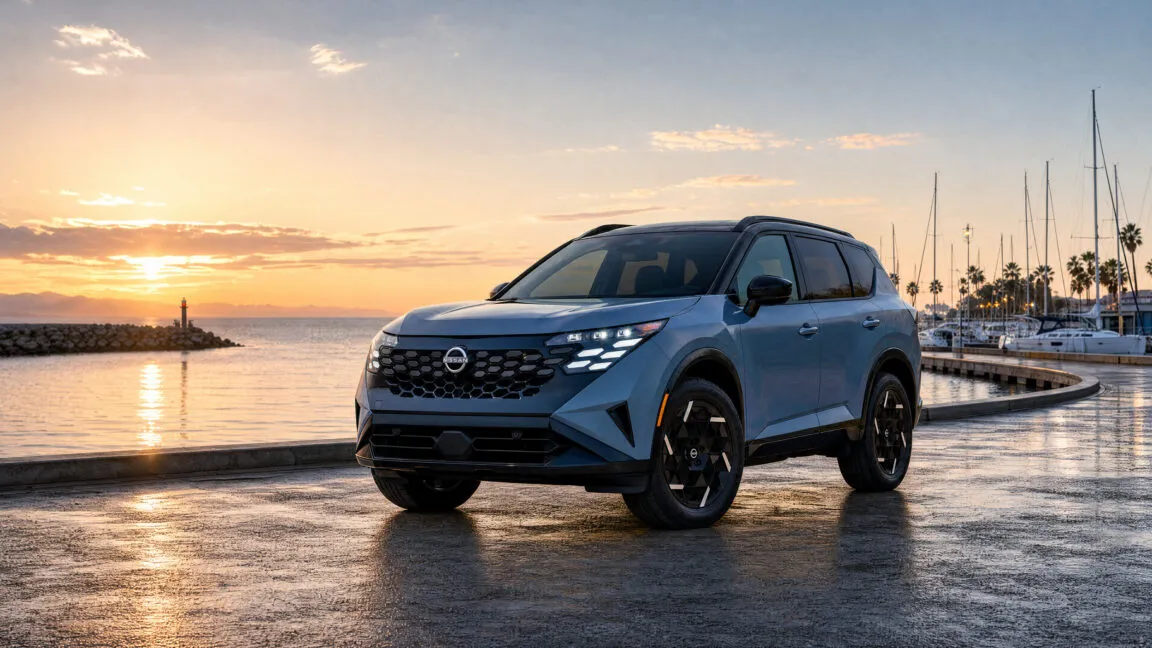
2027 Nissan Rogue Hybrid: Drives like an EV, but there's no plug involved
Nissan’s series hybrid e-Power system has been retuned for American roads.
以下正文同步自 Ars Technica,版权归原站所有,已转换为易读排版。
Nissan provided flights from Washington, DC, to Santa Barbara, California, and accommodation so Ars could drive the Rogue Hybrid. Ars does not accept paid editorial content. Nissan has a new version of its best-selling Rogue SUV, and it’s launching the model here with the latest version of its e-Power hybrid system, which Ars tested back in February. Most of the hybrid cars you can buy today are parallel hybrids, which means that they have an internal combustion engine and an electric motor, both of which drive some or all of the wheels—everything works in parallel. But there’s another approach. Instead of connecting the engine to the wheels via a transmission, it can act as a generator and charge the traction battery, which in turn powers the electric motor. Since the engine and motor work in series, this is known as a series hybrid. That’s mostly how the Chevrolet Volt worked. As does Honda’s hybrid CR-V. Well, mostly; engineers worked out it was more efficient for those cars' gasoline engines to directly drive the wheels at highway speeds, something that to this day makes a certain subset of hybrid car enthusiast irrationally angry. If you know anyone like that in your life, send them to wherever the nearest Nissan dealership is, because the 2027 Rogue Hybrid is exactly what they’ve been asking for.
Series hybrids
Under the hood, with its crisp shut line and slim horizontal lights that give me something of a Range Rover vibe, there’s a 1.5 L, three-cylinder turbocharged direct-injection engine that generates 148 hp (110 kW). It only revs to 5,200 rpm because it’s optimized to charge the battery, not cope with the various loads of an engine connected to a gearbox and the wheels. That also allows the engine to operate at a rather impressive 42 percent thermal efficiency—we would need to look at Formula 1 engines to find higher. Read full article Comments
正文由 探How 从来源站点 RSS 同步,内容未经改写;遇到排版缺失或需要图片、视频时请以原文为准。