Low cholesterol targets cut cardiovascular events by 33%
For a long time, we’ve known that lower ApoB or LDL cholesterol is associated with less heart disease. In the ARIC study, people in the bottom quarter of LDL cholesterol levels had about 47% lower heart disease risk tha…
以下正文同步自 Hacker News 最新,版权归原站所有,已转换为易读排版。
For a long time, we’ve known that lower ApoB or LDL cholesterol is associated with less heart disease. In the ARIC study, people in the bottom quarter of LDL cholesterol levels had about 47% lower heart disease risk than those in the top quarter.
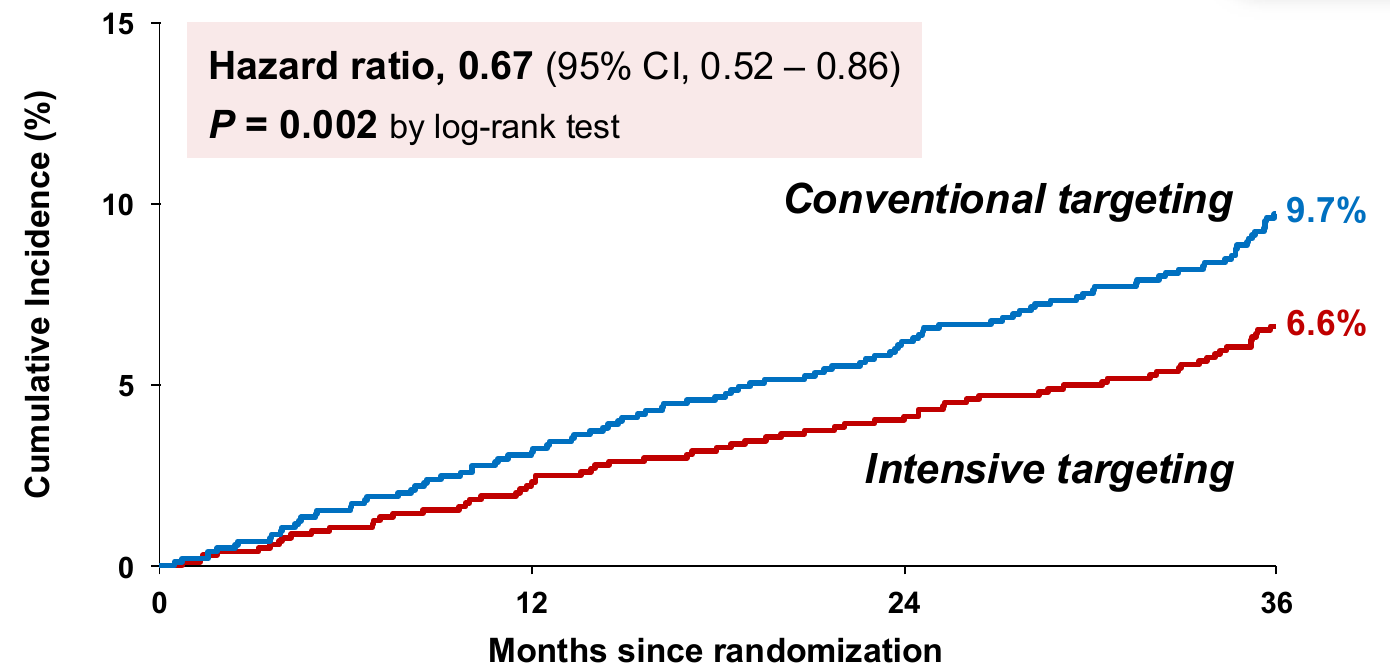
A new randomized controlled trial tested this explicitly. Ez-PAVE randomized people with cardiovascular disease to an LDL target of either <55 mg/dL or <70 mg/dL. The <55 mg/dL group had a 33% lower rate of cardiovascular events. That’s surprising large, particularly for a 43-year study.
Test your LDL cholesterol, or explore how nutrition and clinician care can help lower it.
Cardiovascular events falling by a third (6.6% versus 9.7%) seems large, but what makes this more striking is that only 61% of the intensive group reached the 55 mg/dL target. It implies the ceiling on the benefit is actually higher. The main barriers the researchers reported were due to limited insurance coverage or availability for newer drugs like PCSK9 inhibitors. (A quick definition: “cardiovascular events” includes cardiovascular death, heart attack, stroke, procedures to restore blood flow, and hospitalization for unstable angina.)
LDL cholesterol <55 mg/dL reduced the three-year rate of the combined cardiovascular outcome from 9.7% to 6.6% compared to an LDL of <70 mg/dL. Source: Lee et al., New England Journal of Medicine, 2026.
Fewer heart attacks and procedures accounted for much of the benefit; the trial didn’t establish a reduction in cardiovascular deaths.
Treating physicians had to know each patient’s LDL target to adjust prescriptions, so Ez-PAVE was open label (unblinded) by design. There’s no real practical alternative to this type of study.
How did doctors actually achieve such a low target? In the intensive group, statin + ezetimibe use rose from about 50% in the first month to 67% during years two–three (vs 57% in the control group). High-intensity statin use reached 48% versus 32%. 2.3% received a PCSK9 inhibitor.
Med use by experiment vs control group. Source: same as above.
By the end of the study, the median LDL was 52 mg/dL in the experiment group (versus 66 mg/dL in the control):
Median LDL levels. Source: same as above.
Some people are born with very low LDL because of variants that reduce PCSK9 activity, the same protein targeted by PCSK9 inhibitors. In a 2006 genetic study, researchers described a healthy woman with two PCSK9-disabling variants and LDL of just 14 mg/dL.
In a separate population study, Black participants carrying certain PCSK9 variants had an 88% lower rate of coronary events over 15 years. Only one of 85 carriers had an event, so the estimate was imprecise. Lifelong exposure to lower LDL also differs from starting medication later in life.
Over 15 years, coronary events occurred in 1.2% of carriers of these PCSK9 variants versus 9.7% of noncarriers. Source: Cohen et al., New England Journal of Medicine, 2006.
A high-intensity statin, ezetimibe, and a PCSK9 antibody can together lower LDL by about 85% from the untreated level. Ez-PAVE supports a target below 55 mg/dL in people with established cardiovascular disease; it doesn’t establish the optimal lower limit.
The trial found no statistically significant differences in new-onset diabetes, muscle symptoms requiring treatment changes, liver enzyme elevations, or cancer. Creatinine elevations were less frequent with intensive treatment, 1.2% versus 2.7%. These findings are reassuring, but they don’t exclude rare or longer-term harms. Pratically pseaking, medication choice and dose still depend on tolerability and a person’s medical history.
If you have cardiovascular disease, review your latest LDL result and treatment target with your clinician. Depending on your current medication and tolerance, reaching a lower target may involve adjusting a statin or adding another cholesterol-lowering medication.
Evidence-based steps to optimize your heart health.
正文由 探How 从来源站点 RSS 同步,内容未经改写;遇到排版缺失或需要图片、视频时请以原文为准。