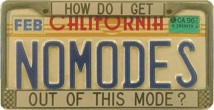
No Modes (Larry Tesler's license plate)
The first time I heard someone say something to the effect of “it’s a SaaS platform, what’s in the back office data center makes no difference to the customer,” my reaction was, “yes, that’s true.” What difference does …
以下正文同步自 Hacker News 最新,版权归原站所有,已转换为易读排版。
The first time I heard someone say something to the effect of “it’s a SaaS platform, what’s in the back office data center makes no difference to the customer,” my reaction was, “yes, that’s true.” What difference does it make to a customer if you have three databases, five application servers and gosh knows how many integrations—that’s your problem as the vendor to manage, right? Over time I’ve come to patently reject this point of view, I’d even call it almost “backwards thinking.” Driving down the cost of operating all those systems is core to your business as a vendor, and that’s argument toward elegance in architecture on its own. However, probably just as important to your offering is the effect of what you have in the background has on your user’s experience. And obviously, that’s something that your customers care deeply about.
“No modes.” – There’s a story about Macintosh development at Apple in the early 80’s. Larry Tesler and Jef Raskin fought hard against software that forced the user to change “modes.” Larry Tesler even had a license plate that said “NOMODES.” (BTW, the book I read this in, Accidental Empires is a fantastic, must read for any high tech history junkie). Unfortunately, even in 2010 enterprise software is rife with ‘modes.’ The most common that I have seen is forcing the user to change his or her role in the system (e.g. now I’m an employee, now I’m a manager, etc.). Companies built by acquisition frequently “smush” their web products together and make you switch applications as well and then call that “integrated.” Yuck.
Switching “modes,” as it were is a key clue that what a vendor is selling you isn’t truly connected under the covers. This could be absolutely fine. It depends on the functions that are being used together and to what end. Some processes don’t need underlying object models to be perfectly in synch. However, if your system is one where a data object (e.g. a “job” or a “competency,” etc.) in one set of functions should be the same as in the second (and third, and fourth) set of functions…be on the lookout for modes. If you see some incarnation of modes, just make sure you dig deeper on the technology to make sure the vendor has done the extra effort to truly link those systems together.
正文由 探How 从来源站点 RSS 同步,内容未经改写;遇到排版缺失或需要图片、视频时请以原文为准。