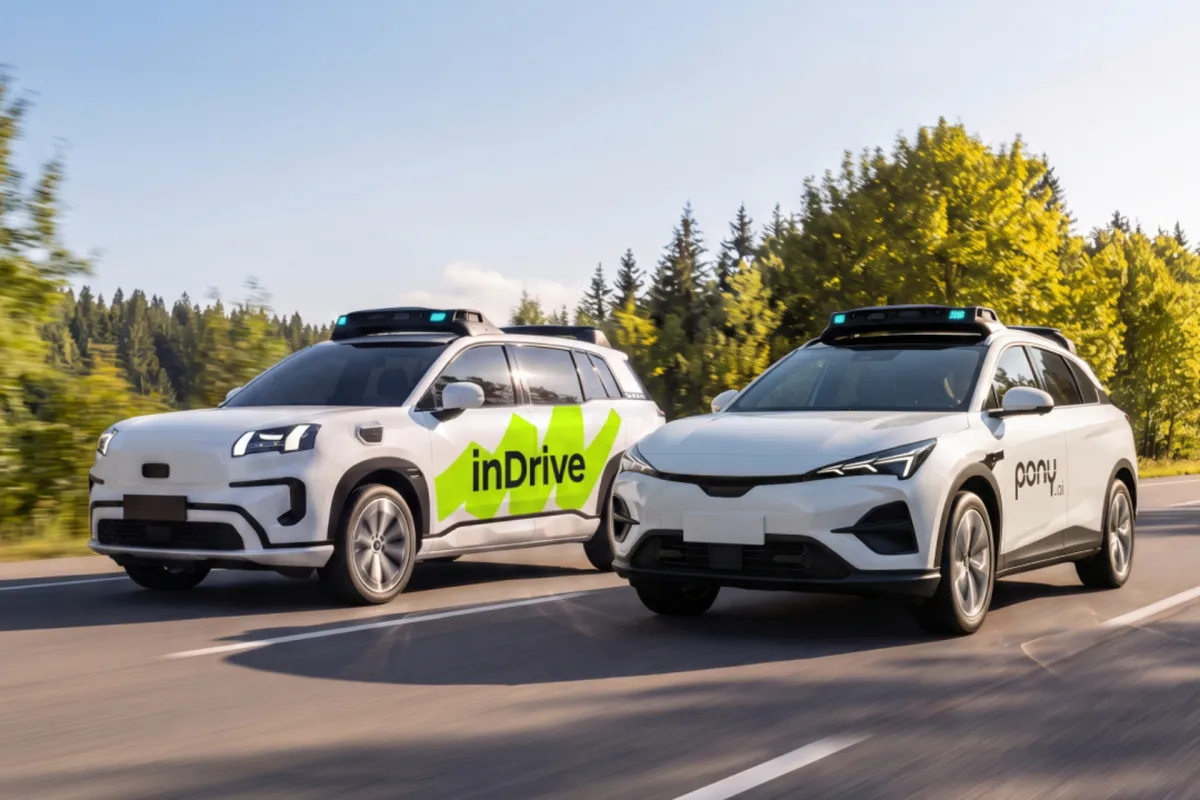
Uber rival inDrive eyes 2027 robotaxi tests in Central Asia with Pony AI and Nvidia
The company plans to begin testing Pony.ai's robotaxis in Kazakhstan's capital in the first half of 2027.
以下正文同步自 TechCrunch,版权归原站所有,已转换为易读排版。
Ride-hailing company inDrive, known for letting passengers and drivers negotiate fares, is working with Chinese autonomous driving firm Pony.ai and Nvidia to begin testing robotaxis in Kazakhstan in 2027.
The companies said Friday that they had signed a memorandum of understanding to explore bringing Pony.ai’s robotaxis to inDrive’s platform — a reflection of the growing interest in self-driving technology beyond the U.S. and China.
Testing will begin in Kazakhstan’s capital, Astana, in the first half of 2027, inDrive CTO Yuri Misnik told TechCrunch. The tests will initially involve a safety operator, with fully driverless rides as the eventual goal.
Under the proposed plan, Pony.ai would provide its Gen-7 robotaxis, which inDrive would offer through its ride-hailing app and operate in Kazakhstan. Nvidia, on the other hand, would supply the AI technology, including its Hyperion platform and Halos safety system.
The move comes as ride-hailing companies expand their push into robotaxis. Earlier this month, Uber announced plans to test Pony.ai’s robotaxis in London, where it has also started offering supervised autonomous rides with British startup Wayve, an investor-backed partner. Uber is also working with multiple robotaxi companies in other markets, including the Middle East.
inDrive, which has built its business around affordable rides, is looking to bring a similar focus to autonomous ride-hailing as it explores a market where Uber and other rivals are already making moves.
“Our approach is capital-light by design,” said Misnik. “We work with a range of partners in different markets, combining their expertise with ours to deliver a better customer experience.”
Nvidia says its Hyperion platform could lower the cost of developing robotaxis by giving companies a ready-made foundation of sensors and computing technology, rather than requiring them to build and integrate everything themselves. The company also offers its Alpamayo model and tools to generate synthetic data and test autonomous driving systems across different driving scenarios.
“Those savings are particularly relevant in emerging markets, where ride-hailing is already relatively affordable and autonomous services need to compete on cost,” Ali Kani, Nvidia’s vice president of automotive, told TechCrunch.
The announcement coincides with Nvidia CEO Jensen Huang’s first visit to Kazakhstan on Friday.
The Kazakhstan proposal would also add to Pony.ai’s ongoing push beyond China. The company aims to have more than 3,500 robotaxis operating in over 20 cities worldwide by the end of 2026, up from a fleet of 1,975 vehicles at the end of June.
Last month, Kazakhstan announced plans to launch autonomous taxi services in 2027, with initial trials planned in Astana and two other cities. It has also introduced rules for autonomous vehicles to be tested on certain public roads.
Astana’s harsh winters could make it a useful testing ground for robotaxis. The city, with a population of around 1.7 million, faces months of snow and ice, posing challenges for autonomous driving systems.
“Launching here will provide an important opportunity to evaluate autonomous driving technology in challenging winter conditions,” inDrive founder and CEO Arsen Tomsky said. “Success in Astana could offer valuable insights for expanding autonomous mobility to other locations facing similar challenges.”
Kazakhstan is not the only market where inDrive is exploring robotaxis. In December, the company signed a separate agreement with Saudi Arabia’s AI Driver to explore deploying autonomous vehicles powered by Chinese self-driving firm WeRide, starting with Riyadh. The companies had targeted a pilot in the first half of 2026, though it remains unclear whether testing has begun.
“We are also looking at a number of other markets for future deployments,” said Misnik. “One of the main requisites for successful launch in our view is a favorable and collaborative regulatory environment to facilitate safe and sustainable testing on the roads.”
inDrive operates in more than 1,200 cities across 47 countries. The company has also expanded beyond ride-hailing into delivery, intercity transportation, and financial services.
When you purchase through links in our articles, we may earn a small commission. This doesn’t affect our editorial independence.
Jagmeet covers startups, tech policy-related updates, and all other major tech-centric developments from India for TechCrunch. He previously worked as a principal correspondent at NDTV.
You can contact or verify outreach from Jagmeet by emailing [email protected].
View Bio
November 4
Boston
Buy One Pass, Get a Second Free
Cover more ground at TechCrunch’s ultimate founder bootcamp of the year by bringing your co-founder or partner for free
Book before the BOGO deal expires
Airbnb limits chores for guests, sparking backlash from hosts
Lauren Forristal
Year-old AI lab Flapping Airplanes raises $1B at a $6B valuation
Julie Bort
Tesla starts Optimus robot production in California as profit falls 43%
Kirsten Korosec
Sean O'Kane
The internet is having a very bad cybersecurity day
Sarah Perez
People are using AI to make their smart TVs dumb again
Sarah Perez
Anthropic says its workforce has become less junior and is spending more time in meetings
Anthony Ha
Mark Wahlberg wants to take on the longevity-startup crowd with an affordable gym concept
Connie Loizos
正文由 探How 从来源站点 RSS 同步,内容未经改写;遇到排版缺失或需要图片、视频时请以原文为准。