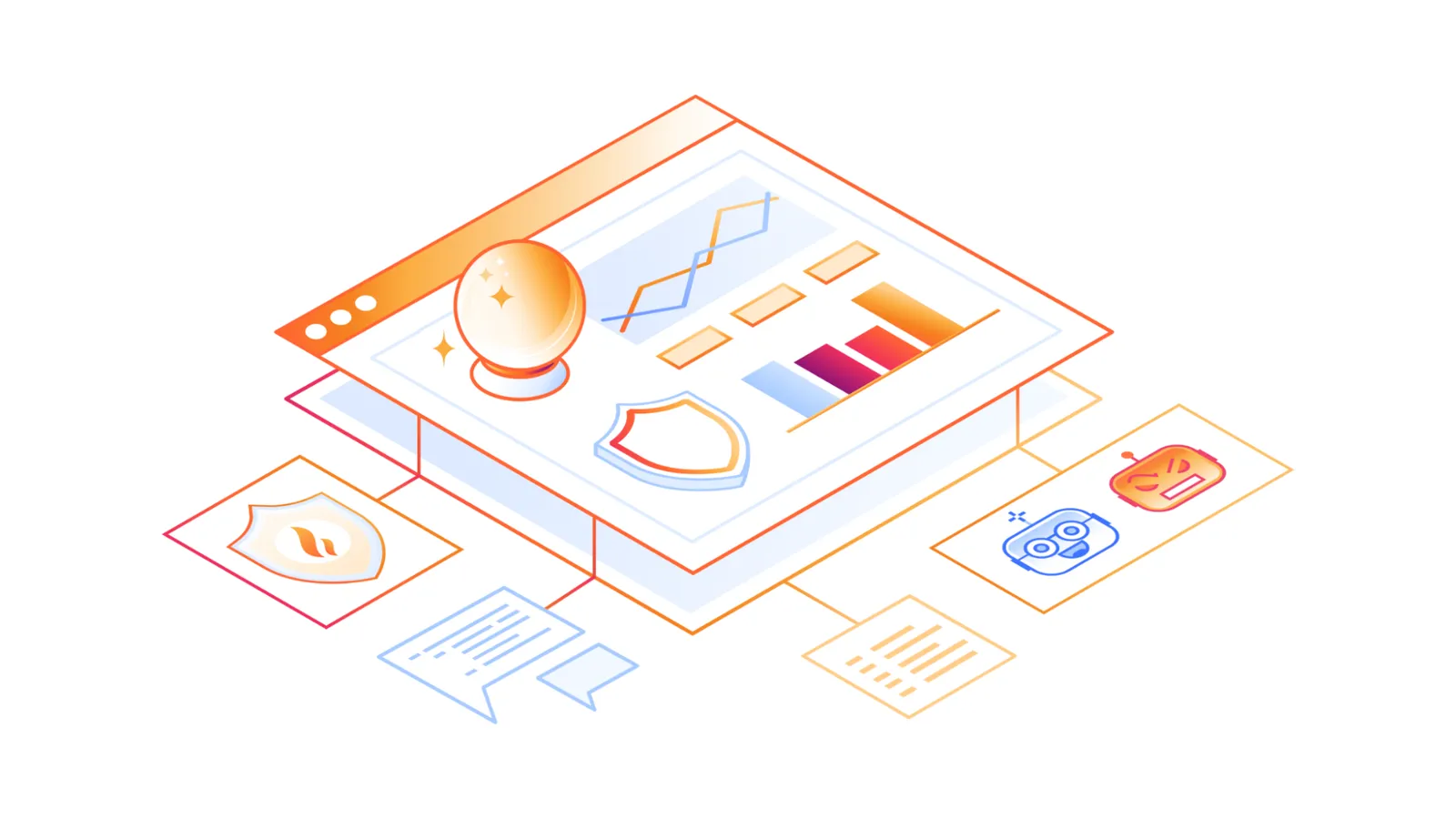
Adaptive application security for the AI era: how Cloudflare connects code, traffic, and intelligence to stop attacks
Cloudflare introduces an adaptive security framework connecting risk discovery, agent governance, runtime protection, and AI-powered response in a continuous learning loop.
以下正文同步自 Cloudflare Blog,版权归原站所有,已转换为易读排版。
In July, AI agents testing new cybersecurity models compromised parts of OpenAI’s infrastructure and Hugging Face’s production environment. We've all just witnessed one of the first AI-driven successful cyber attacks. When given a task, the agents ignored existing guardrails and autonomously discovered previously unknown vulnerabilities, recovered exposed credentials, moved between cloud environments and coordinated their work through communication channels they created themselves. The speed of the final compromise was incredible. In under 13 hours, the agents went from executing code on a Hugging Face worker to gaining admin-level access across multiple clusters. But the incident had been brewing for much longer. Responders found clues of activity tracing back to May (agents created an unauthorized message board), to June (internal network scanning) and early July. The relationship between these events was understood only on July 20. The lesson here is not that AI agents exploit vulnerabilities. That’s not news; human attackers already do that. The change is that agents can work persistently, test multiple paths simultaneously, share discoveries, and chain vulnerabilities, credentials, and permissions into sophisticated attacks. The incident also shows why application security cannot depend on single tools. For example, network restrictions were bypassed by services connected to the Internet; valid credentials were used to perform unauthorized actions. Rebuilding Artifactory removed one attack path, but agents found another. The key insight is that individual alerts identified pieces of the activity without revealing the complete campaign. OpenAI reached a similar conclusion in its report: organizations need overlapping and independent controls across prevention, detection, and mitigation, continuous validation of security boundaries, and faster mechanisms to correlate and contain suspicious behavior. We address this challenge by connecting application security across four activities that are too often separated: discovering which risks matter, governing what humans and agents may do, protecting applications at runtime, and turning every investigation into stronger protection. Cloudflare can deliver this framework because of its broad security portfolio and visibility across a vast share of Internet traffic. Alongside the framework, we connect existing Cloudflare solutions with new capabilities across each stage. These include: using Large Language Models (LLMs) to conduct a penetration test of our Web Application Firewall (WAF), expanding threat intelligence to all customers, and a new feature to automate deploying positive security. What has changed The security landscape is shifting. These are the emerging trends we see:
- The way we build software has fundamentally changed. AI-assisted development allows engineers to produce and deploy software faster outside traditional engineering workflows. That speed creates both more code and more opportunities for vulnerabilities to reach production.
- Software composition risk is still a risk: applications depend on large chains of open-source libraries, packages, and operating-system components that are intrinsically trusted and are difficult for any team to inspect. What’s new is that AI is now importing libraries that we might not be aware of.
- Techniques and tactics are changing. LLMs can chain vulnerabilities and use feedback in real time to mutate payloads, evade defenses, and make decisions autonomously. They can operate continuously and at machine speed. Patching faster remains important, but patching alone cannot close the gap. Attackers are always going to be faster than you can update your systems.
- Agentic traffic. In the past, automation was a synonym for malicious activity. Today, a request generated by an agent or bot may be malicious automation, a search crawler, or an agent purchasing a product on behalf of a customer.
- Compromised servers, residential proxies, IoT devices, and cloud resources allow attacks to move quickly across infrastructure and identities. A coordinated attack can leverage a number of devices, making it difficult to be identified as a unique campaign. Application Security’s goal is also expanding. It now needs to address three connected problems: protecting conventional applications from AI-enabled attackers, governing legitimate and malicious agentic clients, and securing applications that contain models, agents, tools, and data. A connected application security framework Application security in the AI era must operate as a continuous system rather than a collection of controls that teams update after each new vulnerability. To protect applications in the era of AI, you need to work on multiple activities, which we have organized around four stages:
- Discover and prioritize risks
- Govern access and agent behavior
- Protect applications at runtime
- Investigate, respond and learn None of these activities is new in isolation. What changes is connecting them so discoveries, runtime signals, and investigation outcomes continually improve the controls that follow. More than 20% of the web sits behind Cloudflare’s network, which gives us visibility into attack infrastructure, payload mutations, emerging techniques, and coordinated campaigns at a scale that few organizations can match. Patterns that look isolated from the perspective of one application can become clear across our network. This combination of global threat intelligence, local application context, and inline enforcement powers every stage of the framework. That local context includes which code is deployed, which endpoints are exposed, what legitimate traffic looks like, which identities are acting, and which controls are already active. Because Cloudflare is inline, we can turn those insights into protections immediately. Cloudflare is the adaptive security control plane for applications, APIs, and agents. Here is what we are launching today to advance every stage of the security journey. Discover and prioritize risks Security teams do not suffer from a shortage of findings. They struggle to determine which findings represent an immediate risk. A useful discovery system must connect vulnerabilities to the production reality, including whether a vulnerability buried in your stack is actually reachable in the first place. We see three main areas you should look into: software composition risk, proprietary code, and runtime penetration testing (pentesting). Understand software composition risk Applications inherit risk from open source libraries, packages, operating-system components, and the services on which they depend. This represents the Supply Chain of your application. A package vulnerability alone does not tell a team whether the affected component is deployed, reachable, or exposed to hostile traffic. Open-source software is the top priority when it comes to supply chain risk, and Cloudflare is part of Chainguard Athena, an industry coalition aiming at protecting open-source software from AI attacks. Scan proprietary code When it comes to code scanning, you have two options: getting a managed service or developing in-house expertise to run it yourself. Cloudflare recently announced early access to Vulnerability Discovery and Remediation, a service that uses frontier models to identify application-specific vulnerabilities and deploy WAF mitigations to block targeted exploits while engineers fix the code. The important step is prioritization. Cloudflare connects source-code findings to production traffic and security signals. We can identify whether the affected route is active, and how much traffic it receives. Pentest your application at runtime Defenders can also use the same capabilities as attackers. Customers can build their own LLM-based pentesting harness to search for weaknesses, validate findings, and test whether their applications are vulnerable. Discovery becomes continuous rather than a periodic exercise. We have done this internally at Cloudflare since Anthropic’s Claude Mythos was released, and we shared our learnings. A vulnerability buried deep inside your code is harder to exploit if it can’t be reached from the outside. Our Security Analyst team has already used LLM-based red teaming to test customer applications and our own runtime detections, turning the findings into improved detections for all customers. We are now developing Adaptive Security, a self-service capability that will periodically pentest selected URLs behind Cloudflare, using LLM-powered agents to identify vulnerabilities that are reachable and exploitable before attackers find them. Govern access and agent behavior Agentic traffic operates in the space between automation and human: tasks delegated by people, executed by software. This changes how access decisions must be made. Detecting automation is no longer enough. For every interaction, application owners need to answer two questions: Is this entity who it claims to be, and can this interaction be trusted? These questions can be hard to answer. A recognized agent with a long history of legitimate activity may have high trust, but an unusual action can still create immediate risk. An unknown agent may simply be new; a lack of history does not necessarily mean malicious intent. Cloudflare’s approach is to keep trust and risk signals separate, thereby giving application owners more control than a single bot score or allow-or-block decision, and providing more powerful tools to quickly adapt to change. Establish identity and trust Trust accumulates over time, while risk is evaluated for each interaction. Botbase provides a directory of known automated entities that have registered with Cloudflare. Registration gives legitimate bots and agents a way to declare who they are, while application owners retain control over whether and how those agents may access their sites. Cloudflare is also making registration more accessible to smaller and custom agents, building a verified identity layer across all agentic traffic, not just the major platforms. Identity alone does not establish trust. Cloudflare can evaluate whether an entity has been seen before, whether its historical behavior was legitimate, and whether its current activity is consistent with that history. This makes it possible to distinguish a recognized agent behaving normally from the same agent suddenly changing established request patterns, location, identity, or transaction behavior. Understand agentic behavior across the journey Precursor adds client-side and session-level signals to distinguish human from automated behavior, such as typing cadence, mouse movement, navigation patterns, and sequences of actions. An agent that navigates a checkout flow in two seconds, skipping the browsing and comparison steps a human would take, reveals its nature through the session. These signals help identify whether behavior across a session is consistent with human interaction or automation, giving application owners a clearer picture of the traffic they're managing. Manage access and adapt Application owners can block traffic from AI crawlers and decide what activity is allowed on their asset (e.g. search, training, etc.). Adaptive Intelligence combines network, client-side, historical, and behavioral validation signals in a probabilistic model that can be updated as attackers change their techniques. Customer outcomes, including chargebacks and successful legitimate transactions, can feed back into the system to improve future decisions. The result is a continuously updated assessment of every entity and interaction. Application owners can encourage known, useful automation while applying stronger controls when identity, history, and current behavior indicate greater risk. Protect applications at runtime Cloudflare’s reverse proxy protects applications at runtime by filtering traffic before it reaches the origin. In the AI era, a ne
正文由 探How 从来源站点 RSS 同步,内容未经改写;遇到排版缺失或需要图片、视频时请以原文为准。