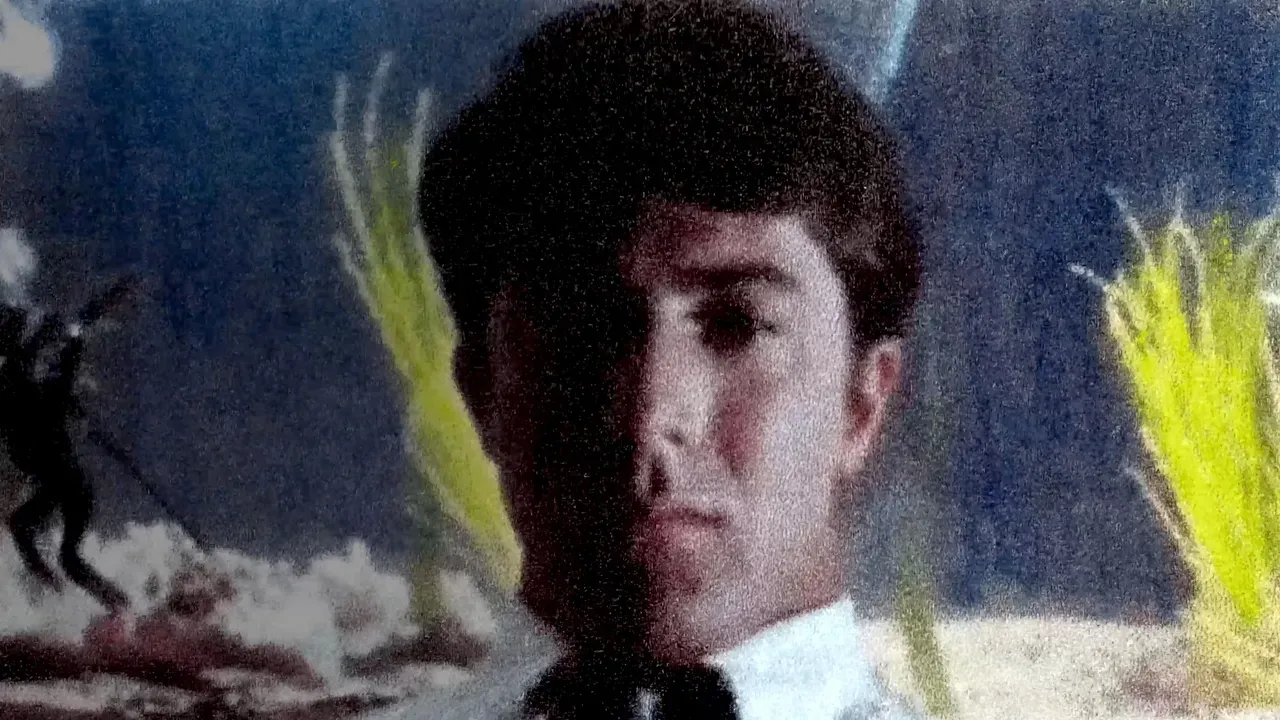
Surviving "The Graduate" [by Dustin Hoffman]
I had been staying with my parents in L.A., shooting “The Graduate,” but my father was driving me crazy. Every day, I’d get home from the set, and he’d grill me, wanting to know every detail of what happened. And he’d b…
以下正文同步自 Hacker News 最新,版权归原站所有,已转换为易读排版。
I had been staying with my parents in L.A., shooting “The Graduate,” but my father was driving me crazy. Every day, I’d get home from the set, and he’d grill me, wanting to know every detail of what happened. And he’d be very critical: Why did you do that? That’s not the way to do it. I lasted maybe five days, and then I couldn’t take it anymore. I was trapped in the house where I’d grown up, totally alienated by the previous generation, just like my character. So I’d moved to the hotel where the cast and crew were staying. Out by the pool, it was like a cabana party on Mount Olympus: the people looked like golden gods among the palm trees. I felt immediately uncomfortable, unworthy. Here I was, playing a starring role in a movie by Mike Nichols, who was the director of the moment, but I felt like I had no right to be there. The shoot went on for months. Mike was in no rush; he had all the time and money he wanted. But I never went down to the pool again. It was impossible to be unimpressed by Mike, though. His first film, “Who’s Afraid of Virginia Woolf?,” had just been nominated for thirteen Academy Awards, including Best Directing and Best Picture. I’d enjoyed his version of “Barefoot in the Park” on Broadway, and I loved the comedy routines he’d done with Elaine May. Still—me, playing a six-foot gentile? I had to draw the line somewhere. “I hear you don’t think you’re right for the part,” Mike said on the phone. “So who is right for it?” There happened to be a copy of Time on the coffee table in front of me; on the cover was a sketch of a handsome, blond, athletic fellow meant to represent Americans “Twenty-five and Under.” “The guy on the cover of Time,” I said. “You’re saying you’re not right for it because you’re Jewish,” Mike said. “Well, because Benjamin’s so not Jewish.” There was a pause. Then Mike said, “Maybe he’s Jewish inside.” By that time, they’d been trying to cast the part for almost two years. “Robert Redford and Candice Bergen, the ideal couple—that’s what we were thinking,” Buck Henry, the film’s co-screenwriter, said about casting Benjamin and his love interest, Elaine. But they’d already seen Redford—and pretty much everyone else—by the time they got around to me and Katharine Ross. Nothing had clicked. I still maintain that if I’d read for them at the beginning of their search, instead of at the bitter end, I never would have got the part. Hollywood had never been my endgame. As far as I was concerned, the studios kept beautiful people imprisoned in seven-year contracts. I wasn’t beautiful, and I didn’t want to be trapped. To be honest, I looked down on American movies, compared with theatre. When it came to breakthrough cinema, the kind made in Europe by greats like Truffaut, Buñuel, Antonioni, and Godard, Hollywood had yet to see the light. My agent convinced me that I should screen-test for Mike, despite my reservations. I told my castmates in “Eh?” not to worry; I was sure they wouldn’t need to replace me. Then I walked to my neighbor on Eleventh Street, Mel Brooks, who’d suggested that I play a small part in “The Producers.” I called up to his window: “They’re flying me out to audition for a Mike Nichols movie.” “What part?” he asked. “The lead,” I told him. “Good luck!” he said, suppressing a laugh. “Keep me posted!” I had to learn ten pages in less than forty-eight hours. I stayed up the entire night running lines; by the time I landed in Los Angeles, I hadn’t slept in two days. Mike’s office was a series of palatial rooms with high ceilings, and in my memory it included a bar, which is where I first saw him. “Oh, hi, would you like a drink?” he said. He was always so casual, almost seductive. Then they brought in Katharine Ross, who was outrageously beautiful. I felt foolish, like I had to apologize to her for looking like I did. They took us to get our makeup done in a long room with rows of upholstered chairs. Today, you get made up in a trailer, without a trace of glamour, but this room was a remnant of Old Hollywood. It seemed likely that Betty Grable’s ass had been on the chair before mine. They had these famous makeup artists, the Westmores—six brothers who’d learned their trade from their father. I can’t remember how many of them were there that day, but they were at it for hours. And it’s not like I was getting prosthetics or a toupee. It took them that long just to do something with what little I offered. Mike came in, watched them for a while, and looked at my face in the mirror. Quietly, in his singsong voice, he said, “Can’t you do something with his eyebrows?” Bobby Duvall always said that I had only one. They started plucking me to make two. Then Mike said that my neck looked too thick, so they put me in a turtleneck. But he was still unhappy with what he was seeing. (I, too, was increasingly unhappy.) Mike sounded almost innocent when he asked the Westmores, “Now, what are we going to do about the nose?” I remember thinking, They’re trying to take the Jew off my face, and it ain’t going to happen. All I wanted to do was go home, to ethnic New York, where I belonged. I knew I was no leading man. I knew my place. It wasn’t just paranoia: everyone thought I was wrong for the part. “I looked at it, and it was just this ugly boy playing the part, and I thought, Ugh,” the film’s editor, Sam O’Steen, later said of my screen test. People imagined the Braddocks as prototypical California gentiles. “All blonde, all healthy,” Buck Henry said. “A family of surfboards is what we called them. And here comes Dustin: clearly not a surfboard.” To save the film, they hoped Benjamin’s parents might be played by Ronald Reagan and Doris Day. “We immediately rationalized it: he’s a genetic throwback,” Buck continued. “Doris Day and Ronald Reagan have had this mutt.” I was so relieved when we finished the screen test. I couldn’t wait to get out of there. As I was thanking the propman, a few subway tokens dropped out of my pocket. He very nicely picked them up, then said, “Here, kid, you’re gonna need these.” I mumbled an apology. There was a long silence. “Well,” Mike said, “you got it.” Stunned is too weak a word. Mike had apparently seen something in the footage. “He had this thing I’d only seen in Elizabeth Taylor, and that I’d certainly not seen in any of the other tests,” he later told his biographer, Mark Harris. “That secret. That deal with Technicolor where you do nothing and it turns out you were doing everything. He was compelling and hilarious and impassive. It was startling. That’s what a great movie actor does. They don’t know how they do it, and I don’t know how they do it, but the difference is shocking.” I hung up the phone feeling like I’d been hit in the head. I looked at my girlfriend, who was holding a spatula, making our breakfast. “I got it,” I told her. “I knew you would,” she said. “Don’t try to do a character, don’t try to be funny,” he told us. “Start from zero.” Mike took me back to my adolescence—my acne, my barely suppressed horniness. He asked me if I thought Benjamin Braddock was a virgin. I said no, but that I didn’t think he’d ever screwed his mother’s friend before, either. (He liked that response.) Mike was completely open and unusually perceptive. I struggled, for instance, with the scene in the hotel lobby when Benjamin is registering for the room where he will have his first illicit encounter with Mrs. Robinson, the seductive, alienated housewife played by Anne Bancroft. Mike asked me all kinds of questions: What was it like when I lost my virginity? When had I experienced sexual shame? I told him that I could never bring myself to buy rubbers from a female pharmacist—if I was at the register and a woman appeared behind the counter, I had to make a break for it. Mike told me to think of the hotel clerk (played, to hilarious effect, by Buck Henry) as a woman pharmacist. It was such a useful piece of direction, such a helpful way of working. Mike also asked me if I had a role model as a kid. I told him it was my brother Ronny. He had me try a scene as Ronny, who I could imitate perfectly; I used to pretend I was him when girls called him, hoping to see how long I could keep them on the phone. Then Mike asked me if Ronny ever got uptight, and he absolutely did. “Try it again, as your brother, uptight,” Mike said. So I did what Ronny did whenever he was nervous: I held my breath. Finally, Mike said, “Now forget all that and just do the scene.” This time, I still held my breath a lot, but I also let out a little squeak periodically. Mike liked it so much he put in a few extra squeaks in the final edit. You can hear them throughout “The Graduate,” like gas escaping from Benjamin Braddock, who is a balloon of tension. I often felt that I was about to be fired. When we were shooting some of the film’s most famous sequences, I remember thinking, I have no fucking idea what I’m doing. The first scene that we shot featured Benjamin in front of a fish tank in his room, where he’s escaped from a party his parents have thrown to celebrate his college graduation. I just sat there on the bed while Mike told me, “O.K., look at the fish. Now look down. Move toward the fish.” We probably spent a whole day on it, and not for one second did I have a handle on what I was meant to be conveying or how to go about it. I did make Mike laugh sometimes, and those were moments of great relief for me. When we started working on Benjamin and Mrs. Robinson’s first scene in the hotel room, I did what I’d done when I had my “first feel” as a teen-ager: I awkwardly and abruptly put my hand on Anne’s bra-covered breast, with absolutely no finesse or passion, without even making eye contact with her. Anne’s response was incredible: without missing a beat, she looked down at the sweater in her hands, noticed a stain, and paid it all of her attention, rubbing the fabric together and fussing with it, while I continued to hold her breast in my paw like a paralyzed animal. It was so funny that I had to walk away, trying to avoid bursting into laughter. That was the worst thing you could do: break character. I started knocking my head against the wall in an attempt to collect myself. Don’t break! Don’t break! Mike interpreted it as an artistic choice, and it cracked him up. When Mike was laughing, I felt he loved the character I was trying to create. It was the only time I knew I was doing something he was happy with. But his mood would shift dramatically. I don’t remember the scene, but I will never forget Mike’s acid voice saying to me, after one take: “What were you doing?” I tried to defend myself: I’d been taught that to give your character depth, you don’t play the text—you play the subtext, which can sometimes be the opposite of the text. “Well, do me a favor,” Mike said. “The next time you get a thought, do the opposite of that.” This is the kind of comment that kept me in a state of constant anxiety. And it wasn’t just my own experience. When we shot a scene in which Benjamin drags Elaine, Mrs. Robinson’s daughter, to a strip club for their first date, Mike overheard Robert Surtees, the cinematographer, say something to the crew. Surtees was a mentor to Mike, the man who taught him all about the possibilities of light and filmmaking. “I said something snotty, as I often did, to the crew,” Mike recalled later. “And Surtees—I heard him say to them, but it wasn’t for me—he said, ‘It’s O.K. It’s not much longer.’ I thought, Oh man. How could I have been such a shit that this man that I revere feels that way about me? But I was.” The next day, we shot an underwater scene in the pool: Benjamin is being forced to try the scuba suit his father has bought for him. The scene was meant to symbolize the way that Benjamin’s parents gave their children material things instead of love. Mike didn’t want me to keep popping up out of the water, so I had to hold myself down: if you watch the movie, you can see that one hand is behind me the whole time I’m unde
正文由 探How 从来源站点 RSS 同步,内容未经改写;遇到排版缺失或需要图片、视频时请以原文为准。