Petra Power looks to modernize energy for data centers and defense vehicles
The startup says its fuel cells are super efficient and cut fuel costs during a time when the tech industry can’t get enough electricity.
以下正文同步自 TechCrunch,版权归原站所有,已转换为易读排版。
As AI gobbles up an ever larger amount of energy, the hunt is on for efficient and cost-effective power sources. One of the companies leading the charge is Petra Power.
Petra, which was founded in 2017, sells solid oxide fuel cells — ceramic devices that convert fuel, like natural gas, into electric power without burning it. The company markets them as a more efficient and environmentally friendly way to operate data centers and large vehicles.
Petra’s founder, Aaron Goodman, told TechCrunch that his company’s product has significantly lower fuel costs and emissions than traditional power sources, and that they have much less of a physical footprint, too, because they’re more compact and lightweight.
The efficiency, and the cost savings that come with it, is what makes the fuel cells attractive. “Combustion takes fuel and creates explosions,” Goodman said, describing how traditional power generation works. “Those explosions create heat. That heat creates motion. The motion powers an electromotive force, which eventually creates electricity. It’s a lot of steps, and they all have so much loss in them that you end up with a really inefficient system.”
Petra’s fuel cells skip most of these steps. “What fuel cells do is they take the electrons directly off of the fuel, so they strip the fuel of its electrons, which creates electricity,” he explained. “It’s one step, no loss, and subsequently, in theory, at least, they’re much, much more efficient.”
As a result, companies that run off fuel cells stand to save a significant amount on fuel costs, Goodman said.
Although it may offer an innovative product, the customer base is still emerging for Petra. Goodman said that his company is targeting two different types of customers: data centers and the Defense Department.
Goodman doesn’t want to reveal specific agreements just yet, but said Petra is currently working with neoclouds and other infrastructure providers that were a few steps down from the hyperscaler crowd. The target for first deployment with these customers is 2028, with full-scale production for the company hopefully set for 2029, Goodman said.
“Hyperscalers are an ICP [ideal customer profile] for us, and we talk a lot to them, but we don’t have anything firm with them yet,” said Goodman. “We’re still kind of working in that direction. Obviously, they’re the largest consumers of power. They’re the ones that we can make the biggest impact with, so that’s where we’d like to go.”
The other customer — the government — is also still taking shape. The idea is that Petra’s fuel cells will be able to provide auxiliary power for land vehicles, meaning electricity for onboard equipment when the main engine is off. But Petra’s product has not actually deployed on a live vehicle yet, Goodman clarified. Instead, the fuel cells are in the testing phase, during which the government is deciding whether to move forward, he said.
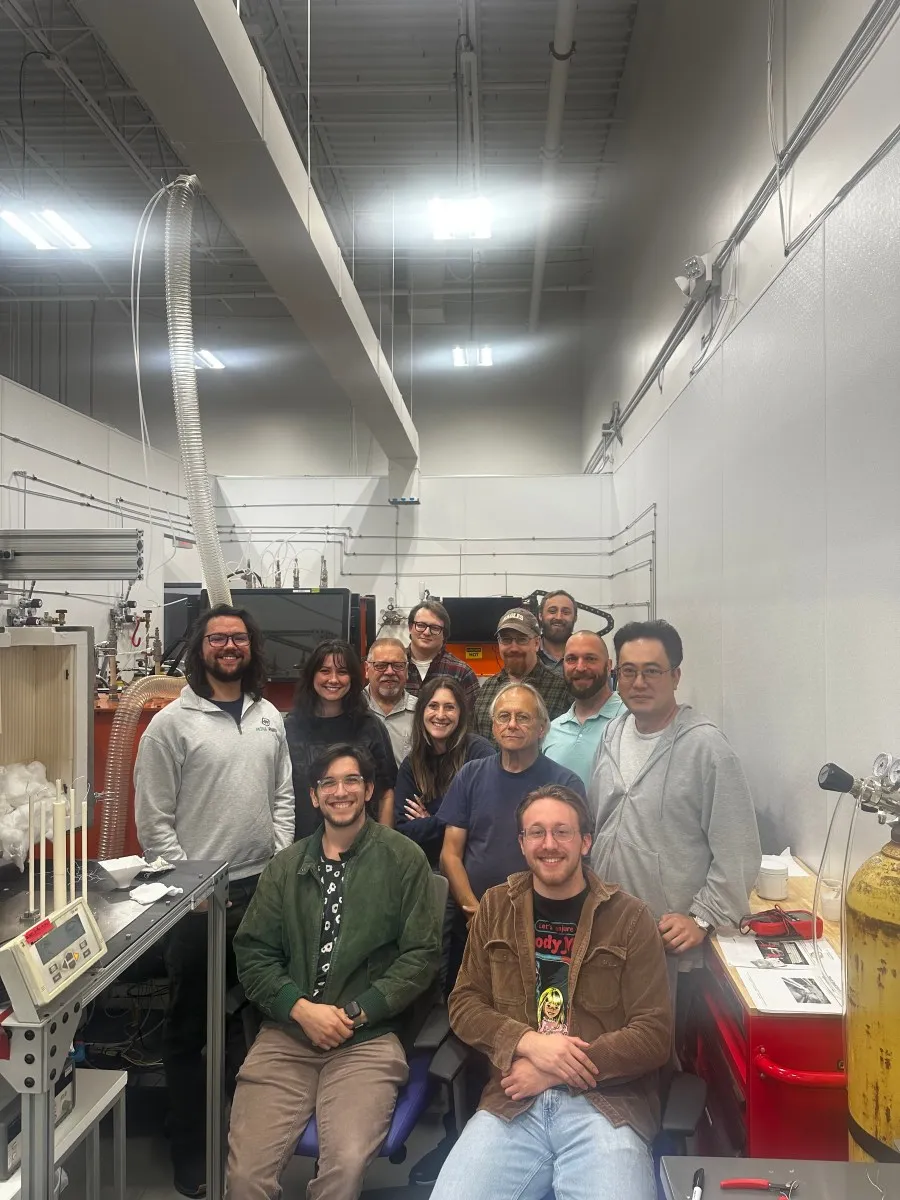
Petra is a small team — some 15 people — but the company is growing, Goodman said. Petra has so far received nearly $9 million in contracts from the Defense Department, and the hope is to scale that work significantly in the coming years, he said.
Petra Power was selected for this year’s TechCrunch Startup Battlefield 200, a group of 200 startups chosen for the program. You can catch all the action this coming week in downtown San Francisco at Moscone West.
When you purchase through links in our articles, we may earn a small commission. This doesn’t affect our editorial independence.
Lucas Ropek
Senior Writer, TechCrunch
October 13 – 15
San Francisco
Get 50% off a second pass
The Disrupt experience is meant to be shared. Get your pass and bring a colleague, partner, or peer at 50% off. Cover more ground by making connections, building momentum, and discovering what’s next in the startup ecosystem.
Remember Orkut? Its founder wants to bring it back
Jagmeet Singh
US bars Microsoft, Adobe, and major IT firms from green card program for skilled foreign workers
Aisha Malik
Cal AI’s 19-year-old founder just raised $10M for his new AI startup
Julie Bort
Google releases a new local-first Granola competitor
Ivan Mehta
Anthropic is giving startups a free year of Claude Team and $1,000 in credits
Russell Brandom
At 19, founder raises $11M for Ghost, maker of a $3,499 computer for personal AI
Dominic-Madori Davis
Trump unveils his new Super Intelligence Force
Anthony Ha
正文由 探How 从来源站点 RSS 同步,内容未经改写;遇到排版缺失或需要图片、视频时请以原文为准。