World’s first enhanced geothermal power plant completed in just 23 months
Fervo Energy completed its first power plant in less than two years. The next phases promise to connect to the grid even quicker.
以下正文同步自 TechCrunch,版权归原站所有,已转换为易读排版。
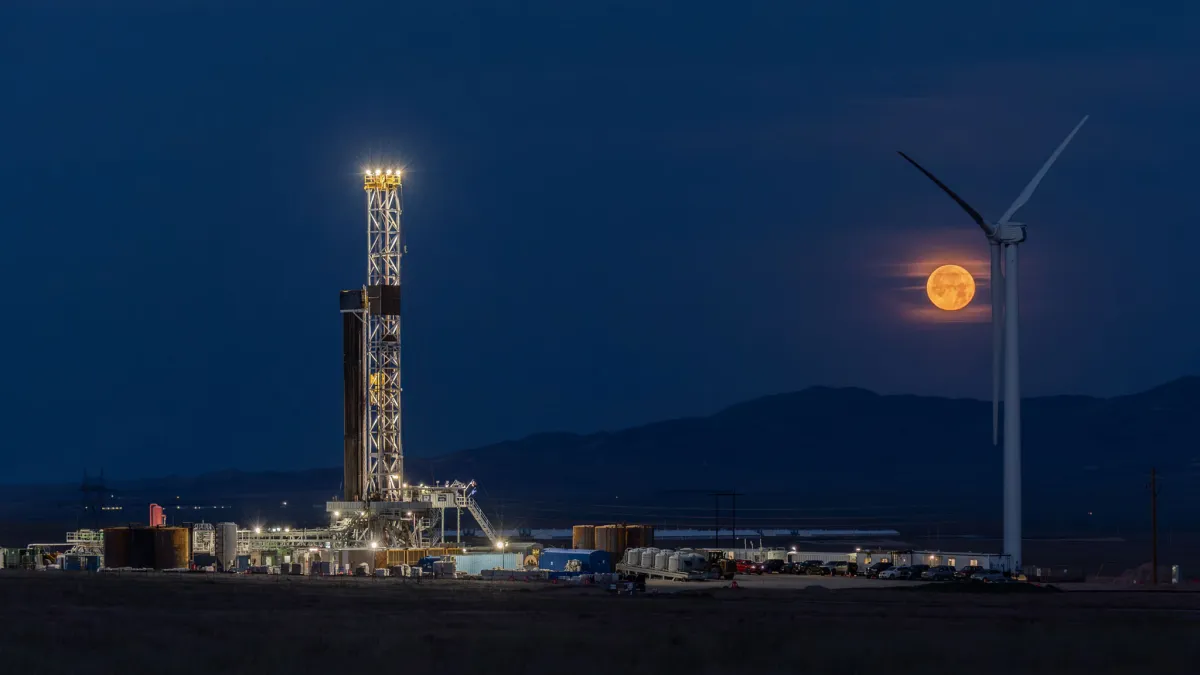
Geothermal company Fervo Energy announced Thursday morning that it had started selling electricity from its Cape Station power plant to the grid on September 30, one day ahead of schedule.
With it, Fervo becomes the first enhanced geothermal company to reach a key commercial milestone. The power plant synchronized with the grid about a week ago, bringing online the first third of what will soon become a 100-megawatt power plant.
The entire site could be much larger, though, with the potential to generate as much as 4 gigawatts of electricity, Fervo previously told TechCrunch.
“No team has ever built a project like this anywhere in the world, and we did it ahead of schedule,” Fervo co-founder and CEO Tim Latimer said in a statement.
From groundbreaking to commercial operations, the first block at Cape Station took 23 months to complete. As Fervo refines its process, it is aiming to complete future blocks in as little as 18 months.
That sort of speed to power should appeal to power-starved data center operators, who have been scouring every part of the energy sector for generating capacity. Geothermal can also be developed in phases, similar to how data centers are developed, allowing hyperscalers to bring racks online as demand ramps up.
Google, Southern California Edison, and others have committed to buying power from Fervo’s Cape Station project.
Fervo is one of several companies developing enhanced geothermal power plants. While traditional geothermal power taps heat sources close to the surface, Fervo and its peers are drilling deeper because deeper rock is hotter, opening more opportunities for development.
Fervo went public in May in an upsized IPO that raised $1.9 billion. It was founded in 2017, bringing drilling techniques and technologies from the oil and gas sector to the development of new geothermal resources. As a startup, the company raised more than $1.3 billion from investors, including Breakthrough Energy Ventures, Congruent Ventures, and Capricorn Investment Group.
When you purchase through links in our articles, we may earn a small commission. This doesn’t affect our editorial independence.
Tim De Chant
Senior Reporter, Climate
Tim De Chant is a senior climate reporter at TechCrunch. He has written for a wide range of publications, including Wired magazine, the Chicago Tribune, Ars Technica, The Wire China, and NOVA Next, where he was founding editor.
De Chant is also a lecturer in MIT’s Graduate Program in Science Writing, and he was awarded a Knight Science Journalism Fellowship at MIT in 2018, during which time he studied climate technologies and explored new business models for journalism. He received his PhD in environmental science, policy, and management from the University of California, Berkeley, and his BA degree in environmental studies, English, and biology from St. Olaf College.
You can contact or verify outreach from Tim by emailing tim.dechant@techcrunch.com.
October 13 – 15
San Francisco
Get 50% off a second pass
The Disrupt experience is meant to be shared. Get your pass and bring a colleague, partner, or peer at 50% off. Cover more ground by making connections, building momentum, and discovering what’s next in the startup ecosystem.
The Pentagon taps Elon Musk and Palmer Luckey to help decide what the military should do next
Dominic-Madori Davis
OpenAI launches Dots, its bubbly agentic avatar
Lucas Ropek
AMD will acquire Fei-Fei Li’s World Labs for $8.2B
Tim Fernholz
Viral AI agent Instinct raises $1B Series C at a $10B valuation
Sarah Perez
Crusoe abandons $1.25B plan to use Boom turbines at AI data centers
Kirsten Korosec
Astra and Opus just passed Turing’s other test
Tim Fernholz
Kiteworks urges customers to shut down their servers amid ‘imminent’ threat of cyberattack
Zack Whittaker
正文由 探How 从来源站点 RSS 同步,内容未经改写;遇到排版缺失或需要图片、视频时请以原文为准。