Scientists voted to redefine how the world keeps time
Scientists just voted to redefine how the world keeps time
以下正文同步自 Hacker News 最新,版权归原站所有,已转换为易读排版。
Scientists just voted to redefine how the world keeps time
A new system, called the “leap hour,” will allow Earth’s rotation and official time to fall out of alignment by a full hour
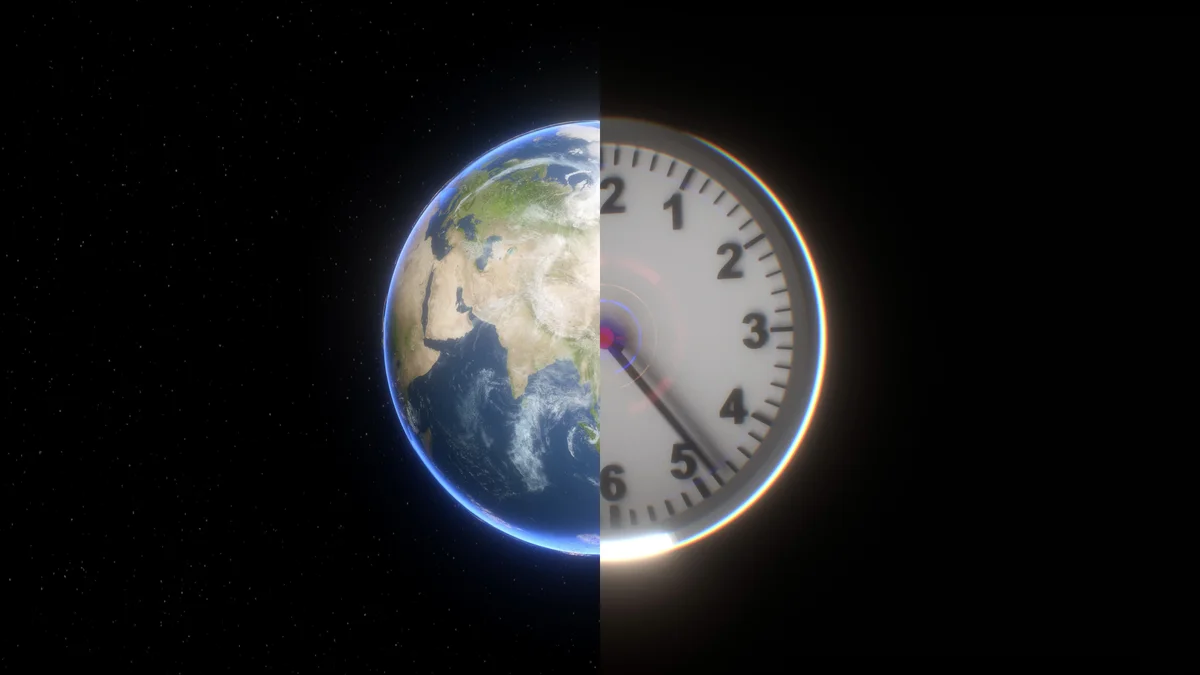
Today an international group of scientists, diplomats and timekeepers voted to end the leap second, which has been keeping Coordinated Universal Time (UTC) aligned with the time according to Earth’s rotation (UT1) within one second of difference. The length of a day according to UTC is close to that of UT1 but not exactly the same because our planet’s rotation is irregular. We add a leap second every few years to keep them from drifting too far apart.
But soon the leap second will be replaced with a leap hour, added much more infrequently, which will extend the allowed difference between UT1 and UTC to an hour, or 3,600 seconds.
“After 30 years of debates, we are ready,” said Noël Dimarcq, a senior scientist at the French National Center for Scientific Research (CNRS) and president of International Bureau of Weights and Measures’ (BIPM’s) Consultative Committee for Time and Frequency, just before the vote, which took place at the General Conference on Weights and Measures (CGPM) in Versailles, France.
If you're enjoying this article, consider supporting our award-winning journalism by subscribing. By purchasing a subscription you are helping to ensure the future of impactful stories about the discoveries and ideas shaping our world today.
UTC is the world’s standard timescale. It’s the reference for how computers, phones, boats, planes, satellites and everything else tell time and for how navigation systems such as GPS function. It’s calculated via a weighted average of the time according to atomic clocks around the world and disseminated by the BIPM.
Shortly after UTC was first established in 1960, scientists noticed Earth’s rotation was ever so slightly slowing down, so it was not keeping pace with the count of the seconds according to atomic clocks. At the behest of astronomers and other experts, the first leap second was added to UTC in 1972 to realign the time standard with Earth’s rotation. Since 1972, 27 leap seconds have been added.
In the mid-2010s, however, Earth’s spin began speeding up. Scientists predicted that a negative leap second would be necessary soon, perhaps as early as 2029. Engineers say a negative leap second would be like a “mini Y2K” event because it would suddenly send the entire world one second backward in time, which could cause chaos in our digital infrastructure.
“Avoiding negative leap seconds is a very big driver to open the window” between UTC and UT1, says Nick Stamatakos, head of the Earth Orientation Department at the U.S. Naval Observatory, which manages the country’s GPS grid.
Since 2022 scientists, government officials, telecommunications professionals and others have been urgently trying to find a practical way to solve the leap second problem.
The BIPM, which is the official source of UTC, hosts CGPM every four years to discuss issues with member states. This morning officials at this year’s conference held the vote to end the leap second and make UTC continuous, with the change taking effect on May 20 (World Metrology Day), 2027. The resolution won by a majority vote.
Instead of using leap seconds, everyone has agreed that they will tolerate more drift between UTC and UT1 than they had in the past. And when things get really bad, we’ll add a leap hour instead. Although leap seconds have historically been added every few years, scientists predict that a leap hour won’t be needed for more than 1,000 years—effectively ending the BIPM’s procedure to link UTC with Earth’s position in the sky.
The change won’t be noticed by most of us, and switching to continuous time will be easier for our digital infrastructure—there will be much less risk of bugs or service outages arising from a leap second discontinuity. But the shift means that human civilization will even further diverge from our oldest way of telling time: by looking to the sky.
Great science journalism requires human expertise, time, effort and creativity. And it costs money. That’s why I and the journalists here at Scientific American hope you’ll join our community.
Jeanna Bryner, Editor in Chief, Scientific American
正文由 探How 从来源站点 RSS 同步,内容未经改写;遇到排版缺失或需要图片、视频时请以原文为准。