The Best Smart Ring for Discreet Fitness Tracking in 2026
Turns out, your finger is prime real estate for health tracking. Here are the smart rings that impressed me the most.
以下正文同步自 Wired,版权归原站所有,已转换为易读排版。
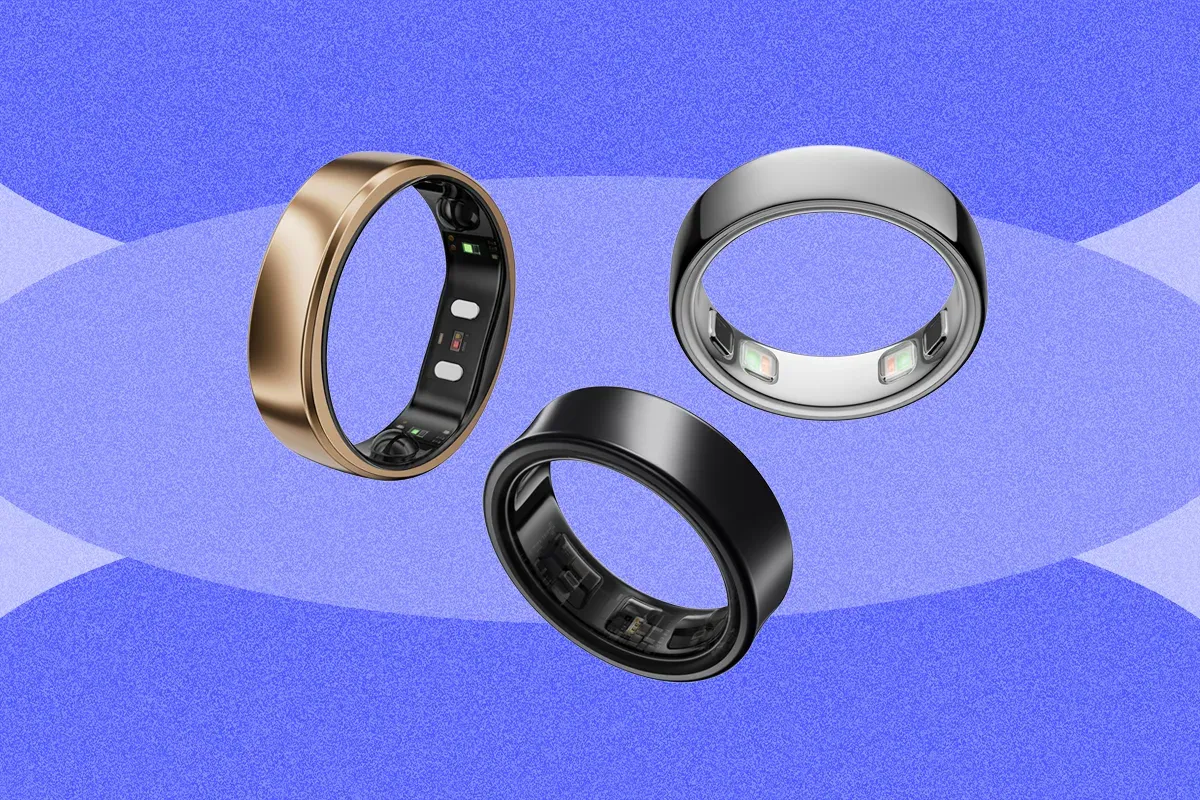
Once the preserve of wealthy wellness buffs, top-of-the-line smart rings are becoming increasingly affordable and available. Although our top pick is still Finnish pioneer Oura's Ring 5 (from $399), the company is no longer the only fish in the smart-ring sea, thanks to upstarts like Ultrahuman and RingConn, established fitness-tracking brands like Amazfit, and even tech giants like Samsung. I expect to see more entrants in the coming months, but for now, these are the best smart rings we’ve tried. For more wearable recommendations, check out WIRED's guides to the Best Smartwatches, the Best Fitness Trackers, and the Best Fitbits. Love WIRED? Add us as a preferred source on Google to see more of us. Best Smart Ring Overall The original Oura Ring unilaterally created the health smart ring category. This stylish, unobtrusive ring, popularized by biohacking billionaires, soon brought miniaturized fitness tracking to the masses. Why WIRED recommends: The latest Oura Ring 5 is 40 percent smaller than its predecessor, making it one of the comfiest wearables to keep on all day and night. The titanium exterior has a new coating applied with physical vapor deposition (PVD) to improve scratch resistance, and the ring itself features redesigned sensors, stronger signal detection, and consequently, better accuracy. It also has improved battery life, lasting up to nine days of use. The biggest upgrade is Oura's push toward AI-powered health guidance. Similar to Google Health Coach, the Oura Advisor can answer wellness questions, provide personalized recommendations, and help identify patterns across your long-term data. New health features, including blood pressure signals and nighttime breathing insights, expand Oura's focus beyond basic fitness tracking. The trade-offs: While it now supports live activity tracking through the app and can work with compatible heart rate monitors, the Ring 5 isn't the best choice for athletes who need live workout stats or a built-in GPS. If you already own a Ring 4, I'd probably wait another generation, considering that most software additions are coming to older hardware anyway. Finally, you'll need an Oura membership ($6 per month or $70 annually) to unlock most of its insights. (Without it, you can only view your Readiness, Activity, and Sleep Scores.) TL;DR: Though still subscription-based, the Oura Ring 5 is the best sleep tracker, one of the best fitness trackers, and the best smart ring for most folks. Read my full review.
Specs
Weight From 2 grams (depending on ring size)
Battery Life 6 to 9 days
Durability 100-meter water resistance; IP68 rated for water and dust
Subscription $6/month (first month is free)
Compatibility iOS and Android
Best Subscription-Free Smart Ring I'm currently testing the RingConn Gen 3, but the Gen 2 Air remains one of our budget picks thanks to its affordable price and subscription-free model. Why WIRED recommends: The RingConn Gen 2 Air is slimmer, lighter, and much more comfortable than previous models. It tracks your steps, calories burned, heart rate, blood oxygen, and sleep. It can prompt you to get up when you’ve been sedentary for too long and nudge you to take a breather if your stress levels spike. It's also compatible with colored ring protectors to swap out with your outfits if you're someone who likes to color-coordinate. RingConn added an AI assistant to the app that generates a plan for you, adjusting your targets weekly based on your activity and feedback. This feature is fine. You can ask questions and get tips, but it doesn't dramatically change the overall user experience or make me more motivated to use the ring. The trade-offs: Compared to the Gen 2, it's made from cheaper steel, has a slightly shorter battery life (still up to 10 days), can’t detect sleep apnea, and comes with a basic charger instead of a nifty charging case. Workout tracking is limited and does not work well when your heart rate is elevated. It also consistently overestimated reviewer Simon Hill's sleep and underestimated his steps and activity compared to the Oura and Apple Watch. TL;DR: The RingConn Gen 2 Air is worth considering given that it's comparatively affordable and subscription-free.
Specs
Weight 2.5 to 4 grams (depending on size)
Battery Life Up to 10 days
Durability 100-meter water resistance; IP68 rated for water and dust
Subscription None
Compatibility iOS and Android
Best for Samsung Users The Samsung Galaxy Ring works seamlessly with the Galaxy Watch8 series and Galaxy Watch Ultra, extending each device's battery life by trading tasks and keeping tabs on your activity while the other is charging. Why WIRED recommends: Former WIRED editor Adrienne So found this ring's accuracy similar to the Apple Watch Ultra. It accurately auto-detected workouts—even pool workouts—and the heart rate tracking is also reliable. Its cycle-tracking feature, powered by the fertility-tracking app Natural Cycles, uses skin-temperature sensing to track when your period will come—and it works. It comes in an attractive, clear charging case with an LED that shows you how much battery life you have left. The trade-offs: While you can use the Galaxy Ring with most Android phones, it costs about as much as the Oura Ring 5 upfront and doesn’t require a subscription. The most useful features, like your daily Energy Score and wellness tips (what the company calls Booster Cards), also rely on Galaxy AI, which means you'll only be able to see them if you are using the ring with an Android phone and the Samsung Health app. Lastly, Adrienne found the Galaxy Ring to be a bit too generous with its sleep tracking, which makes sense since it lacks a gyroscope. TL;DR: If you have a Samsung phone and Galaxy Watch, the Samsung Galaxy Ring has an Apple-like seamlessness and interoperability to it. Read Adrienne So's full review here.
Specs
Weight 2.6 grams (depending on size)
Battery Life Up to 7 days
Durability 100-meter water resistance; IP68 rated for water and dust
Subscription None
Compatibility Android
Over the years, the WIRED Reviews team has tested several other entrants in this category. Here are some more smart rings to consider. Oura Ring 4 for $349: While the Ring 5 is the smallest smart ring on the market, the Ring 4 is still slimmer and lighter than its predecessor. There's also a ceramic version. Reviewer Simon Hill had issues with dwindling battery life and some scuffing with his silver Ring 4, but he hasn't encountered those issues with the ceramic version. Leep Ring for $199: A British smart ring that's affordable and subscription-free, and offers simplified stats on your activity, sleep, and stress. Unfortunately, sleep is woefully inaccurate and tends to report that I’ve been asleep for my entire time in bed, even if I was watching TV or reading. One night, it suggested I slept 8 hours and 43 minutes (Oura said 6 hours and 52 minutes). The app could also use some polish. For example, it doesn’t take into account that it’s only a couple of hours into the day before telling me my movement for today is “Bad.” I also lost data on the first night it ran out of battery, and there was no warning notification to tell me to recharge. A fully charged ring is meant to last up to eight days, but I’ve been getting closer to five. —Simon Hill RingConn Gen 2 for $299: Despite being $100 more than the Gen 2 Air, this is still a relatively affordable, subscription-free smart ring. The main differences here are that the Gen 2 offers sleep apnea monitoring and it's a titanium build; the Gen 2 Air is made of stainless steel. Amazfit Helio Ring: Amazfit is a purveyor of affordable fitness trackers like the Active 2, so I expected its smart ring to be competitive, but the Helio falls short in several areas. I like the textured bronze finish, but it is the only color you get. Sizes are limited to 8, 10, or 12 for now (sizes 7 to 13 are coming). Also, the Helio was often inaccurate, with heart rate measurements wildly out of step with other wearable tech. It lacks automatic workout tracking, battery life averaged three days for me, and it frequently disconnected from the busy and confusing Zepp app. There's no monthly subscription fee, but there is Aura AI ($70/year) for sleep insights and content or Fitness ($30/year), which includes an AI coach. They are expensive and confusing. (Why have two separate subscriptions?) The Helio works much better in conjunction with a smartwatch (I tried it with the Amazfit Cheetah Pro), as it can merge the data, but as a stand-alone device, it is impossible to recommend. —Adrienne So Movano Evie Ring: When the subscription-free Movano Evie Ring first came out, it was touted as the fitness tracker for women’s health. However, its menstrual health features are pretty underbaked compared to those offered by its competitors. Now that the Oura and the Galaxy Ring can track cycles accurately, this ring's time may have passed. It's also currently sold out. Power up with unlimited access to WIRED. Get best-in-class reporting and exclusive subscriber content that's too important to ignore. Subscribe Today.
正文由 探How 从来源站点 RSS 同步,内容未经改写;遇到排版缺失或需要图片、视频时请以原文为准。