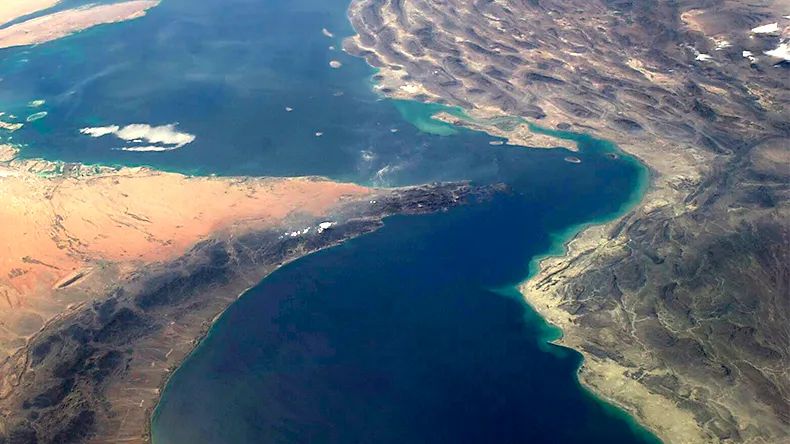
A rare glimpse inside the high-risk, high-reward Hormuz trade
The witness statement of Mercuria freight trader Renaud Hauspy in the case of Mercuria v Baltic Exchange, now at trial in London, sheds new light on the business of getting crude through the Strait of Hormuz
以下正文同步自 Hacker News 最新,版权归原站所有,已转换为易读排版。
The witness statement of Mercuria freight trader Renaud Hauspy in the case of Mercuria v Baltic Exchange, now at trial in London, sheds new light on the business of getting crude through the Strait of Hormuz
BRINGING crude through the Strait of Hormuz is a highly secretive affair. The transaction terms are very private, the players are exceptionally press-shy, the security risks are extreme, and the financial rewards are enormous.
With Iran still attacking tankers eight months after the crisis began, providing details on Hormuz transit mechanics and naming names is not something you’d do outside of a court proceeding.
As it happens, there’s a proceeding now underway.
The Mercuria v Baltic Exchange trial is ongoing in London, with Mercuria seeking to invalidate the Baltic Exchange’s assessments for the TD3C Middle East Gulf-China index from March 1-July 3. Witness statements have just been made public.
The witness statement of Renaud Hauspy, a Switzerland-based crude freight trader at Mercuria, provides a rare inside glimpse of the Hormuz crisis charter market — or lack thereof.
Hauspy’s account (supported by email and chat message documentation) begins in early March, just after the missiles began flying, and extends through the US-Iran “peace” Memorandum of Understanding period in June and July.
Mercuria turns to Sinokor in the early days
Mercuria has a fleet of around 200 vessels, he wrote, with around 60 in the crude segment, including very large crude carriers, suezmaxes and aframaxes. All its VLCCs are chartered in.
The company did not have any VLCCs or suezmaxes inside the strait when the war broke out, but did have VLCCs outside the strait that had been fully fixed with commitments to load in the Middle East Gulf after hostilities began.
These fixtures were either renegotiated to load outside of Hormuz, such as in Fujairah, or were cancelled. “I believe our customers, including TotalEnergies, CNOOC, Unipec and IOC, all agreed that it was impossible to load inside the Arabian Gulf,” said Hauspy.
Mercuria also had oil cargo inside Hormuz that needed to be moved on a contracted schedule that was agreed to before the crisis began.
It couldn’t use the VLCCs it chartered from owners including Olympic Shipping and Maran Tankers. The owners “were not comfortable with ships transiting the strait”, he said.
So Mercuria turned to Sinokor, which has since grown into the key non-state-backed player in the strait.
In early March, Larry Johnson, Mercuria’s global head of marine business, reached out directly to Sinokor’s chartering manager, KB Lee, Hauspy testified.
Sinokor had tankers inside Hormuz when the conflict began. To get its crude out, Mercuria fixed Sinokor’s Singapore Loyalty (IMO: 9322293) on March 11 and Habrut (IMO: 9500730) on March 13.
The prices on the fixtures were redacted in the court filing; Hauspy said, “They were extremely high. We agreed primarily because we had little choice.”
Importantly, the charter terms included a special demurrage structure taking into account the risk of not being able to transit the strait, a structure that would become a model for future charter negotiations.
Mercuria agreed to pay a daily demurrage rate as the cargo holder that declined as time passed, “meaning that if the ship was trapped inside the Arabian Gulf for a long time, the fixture essentially became cheap floating storage for Mercuria”, Hauspy recounted.
“This structure was designed to incentivise the shipowner to cross the strait as soon as it was possible to do so, given that the demurrage recovery would continuously decrease.”
Singapore Loyalty was quickly loaded but then waited “for at least a month” before it transferred its cargo to another VLCC, Fujairah Energy (IMO: 9723071), off Dubai on May 24-25. Fujairah Energy then successfully transited the strait.
Hauspy said Fujairah Energy was thought to be “better able to cross the strait”, although he did not explain why. He added that Sinokor originally opposed the switch but “ultimately agreed to perform the operation” after he called Lee.
By contrast, Habrut transited the strait in April without incident or any warning from the Iranians. “It was a bit of a surprise,” said Hauspy.
“I believe she was ultimately owned or operated by a partially or fully Omani-state-owned company. My belief is that because of this ownership, the Omani government assisted somehow with the ship’s transit through the strait, but I don’t know for sure.”
According to data from Lloyd’s List Intelligence, the beneficial owner of Habrut is the government of Oman.
Hauspy said that one of the early Mercuria fixtures of Sinokor tonnage was reported by McQuilling at Worldscale 1,020, and that he called the broker to dispute that it was a “market” rate, because the fixtures were off prompt dates (not 15-30 days forward as usual), and had a storage-deal aspect due to the special demurrage terms.
With the Mercuria crude cargoes exiting the strait, Hauspy focused on finding new business inside the strait and making money on the crisis.
“It was apparent to me that the profit from such a fixture would potentially be significant” and “significantly greater than we might make from alternative employment”, he explained.
However, owners would not allow VLCCs chartered to Mercuria to enter the strait without a special clause. “That became known as a ‘Strait of Hormuz Clause’ or ‘SOH Clause’, and became a feature of my negotiations involving ships loading inside the Arabian Gulf,” said Hauspy.
That clause permitted a ship to wait until it was deemed safe for the vessel and crew to transit Hormuz. Either the owner or the master could refuse the voyage.
Baltic Exchange warns of ‘chaotic consequences’ if Mercuria wins
By Greg Miller 21 Oct 2026
Mercuria is no longer seeking a restatement of the TD3C for the period since the Hormuz crisis began. It is seeking a retroactive invalidation and suspension of the index
For some customers, this wouldn’t work. “Unipec had very strict requirements, essentially requiring a warranty that the ship could transit the strait as scheduled. This was simply not possible,” said Hauspy.
For other customers, there was potential to negotiate. In return for accepting an SOH clause, customers required “some sort of compensation structure to incentivise that transit as soon as possible”.
The decreasing demurrage fee concept previously used by Sinokor and Mercuria was discussed for new potential fixtures, with some tweaks. One idea was to pay a portion of the demurrage to the owner chartering the ship to Mercuria, and for terms allowing the charterparty to be cancelled after a certain number of waiting days.
Hauspy tried hard, making almost daily unsolicited offers for inside-Hormuz business, but to no avail. In the court filing, he listed 24 attempts between April 22 and June 15 to fix five VLCCs chartered by Mercuria: Maran Leo (IMO: 9602473), Maran Arete (IMO: 9776547), Maran Thetis (IMO: 9421427), Sophia (IMO: 9776559) and Olympic Luck (IMO: 9424211).
“I cast the net wide with these offers,” he said. There were some negotiations, a few ships placed on subjects, but no fixtures that didn’t fail.
“I was not able to fix any of Mercuria’s VLCCs to load exclusively inside the Arabian Gulf, no matter the rate offered,” said Hauspy. “It was impossible.”
The dynamics described by Mercuria’s freight trader highlight two key hurdles amid the crisis: the high safety risk to ships and crew on one hand, and the high commercial risk of “who pays if we get stuck waiting?” on the other.
The shuttle tanker system pioneered by Adnoc solved both issues.
Owners wouldn’t have to take Hormuz risk — they could load by ship-to-ship transfers in the Gulf of Oman — cargo interests wouldn’t risk having to pay massive demurrage costs on cargo stuck inside the strait, and charterers wouldn’t have to risk loss of hire if tonnage was waylaid in the AG.
Hauspy said he first become aware of the Adnoc shuttle service in mid-April. “The benefit of this for the customer is that their ship did not have to risk crossing the strait. Adnoc would take on that risk.”
Mercuria took advantage of the Adnoc shuttle service and fixed “a number” of VLCCs loading off Oman.
Hauspy did not directly deal with Adnoc headquarters, but with Richard Lewis, chief commercial officer of Navig8 (Adnoc bought Navig8 for $1bn-plus in 2025). Lewis and Navig8 “effectively acted as the middleman between Adnoc and Mercuria”, he said.
Hauspy described the first shuttle fixture done by Mercuria in late April. “I remember negotiating this fixture with Richard directly. We had agreed that he would provide us with the Barakah (IMO: 9902615), which would load inside the Arabian Gulf and perform an STS operation in Fujairah.”
The market changed yet again with the US-Iran peace MOU in mid-June. “I noticed more willingness from shipowners to explore options to load inside the Arabian Gulf following this agreement,” said Hauspy.
Mercuria was able to fix some of its fleet, although none of its VLCCs, and was able to charter in VLCC tonnage on a spot basis loading inside the AG. Hauspy said he believed these fixtures included SOH Clauses.
Mercuria was offered US military support during this period. He testified that he held a Teams call in mid-July with Chimi Zacot and Andrew Weiner of the US Department of Energy.
“They were exploring ways to move ships through the strait with some military assistance,” Hauspy said, adding that Mercuria subsequently secured a US escort for a voyage of Sinokor’s Monaco Loyalty (IMO: 9312511).
Then the peace MOU fixture window closed.
“Only a few weeks after the MOU was signed, attacks on ships in the strait resumed, and my experience was that confidence in the market deteriorated again,” said Hauspy.
Your username does not meet the requirements.
Sorry - this email domain is not allowed.
Sorry - public email accounts are not allowed. Please provide a work email address.
An account with that username already exists.
Unfortunately we've not been able to process your registration. Please contact support.
Please Note: You can also Click below Link for Ask the Analyst
Ask The Analyst
Your question has been successfully sent to the email address below and we will get back as soon as possible. my@email.address.
Please make sure all fields are completed.
Please make sure you have filled out all fields
Please make sure you have filled out all fields
All set! This article has been sent to my@email.address.
All fields are required. For multiple recipients, separate email addresses with a semicolon.
Please make sure all fields are completed.
Please make sure you have filled out all fields
Please make sure you have filled out all fields
Subject: A rare glimpse inside the high-risk, high-reward Hormuz trade
Finish creating your saved search alert after you sign in
正文由 探How 从来源站点 RSS 同步,内容未经改写;遇到排版缺失或需要图片、视频时请以原文为准。