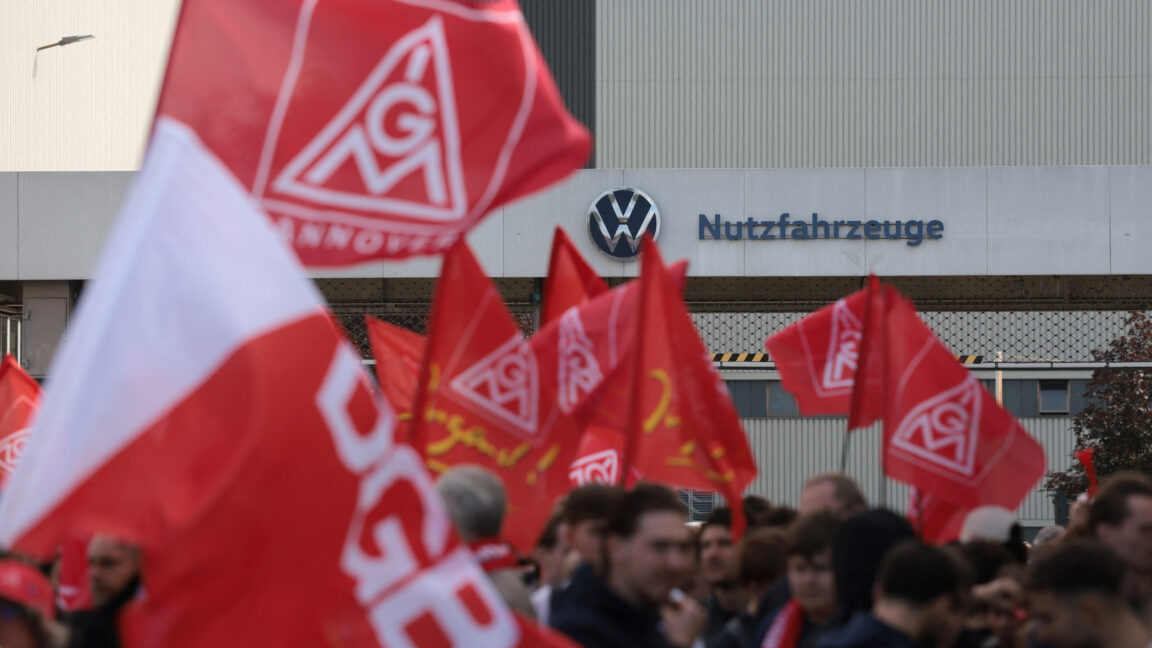
Protests for Germany’s car industry as job losses loom
A combination of Chinese competition and US tariffs is causing problems in Germany.
以下正文同步自 Ars Technica,版权归原站所有,已转换为易读排版。
The future is looking increasingly bleak for Germany’s automotive industry. Since the turn of the century, car makers have been among the crown jewels of the German economy, punching above their weight in terms of investment and innovation. But those companies are now facing multiple problems at once, from declining demand at home and stronger competition from abroad to the cost of punitive and arbitrary new tariffs, on top of preexisting structural challenges like an aging workforce and a slow recovery from COVID. Total automotive sales in Europe have fallen from a peak of almost 18 million in 2019 to around 13 million in 2025, and some share of that smaller market is increasingly going to new entrants from China, which has its own spare automotive production capacity problem to worry about. And while the US market has always been the most profitable for German car exports, that was before the imposition of new import tariffs, which currently stand at 25 percent but could be subject to change at any time. Factory closures now seem not just possible but likely, something that would have been unthinkable just a few years ago. Earlier this summer, news emerged that Volkswagen Group is considering closing four of its German factories to prepare for the future. Things have not gotten much better for VW Group in the months since that news broke. Read full article Comments
正文由 探How 从来源站点 RSS 同步,内容未经改写;遇到排版缺失或需要图片、视频时请以原文为准。