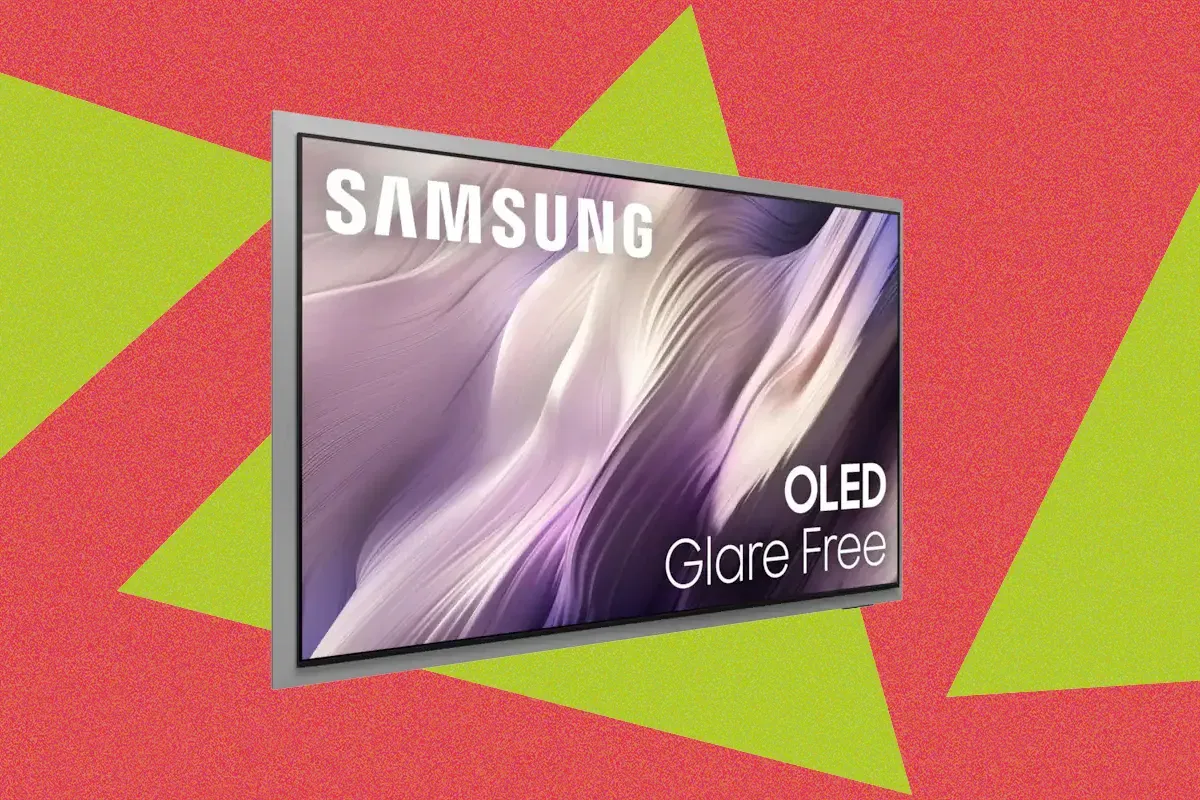
Samsung S95H OLED TV Review (2026)
It performs great, with rich texture and high brightness, but faces new competition when it comes to color dominance.
以下正文同步自 Wired,版权归原站所有,已转换为易读排版。
WIRED
Easy setup without a required breakout box. Incredibly accurate color with deep and rich blacks. AI Optimized picture mode improved color quality and contrast.
TIRED
Some skin tone tests showed less variation than RGB models. Somewhat confusing OS. Did not perform as well on some tests compared to RGB models and projectors.
The traditional wisdom with TVs is that an OLED panel is the crown jewel of display technology. The Samsung S95H is the new flagship OLED mode from Samsung. It stands to reason that that alone would make it the best TV around. But this year, OLED and this TV face some serious competition.
To be clear, OLED TVs are still a safe bet for excellent picture quality, but not as clearly superior to other televisions in 2026. The S95H is no longer a no-brainer for me mostly because of new RGB TV and Art TV models, many of which are extremely appealing and around the same price. I loved the Samsung The Frame Pro 2026 art TV because it has a matte display and looks stunning on a wall showing masterpiece paintings. Movies, shows, and games looked stunning on the LG Micro RGB Evo (after some setting changes). The competition is fierce.
The new S95H replaces the Samsung S95F, and shares many similarities, including anti-glare tech. The S95H is a notch better in picture quality and AI processing, though.
The biggest difference between the two is cosmetic. The S95H now has a silver bezel that you might not realize is recessed behind the main OLED panel. It’s more like a metal picture frame. Personally, I love the new look. Family members noticed it right away, commenting on how the OLED panel with a thin black edge seems to float just in front of the metal frame.
Another major difference has to do with the breakout box, called the Samsung One Connect. With the S95H, it’s no longer required or included in the box, so you have to connect all of your devices like a video game console or a streaming device directly to the television. That means the S95H is thicker at 1.04 inches compared to just 0.4 inches for the S95F. However, I actually preferred not using the One Connect. It meant less hassle with another device to plug in and set up. You can always buy the One Connect box later if you decide you want less clutter by your TV stand or on the wall.
The S95H has four HDMI ports on the right side (including one for gaming at 165 Hz and one for eARC passthrough audio for surround sound), an Ethernet jack, optical audio out, two USB ports for playing files off a storage drive, and a headphone jack. It supports Wi-Fi 6E for faster speeds and compatibility than older standards (like the Wi-Fi 5 used on the S95F). Both TVs mount flush to the wall, although I used the included pedestal stand, which attached easily.
For the UI, Tizen OS is not terrible, but as we noted in our previous S95F review, it’s still a bit of a maze. The setup process including adding apps and tweaking picture settings is far easier on a Google TV model like the Sony Bravia 7 II. I’m used to Tizen OS, since I test TVs often, but I still don’t love it. (At least I didn’t need to use the Samsung SmartThings app for setup.)
I really like the Samsung remote—It doesn’t overwhelm you with buttons. Hisense remotes tend to have way too many buttons, in my experience. Most of us need channel, mute, and volume, plus maybe a few shortcuts to apps like Netflix.
Samsung doesn’t officially list the color gamut specs like DCI-P3 or BT.2020 for the S95H. Equally so, there is no official mention of brightness rating in nits or contrast ratio, but I’m okay with that as well. Those specs can be misleading and really depend on the picture quality settings, the brightness of the room, and (mostly) the content you watch. Instead, I subjected the S95H to rigorous real-world testing to see how it measures up to recent models.
The S95H measures up to the competition quite nicely when it comes to color quality. It excels in many areas but is not always the de facto winner for every movie, show or game. Once again, there is so much competition that buying a flagship OLED like this one is no longer the obvious choice.
I started with the movie Awake because several scenes in that movie (about people who can no longer sleep) are extremely dark. Time and again, even top-end televisions can’t seem to show key scenes with enough color or clarity. The S95H performed surprisingly well, but it took some tweaks. On Filmmaker, Dynamic, and even Standard and Eco modes, scenes with the main character biking at night looked too dark. Enabling AI Optimized picture mode helped a lot, beating out what was possible on the Samsung Micro RGB R95H in the same scenes.
AI Optimized also helped make the movie The Creator look clear and colorful during a dark scene by cliffs. I was frankly amazed at how much texture I could see—some OLED and RGB televisions render the cliffs very dull. It means the S95H is capable of showing contrast, depth, clarity, and deep blacks all at the same time. Why the Samsung Micro RGB rendered those scenes too dark is a testament to the S95H’s OLED tech.
For color, I was impressed with a short scene in the movie The End of Oak Street, showing people in brightly colored shirts. No color blooming or bleeding, just really crisp clear and bright colors. The Super Mario Galaxy Movie is my go-to for color bloom testing, and the S95H looked above average. Ironically, while Filmmaker picture mode made some movies look dark, it corrected color blooming perfectly on the Galaxy movie. The OLED tech worked overtime when I watched Guardians of the Galaxy Vol 2 to test color, rendering a dark uniform in one scene with excellent shadow detail.
OLED renders blacks and grays with a deep richness and clarity, since individual pixels can be adjusted or be turned off completely. A much-debated scene in Game of Thrones showing an army at night had both good and bad results. You can see dragons behind a main character that are often way too dark, as long as you use AI Optimized mode. Still, only a high-end home cinema projector like the AWOL Vision Aetherion makes you realize there are faint trees behind another character as she gallops into view from pitch black darkness.
For benchmarks, a skin tone test looked okay but not great. There wasn’t enough variance in color between different people in one scene I’ve tested on every TV this year. That same scene showed more skin tone variance on the LG Micro RGB Evo. A demo reel showing nature scenes also revealed some minor flaws with the S95H. The LG Micro RGB Evo rendered grass as brighter green in one scene by a fence, and with more clarity in a scene with white mist over a snowy mountain compared to the S95H. However, dark trees in a forest still had plenty of shadow detail.
To me, the benchmark demo revealed a simple truth: OLED is superior to RGB at rendering blacks and grays no matter what you are viewing. When it comes to color, OLED rivals RGB as well. Indeed, a scene with a yellow flower and a red cactus looked brighter than any RGB I’ve tested. Later, I watched Blade Runner 2049 on 4K Ultra and noticed yellows and reds in one scene looked hyper-realistic, like you could reach out and peel the color off the screen. On some RGB models from Sony, Hisense, and even Samsung, the colors were not as clear.
I switched to gaming to test picture quality, refresh rate, and sound. Oddly, my first test playing Resident Evil Requiem showed a library scene at a police station that lacked texture and detail compared to some RGB models and projectors I’ve tested. The S95H looked crisp and felt responsive at 165 Hz, especially during a lakeside horse ride in the game Red Dead Redemption 2. The OLED tech rendered the main character's face with incredible detail.
Playtesting the game Senua’s Saga: Hellblade II on an Xbox Series X, I noticed the main character’s face looked a bit dark even with AI Optimized picture mode enabled. I was also surprised at some color blooming issues when I tried Crimson Desert on PC. Fire from my pet dragon that filled the screen looked too stark orange for my tastes. The takeaway? Not everything is absolute perfection, but performance is still mostly amazing with the S95H.
I haven’t mentioned the anti-glare tech yet, mostly because it matches what I’ve seen on many Samsung televisions lately, and is not a big differentiator on the S95H. It’s amazingly good, but glare is not a major issue I’ve had on many TVs I’ve reviewed recently.
Artwork looked spectacular on this model thanks to the OLED tech and anti-glare screen. For access to most paintings, you do have to pay a $5 a month subscription to the Samsung Art Store. Keep in mind that the Samsung The Frame Pro 2026 still looks much better for art.
Overall, the S95H is a fantastic television with deep blacks, excellent contrast, accurate color, and plenty of picture quality settings including AI Optimized mode. What’s changed is the television landscape. RGB models like the LG Micro RGB Evo have more color variance at times, especially for skin tones. High-end home cinema projectors like the AWOL Vision Aetherion perform better on some benchmarks. Yet, in many of my real-world tests, the Samsung S95H is a crown jewel, if just a notch less capable than a few competitors.
正文由 探How 从来源站点 RSS 同步,内容未经改写;遇到排版缺失或需要图片、视频时请以原文为准。