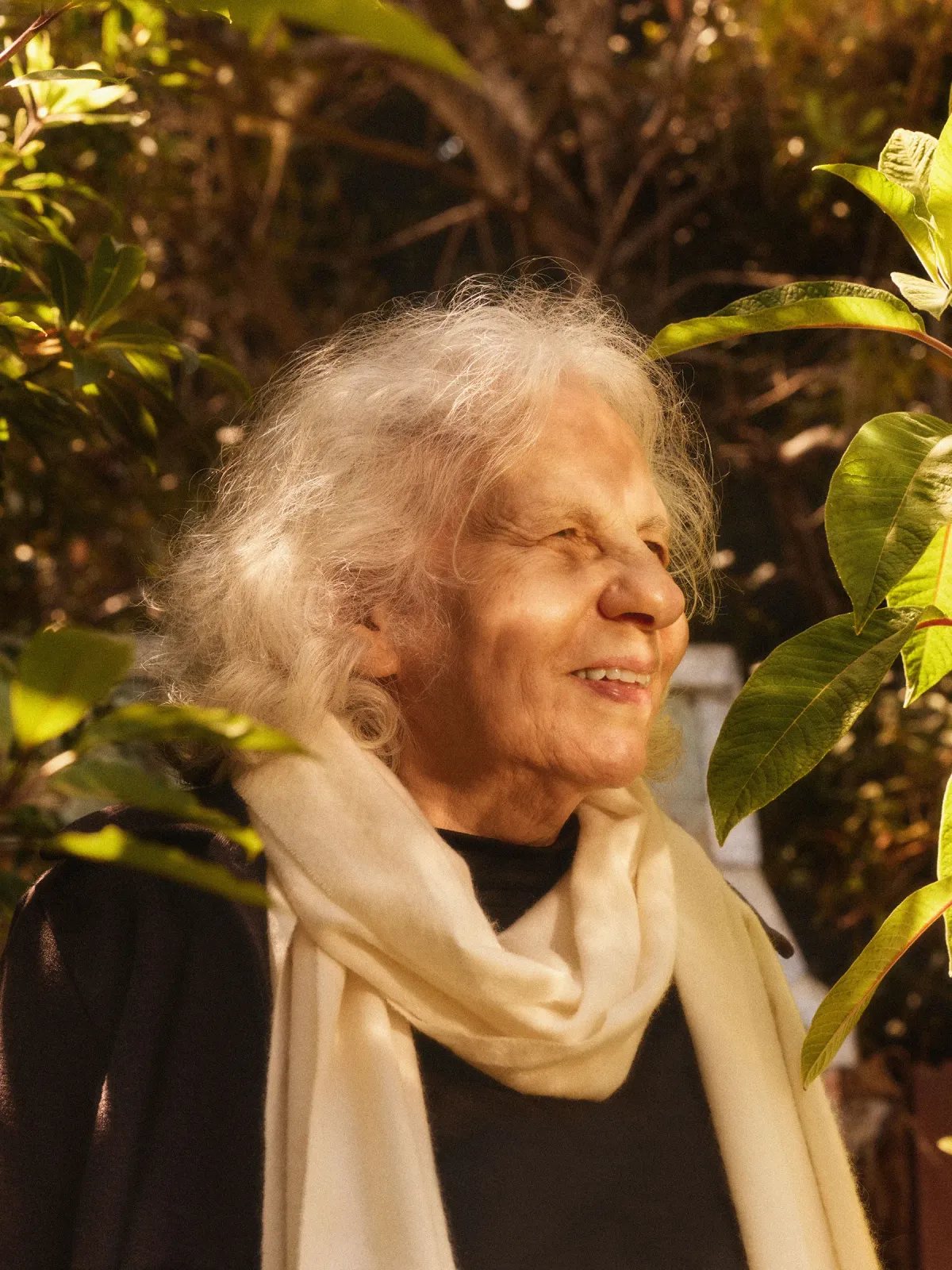
Who Killed Paulina Borsook’s Career?
A quarter-century ago, Borsook published a wildly prophetic, penetrating book about Silicon Valley called Cyberselfish. Then she disappeared.
以下正文同步自 Wired,版权归原站所有,已转换为易读排版。
“I don’t know what to make of it,” she said as we drove to lunch. I’d picked Borsook up outside her home near Oakland, California, a basement unit that she calls “Ice Station Zebra” on account of the cold and the color scheme and the isolation. At least that’s how I was encouraged to picture it. Borsook didn’t want me to come inside, lest I pull the old magazine hack’s scam of investing the decor with symbolic significance. She wrote enough stories of this kind in her heyday, back when she was landing bylines in WIRED and the like, to know how the game gets played. Later, she explained over email: “this place i ended up in reflects me not at all. i lost all i owned when i couldnt pay for storage and this place is the best i could find that worked with my disabilities. so i feel it REALLY doesnt reflect me/my taste/my preferences. shame and aversion.” What had happened to Paulina Borsook? The question was haunting her, even on a day when she’d gotten such good news. It’s haunted her for a quarter-century now. In 2000, after years writing about Silicon Valley, she published a book, Cyberselfish, that discerned within the tech utopianism of the era a dead-eyed, woman-hating social malevolence—what the subtitle called the “Terribly Libertarian Culture of High-Tech.” It was smart at a moment when the whole of the tech industry had gone dumb, and it was funny where Silicon Valley was at its most self-serious. Cyberselfish got warm, if occasionally baffled, reviews. It sold something like 5,000 copies in hardcover and another 2,000 in paperback, a respectable mid-list number, no blockbuster but not a dog, either. And then … nothing. Editors stopped taking her calls. No fellowships materialized, no second book deal, no regular MSNBC spots for the dotcom Cassandra of the boom times. Borsook couldn’t get work. She began to wonder if she had been blacklisted. Her health, always wobbly, only worsened. She was living in other people’s houses. She went broke, a process she likened to a fire in which everything burns to the ground, and was getting by on a GoFundMe and support from friends. She’d taken to calling the book TDB. That damn book. When Borsook and I first met, in December of last year, she was fully in the midst of what she terms “this resuscitation thing.” It had happened so quickly and altogether without her knowledge: a social media post here, another one over there, celebrated tech critics like Gil Durán of The Nerd Reich exhuming her book and waving it around as proof that, even in the go-go days of the dotcom bubble, some people saw where things were headed. “Instead of centering men who missed the boat (and still don’t seem to get it), let’s lift up the work of Paulina Borsook, who saw it all very clearly and tried to warn us 25 years ago,” Durán wrote in a widely shared post on Bluesky—in response to a 2025 WIRED essay by Steven Levy. Borsook was christened a prophet, unappreciated in her time but uniquely fitted to ours. Hadn’t she written of “testosterone-poisoned guys with chips on their shoulders and too much time on their hands” years before the manosphere? Hadn’t she recuperated the Luddites as “early protesters of de-skilling” back when “Luddite” was an epithet? Hadn’t she raised her eyebrows at the theorists of Sand Hill Road playing footsie with eugenics? Cyberselfish became a minor phenomenon without Borsook so much as saying a word about it. The New York Times profiled her, calling her “The Writer Who Dared Criticize Silicon Valley.” It’s like what a friend once told her: The universe isn’t done with you yet. Publishers were now keen to get the book back in circulation. That day in December, five of them had sent their bids to her agent. (Eventually, Borsook would settle on Tin House, which published a new edition of Cyberselfish in mid-September, with a foreword by Durán.) The offers were validation, after all those years in the wilderness. Things were finally looking— “It really kind of broke my heart in so many ways,” Borsook was saying now at the restaurant, as we waited to order. Her mind was back in 2001, wondering again what had happened to her career. Was it something she’d written? Could it have been an actual blacklist? Was it something as depressingly commonplace as sexism? “I really hate playing that card,” she said, “but I do have to wonder.” She just couldn’t figure it, even still, all these years later. In a way, the happy turn of events in the past few months had left her even more discombobulated. As she told me more than once, “I don’t know how to think about myself anymore.” She’d won me over in a matter of hours—a common enough phenomenon, I would learn, among people who find themselves in Borsook’s orbit. When I dropped her off that afternoon, I promised—only half in jest—to find the guy who killed her career. Dick Pick was a software developer for a military contractor during the Vietnam War. The story goes that the Army needed a way to track spare parts for Lockheed’s Cheyenne attack helicopter. Alongside his business partner, Don Nelson, he came up with a database operating system that they called—and here you have to imagine two of the shit-eatingest grins you’ve ever seen—the Generalized Information Retrieval Language System: GIRLS. (What, you thought tech bros were a new phenomenon?) Like a lot of tech innovation underwritten by defense spending, GIRLS was soon put to commercial use. Eventually it came to be known as PICK, and it was with this latter name that the operating system found itself under the fingertips of one Paulina Borsook, an employee at a small software company in Marin County. Before she became one of the sharpest media observers of early Silicon Valley, Borsook first learned how to see tech. That happened in the early 1980s, in front of one of those so-called minicomputers that were in fact big enough to be buried in. The company was called Construction Information Systems, and Borsook was doing some technical writing, documenting in the plainest language she could muster how the software worked. She learned two important things at that job. The first is that tech is “infrastructure, not magic,” she wrote in a 2015 essay. The second is that the computer is a way of seeing into the mind of another human. It is, ineluctably, social. “Learning about PICK,” she wrote, “taught me that software was a human artifact; that is, I began to be able to think the way the creators of PICK thought … The dyer’s hand, the design sensibility, the cognitive blind spots: all evident and all human artifacts. Technology is idiosyncratic like the humans who devise it and the people who make it are just people.” Everything Borsook would later write as a journalist covering the industry—the frisky pieces for Salon and Suck, the weightier profiles for WIRED, every barbed word of Cyberselfish—seemed to flow from a simple imperative drawn from her experience at that minicomputer: never lose sight of the human in the machine, the Dicks (as it were) behind the system. Once, she described her writerly voice as one of “agonized humanism,” and that’s it exactly. She was appalled by those in the industry who were determined to leave the human behind. “The most virulent form of philosophical technolibertarianism is a kind of scary, psychologically brittle, prepolitical autism,” she wrote in an especially pungent passage in Cyberselfish. “It’s an inability to reconcile the demands of being individual with the demands of participating in society … these technolibertarians make a philosophy out of a personality defect.” Her own politics ran to the left, broadly speaking, though like a lot of political commentators of her time she seemed to cherish her own à la carte apostasies. She wasn’t embarrassed to say she agreed with the libertarians in their premises. More than anything she, too, wanted “to be left alone,” she wrote in Cyberselfish. But what Borsook brought to her journalism was an understanding of Silicon Valley as a social creation. Some of that can be attributed to growing up in Pasadena during the space-age boom. She remembers the “vaguely New Deal mentality” of the engineers and scientists at the Jet Propulsion Laboratory and Caltech, all of them beneficiaries of robust state investment in the war machine. In a place like that, there could be little mistaking the public’s role in the development of new technologies. Thus did Borsook receive an early inoculation against the basic fetishism that would come to define the culture of Silicon Valley—the idea that the power of technology is inherent and not derived from the social relations that produced it. We shouldn’t overstate things. Not everyone who lived or worked in the shadow of the military-industrial complex drew the same lessons about the virtues of government. In his indispensable 2006 book From Counterculture to Cyberculture, Fred Turner reminds us that the research laboratories spun up during the Second World War were also sites of freewheeling collaboration across disciplines, liberated (so it seemed) from hierarchy—sites of what today we might call disruption. And believe it or not, all those earnest poindexters with their slide rules offered an organizational model for the libertarian communalists of the following era. This was the milieu that would eventually spawn the magazine you have in your hands now. When Borsook began writing for WIRED in the 1990s, it was something of a collision between two very different ways of understanding the political economy of the American midcentury. Borsook has no doubt the shooting was “accidentally on purpose,” some violent fugitive impulse escaping the tangle of teenage love-hate. She tells the story now without self-pity or sentiment, simply as a way of explaining why her brain works the way it does. Even in the moment, she refused any histrionics. She went to the kitchen and poured cold water on the hole in her face, told her friends to call the operator, and then somehow gave them to understand that now was the time to get their stories straight. “I felt protective” toward the friend who shot her, Borsook explains now. “I know she immediately regretted it. And I said we need to come off as like we’re just a bunch of ditzy teenagers, as opposed to these alarmingly precocious, kind of scary young women that we were.” She says she refused to cooperate with any attempt to prosecute her friend. The two remained close for years. It was the jolt from the impact, Borsook believes, that caused the most lasting damage. The effects soon began to present themselves. “That gunshot prematurely aged my brain,” she said in her presentation for My Life as a Ghost. She continued: “I flunked calculus three times and I had no idea why this happened. Ever after, I simply could not process texts of a certain density, such as a geology textbook or a legal opinion. It all washes out. My brain just cannot process and retain quantitative transactions and language of a certain abstraction—all of which are necessary to function as a symbolic-manipulator in a knowledge economy.” (It isn’t just an issue of cognitive function. She says her lifelong environmental sensitivities—so acute now that she can’t even wear a metal watch—were likely exacerbated by the shooting.) Borsook got a degree in psycholinguistics from UC Berkeley, but even then, communication of any kind was difficult, an issue that predated the shooting. Whether in her speech or her writing, she had a tendency to be “gnomic,” “elliptical,” “highly condensed”—her words. “How my friends put up with it, I don’t know,” she says. She developed a conversational habit, still obvious today, of rounding off her sentences by asking if what she had just said made any sense. “I began to realize that a lot of the ways I think and speak about things don’t make sense to a lot of people,” she says, “so I have to check in with them.” She was still chatty, and nothing would seem outwardly amiss. But she knew something
正文由 探How 从来源站点 RSS 同步,内容未经改写;遇到排版缺失或需要图片、视频时请以原文为准。