America didn't lose its rare earth industry, it sold it
In October 2025, Beijing imposed sweeping controls on its rare earth exports. Since then, those controls have been suspended one short reprieve at a time, in the latest instance until Nov. 10, with a broader trade truce…
以下正文同步自 Hacker News,版权归原站所有,已转换为易读排版。
In October 2025, Beijing imposed sweeping controls on its rare earth exports. Since then, those controls have been suspended one short reprieve at a time, in the latest instance until Nov. 10, with a broader trade truce through Jan. 10, 2027. The reprieves have repeatedly come only after American concessions, demonstrating China’s leverage in the export fight.
Yet China has constricted sales even during the truce, as buyers have few options but to take what they can get. In June, with the suspension in force, Beijing placed MP Materials and USA Rare Earth, the two companies the U.S. is counting on to build an alternative supply to China, on an export control list.
Washington’s effort to rebuild the supply chain, meanwhile, has not yet reached the scale or durability the problem requires. With up to $100 billion in loan authority specifically earmarked for critical minerals in the One Big Beautiful Bill Act, the capital undoubtedly exists. What is missing is alignment of interests among the parties that would supply and benefit from it, and a political system patient enough to hold a course for the decade or more that rebuilding a supply chain takes.
This article’s authors work at the intersection of finance and national security. Between the three of us, we have watched the same on-again, off-again rhythm play out in both Chinese statecraft and U.S. budget fights. A consistent pattern plays out: Capital markets are good at financing efficient supply but are not good at financing a binary outcome, such as insurance against a monopoly state seller that can manipulate both price and availability. And subsidies alone will not close that gap. We have seen firsthand that what the U.S. government has to offer right now insufficiently incentivizes private investors, because its tools are market tools deployed in an environment of market failure. Instead, we propose a financing instrument that could clear both economic and political hurdles: a contingent convertible security that converts into ownership if Beijing weaponizes supply.
The history of how we got here is well known, but worth retelling briefly. The Chinese Communist Party inherited its strategic focus on building industrial capacity from the Soviet Union. In 1964, Deng Xiaoping inspected an iron ore mine near the Mongolian border holding the world’s largest rare earth deposit. He ordered the engineers to develop steel and rare earths alike. Since then, as technologies have increasingly relied on specialized materials, the Chinese Communist Party under successive leaders has deliberately invested in and consolidated control over the rare earths industry. China refines more than 90 percent of the world’s rare earths and close to 99 percent of heavy rare earths today. It processes nearly all the heavy elements that go into precision-guided weapons and advanced chips.
When Beijing tightened export controls in October 2025, Treasury Secretary Scott Bessent characterized it as “pointing a bazooka at the supply chains and industrial base of the entire free world.” Remarkably, the entire market for rare earth oxides is worth less than $10 billion. That a $10 billion market can grind to a halt trillions in global gross domestic product is the definition of a chokepoint. Beijing controls this chokepoint today by design. Decades of state policy work laid the groundwork for the Chinese Communist Party to enact an international licensing system by 2025. General Secretary Xi Jinping himself openly speaks about the importance of maintaining global dependency on China’s industrial supply chains.
Hindsight treats this as neglect, something policymakers lost sight of and let slip during the U.S.’s unipolar moment. That is a necessary, but only partial, explanation. The truth is the United States did not lose its rare earth industry due to carelessness. Private American companies willingly sold it, for reasons that made perfect economic sense at the time and still do. China bought it for reasons that were never purely economic. That mismatch explains why, after years of investment and policy attention, the dependency remains.
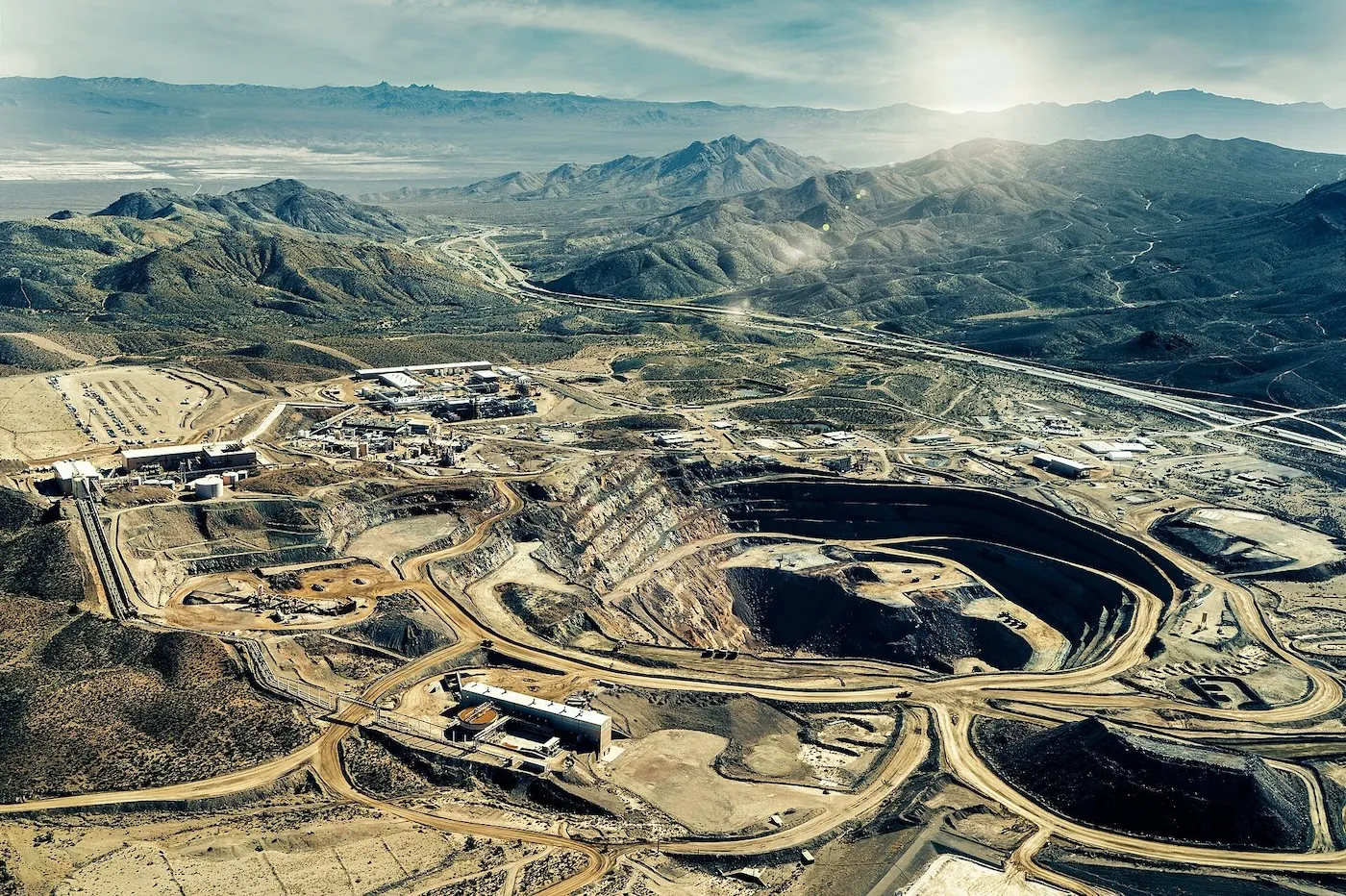
Until the late 1980s, the United States was the world’s leading producer and refiner of rare earths. But it was a dirty business: The Mountain Pass mine in California leaked roughly 600,000 gallons of radioactive and other waste into the Mojave. As cleanup and regulatory costs mounted and profits fell, the mine shut down in stages starting in the 1990s until it was fully idle by 2002. Meanwhile, the work moved to China, where the state subsidized unprofitable operations, tolerated pollution, and sold the processed oxides back to the U.S. at rock-bottom prices.
The same thing happened to the magnets: In 1995, General Motors sold Magnequench, its magnet unit, to a Chinese-backed consortium. By 2006, the last U.S. plant had closed, and the machine tools and equipment had been shipped to China. Economists would say this was the right move for a free market economy. Comparative advantage did what it was supposed to do, and a dirty, low-margin business left a wealthy country for a developing one. There was even a strategic rationale: Drawing China into the trading system, the wishful thinking went, would also make it a responsible stakeholder rather than a rival.
The category error was to conceive rare earths as a market, rather than recognizing it as a geostrategic industry. A market solves for the lowest cost. To be sure, Chinese producers competed on cost, and they rode a tech boom with surging demand for their product. But a state will pay almost any price to control a chokepoint, because tolerating a money-losing business pales in comparison to the geopolitical leverage that it brings. Over time, China has become less market driven, not more. Meanwhile, the U.S. continued to treat as a market what the Chinese Communist Party came to appreciate as a strategic program.
This is classic market failure in which the same critical material can become worthless or priceless on command. In 2010, during a maritime dispute with Japan, Beijing reportedly halted rare earth shipments, and Tokyo quickly conceded. The short-term truces of the past year, each struck around contentious but episodic trade disputes, further entrench that market failure. Each successive loosening and tightening seems designed to keep the United States and its allies off balance and frustrate any long-term plan to reduce Beijing’s leverage.
If the market will not rebuild the rare earths supply chain, the government must do so.
Administrations under both parties have tried, and their attempts have run into a predictable morass of misaligned interests. The parties to government financing all want different things. Private investors want attractive returns in fat years, while having the government carry losses in lean ones. Commercial lenders want years of fully contracted offtake to guarantee interest payments, while Congress typically appropriates money for the next year. Markets want flexibility while Congress wants tight oversight and guardrails. Washington often wants to be the last (and lightest) money in, which signals to investors that the government is hedging. And cheap, open-ended financing is exactly the wrong signal to send to management teams.
The Pentagon’s latest playbook acknowledges that the market, left to its own devices, simply will not finance uneconomic redundancy. As a result, the July 2025 deal with MP Materials includes $400 million in convertible preferred stock, loans, equity warrants, a 10-year guaranteed price floor, and a 10-year offtake commitment. The deal was right for its moment, as it gets the producer going and sustains it while Beijing floods the market. But the deal blurs two different roles: In ordinary years, the government is a lender, financing capacity the market will not; in a crisis, it has insured against a geopolitical event. These two roles call for two different return profiles. Because the deal does not separate them, it puts the government in the unenviable position of simultaneously absorbing losses and inviting the charge of nationalization, all without a clear exit strategy.
Without some structure to navigate potentially painful political costs, these financing arrangements will come under pressure during budget cycles and electoral turnover. And that is simply untenable, because when it comes to the decade-plus timeline to stand up a rare earths supply chain, whatever Washington builds must outlast the administration that built it.
A Financial Instrument That Responds to Beijing’s Behavior
Our proposal is a financial instrument that aligns these interests. In financial parlance, the instrument is called a contingent convertible security, also known as a CoCo bond, issued by the producer to the government and any private lenders who wish to join, paired with guaranteed offtake at a price floor. Its form changes with two externally observable conditions: the producer’s capacity build-out and Beijing’s behavior.
Here’s how it works. In its starting form (and in quiet years), a CoCo bond is a simple loan paying interest. Two triggers change its form. The first is capacity. The producer must cross a defined capacity threshold by a fixed date. Capacity can be measured as units of output in mining, refining, or manufacturing critical minerals. Management’s immediate incentives should be tied to the build-out itself.
The second trigger is either a sustained breach of an agreed price band or an externally observed exercise of the chokepoint. This could be denial of export licenses, a bureaucratic delay beyond a specified period, or another form of “constructive denial” that materially interrupts supply to the United States or allied countries. Importantly, no part of this trigger should rely on Beijing’s confirmation, because it is not incentivized to admit to a cutoff. The trigger should be narrow enough that it cannot be declared for political convenience, but broad enough that an adversary cannot game it simply by changing the form of the restriction.
When the first trigger fires, the lender receives a pro rata share of the producer’s free cash flow, in effect, a dividend. The lender paid to build the capacity, so it shares in what that capacity earns. When both triggers fire, the lender also gains the right to convert into common equity. The conversion event does not create new capacity—the financing has already done that work—but rather matches the payoff to the risk. If lenders financed years of otherwise uneconomic capacity because a cutoff might someday make it necessary, they share in the upside if and when the cutoff comes. The cash participation matters too: In a crisis, the market may treat a price spike as temporary and event-driven and not value the equity, but the spike still flows through the producer’s cash flow, which benefits the lender either way.
Why would a producer agree to this? Because it gets something unique that the market will not otherwise provide. In effect, the producer buys a put—the price floor that carries it through Beijing’s dumping—and pays for it by selling a call—the cash share and the conversion right. It trades some of the windfall in a crisis for the protection of surviving quiet years. Either way, the taxpayer is paid for the risk actually borne, when it is borne, rather than for a risk merely feared.
Nor does the government have to finance the entire CoCo bond. Pre-vetted private co-investors, including foreign co-investors subject to Committee on Foreign Investment in the United States (CFIUS) screening, can offset government money dollar-for-dollar. Ideally, co-investors should be firms that fear a cutoff the most, such as defense contractors and automakers. Private co-investors
正文由 探How 从来源站点 RSS 同步,内容未经改写;遇到排版缺失或需要图片、视频时请以原文为准。