YC funded a startup $1.3M to build silent speech – a dev on x built it in 9mins
A startup announced $1.3 million, custom glasses and a preorder link to stop you typing, and a developer replied with a free version for the earbuds you already own, which he says took nine minutes.
以下正文同步自 Hacker News 最新,版权归原站所有,已转换为易读排版。
A startup announced $1.3 million, custom glasses and a preorder link to stop you typing, and a developer replied with a free version for the earbuds you already own, which he says took nine minutes.
There is a particular kind of announcement that begins with how much money was raised and ends with a promise that you will never again have to do something humans have done since the cave. This week's came from Aarush Yadav, whose company Subvocal posted on X: "We've raised $1.3M from YC & Afore Capital so you never have to type or speak again."
The pitch is that typing is slow and talking to your computer is awkward, and that Subvocal fixes both. Its glasses, the company says, "track your internal speech muscles with non-contact sensing" and decode "silent, almost invisible mouthing into text at more than 200 words/min." Pre-orders, the post says, are live.
Listings of the company's funding say Afore put in its first $500,000 back in April, when the product was a prototype. So this was not a weekend project. It was months of work, a funding round, a Y Combinator batch and a pair of glasses that somebody had to design, build and presumably wear in public.
The thread started politely. Congratulations arrived from the usual quarters, and one reply called it "the coolest technology I've tried in the last year, hands down." Taylor Lorenz offered, "Excited to be silently mouthing to my computer during my morning coffee run," which I read as the most generous review of the product's social life anyone will write.
LFM3-1.7B beats Alibaba's five-times-larger Qwen3.5-9B on 29 benchmarks while fitting in 1GB of memory, as Nvidia Blackwell rental prices climb 48% in two months and chip supply stays booked into 2027. - liquid AI LFM3 models for mobile phones - small language models under one gigabyte memory
A user named Neal asked the obvious question: "wearing the glasses and mouthing words to yourself seems maybe more embarrassing than just talking." Another said "mumble rap is back and is weaponized," and the founder replied "weaponized indeed," a reply that only works in public.
Then Joe Blau quote-posted the announcement with a different kind of message: "I recreated subvocal in 9 minutes with one prompt for AirPods Pro 3." He linked the code, called subvox, on GitHub under an MIT licence. No glasses, no preorder, no funding round. Just the hardware you may already be wearing, and a repo anyone can download.
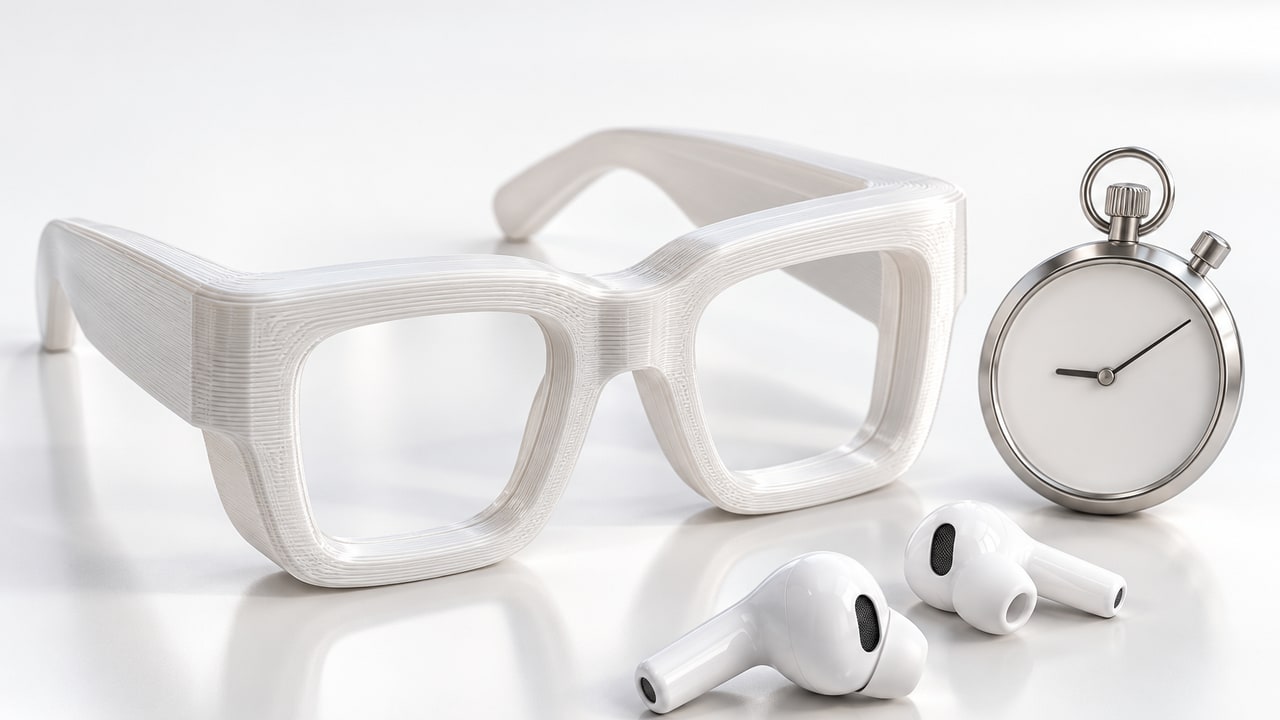
From there the internet did what it does. "bro killed that startup in 9mins," wrote one reply. Another said, "There is no moat," the economy's most reliable verdict on any startup that has lasted longer than an afternoon. Someone asked, "where to send 1.3 mln?" and another noted that the real bonus was that you no longer need "oversized FDM 3d printed glasses with no lenses."
Not claim for claim, and it is worth being straight about it. Subvox reads the head-motion data AirPods collect for spatial audio. Its README says it tests "whether AirPods Pro head-motion data carries enough information to turn silently mouthed words into text." It uses no language model. It is "a small-vocabulary template recognizer plus a statistical test," and the README suggests training it on a five-word script repeated ten times. It gives no accuracy result, and it warns that you should "expect jaw and head movement, not vocal vibration." Subvocal's 200 words a minute from non-contact sensing is a different claim, and we have not seen it demonstrated independently. One reply on the thread said as much: "would fall apart with open vocabulary."
That caveat is real, and I am including it because it is true. But it does not rescue the main point, which is hard to argue with. A funded company built custom hardware to do something, and a developer got the same idea running on earbuds that already exist, shared it for free, and finished before most people have made their coffee.
If your product is a gadget, the question your customer will ask is why they cannot do it with the gadgets they already own. Sometimes there is a good answer, such as sensors that earbuds simply do not have. Subvocal may well have one. If so, it has not yet been shown to the people laughing at it.
The cheap lesson is to lead with the demo. Put the 200 words a minute in a video, with a stranger, in a busy coffee shop, and let the people at the next table decide how invisible the mouthing is. Until then, the nine-minute version has the better launch.
Cursor's @cursor/sdk, in public beta since April 29, 2026, lets any developer call its coding agent via npm install, running locally or on sandboxed cloud VMs, arriving seven months after Anthropic's own Claude Agent SDK. - cursor ai coding agent typescript sdk - how to build on cursor ai infrastructure
Details are from the two public posts and the project's GitHub page, read on 31 October 2026. Subvocal's funding and speed claims are the company's own.
This article is posted in Technology News, check it out for more related stories.
Almost there. Sign in and your reply posts straight away.
正文由 探How 从来源站点 RSS 同步,内容未经改写;遇到排版缺失或需要图片、视频时请以原文为准。