Fashion Week's Response to AI Fatigue? A Distinctly Human Sloppiness
The Spring/Summer 2027 runways were rife with what could be considered fashion mishaps: belts left unbuckled, bras slung over shoulders, satin slip dresses half pulled up. In reality, however, these were clothes portray…
以下正文同步自 Hacker News 最新,版权归原站所有,已转换为易读排版。
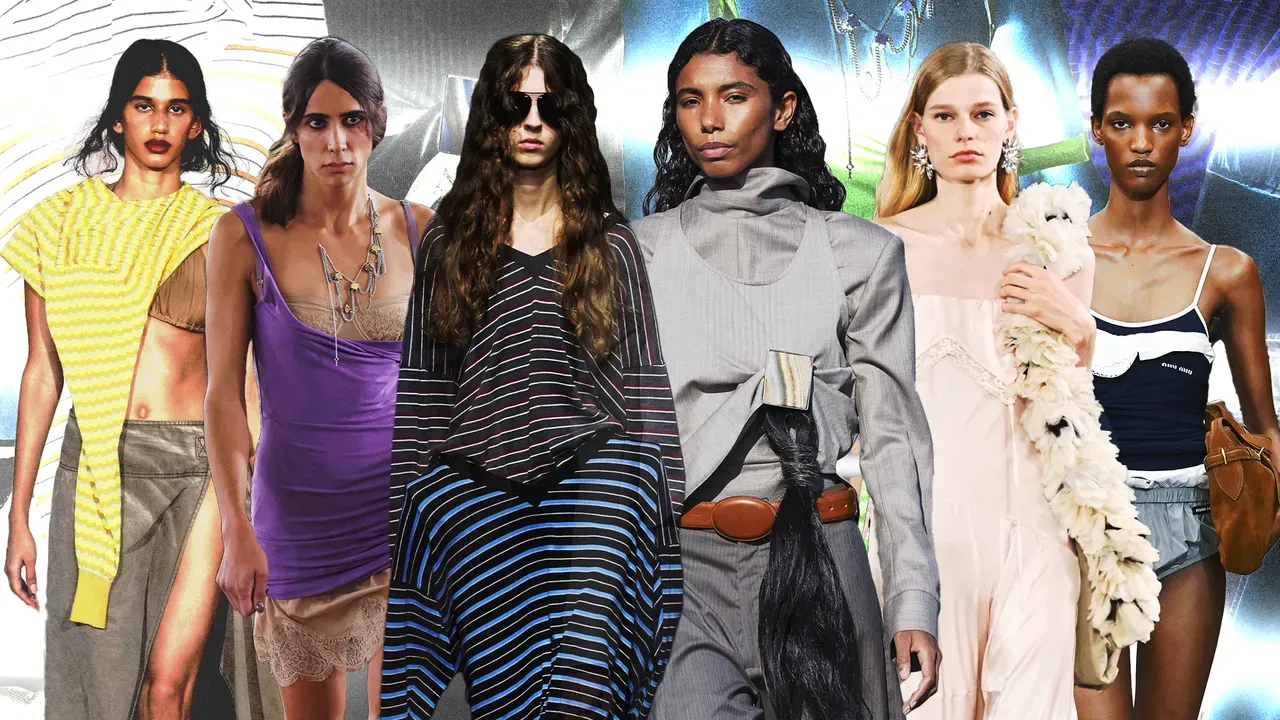
The Spring/Summer 2027 runways were rife with what could be considered fashion mishaps: belts left unbuckled, bras slung over shoulders, satin slip dresses half pulled up. In reality, however, these were clothes portrayed as life actually demands them—rumpled, unpolished, and intentionally messy in a way that indicates a real person’s vision. It felt like this season’s runways symbolized an uneasy question the fashion industry is grappling with in an increasingly AI-driven world: Can you design clothing if you’ve never worn it? Clearly, some sides of the industry have already answered this question; generative AI continues to expand its presence through AI-led fast-fashion retailers, virtual “models” with stolen faces, and robots on runways. But this September’s Fashion Month proved that not everyone in fashion is so keen to turn their creative process over to a non-being that can’t even experience the product it’s peddling. Generative AI for creative fields promises something akin to surgical precision, limitless capacity for knowledge, and near-instantaneous processing speed. But at this point in time, it can’t really deliver on these promises instead offering up an unnatural pseudo-meticulousness that feels too shiny, too contrived. It’s this false promise that fashion designers and stylists are rejecting en masse, in favor of something that feels a bit more alive. Instead of striving for an impossible facade of “perfection,” fashion brands have chosen to infuse their Spring/Summer 2027 collections with a bit of tasteful disarray. The styling technique made its seasonal debut at New York Fashion Week, bringing sartorial chaos to the home front. Altuzarra was the first to tap in, sending models down the catwalk looking carefully mussed. Shirts were misbuttoned, belts hung open, and spaghetti straps fell off shoulders with the intent of revealing beaded bustiers beneath—Alison Syrett Cleary of InStyle dubbed it “analog dressing.” The aesthetic spread across runways quickly. Zoe Gustavia Anna Whalen, hung unfastened bras uselessly from shoulders; Campillo dressed models backward; And LII embraced the fashionably disheveled via lopsided tanks and haphazard layering. Even Tommy Hilfiger—patron saint of the preppy and polished—embraced the opposite, leaving the crisp collars of his signature all-American button-downs wilfully off-kilter. And that’s just NYFW. Elsewhere London Fashion Week darling Simone Rocha allowed the bodices of her satin slip dresses to hang around waists before passing the baton to Charlotte Knowles, and Alexandre Arsenault of KNWLS. Together, they put on one of the most deranged fashion shows of the season, aesthetically speaking, converting upside-down tank tops into quasi-pencil skirts and styling underwire backward. The trend then hopped the border to Milan, where it took center stage at the most talked-about show of the season. Returning the aesthetic to its familial roots, Prada presented wind-tunnel hair and unsettling layers, alongside their viral curation of midi skirts. In doing so, Prada paid respect to the trend’s earlier appearance, at its sister brand Miu Miu’s Spring/Summer 2025 Paris Fashion Week show. This aesthetic represents something much more nuanced than a coincidental trend. Among the relentless perfection of AI, it’s a stylistic choice that feels distinctly human. What was once considered a faux pas (and likely still would be, in the eyes of a chatbot) has become a bat signal for humanity. On her Substack Brain Matter, celebrity stylist Gabriella Karefa-Johnson called the act of putting on a fashion show a “deeply human experience”—particularly, she says, when done “without Big Pharma or AI money.” At its core, dressing is a singularly human practice. It’s art, as well as function and try as AI might, real life doesn’t fit into a neat little box of data and code. Even the most learned AI agent can only imitate the work of humans. It cannot experience creativity, nor the messy moments that so often inspire it: a button left undone in a rush to make it out the door, a nightgown thrown on backward after an all-nighter. These runways encapsulate the human experience in a way no machine ever could, or likely, would even “think” to. Any inspiration to be had from these mundane occurrences would likely fall through the cracks of AI’s insatiable quest for perfection, flagged simply by its algorithm as a mistake. Muse, Grog, Alexa, Claude, ChatGPT, or any other vaguely dystopian-sounding cyber-being would never plausibly advise you to wear a bra over your shirt or utilize only one sleeve of a sweater. That’s a choice so deranged it could only have been concocted by the human mind.
正文由 探How 从来源站点 RSS 同步,内容未经改写;遇到排版缺失或需要图片、视频时请以原文为准。