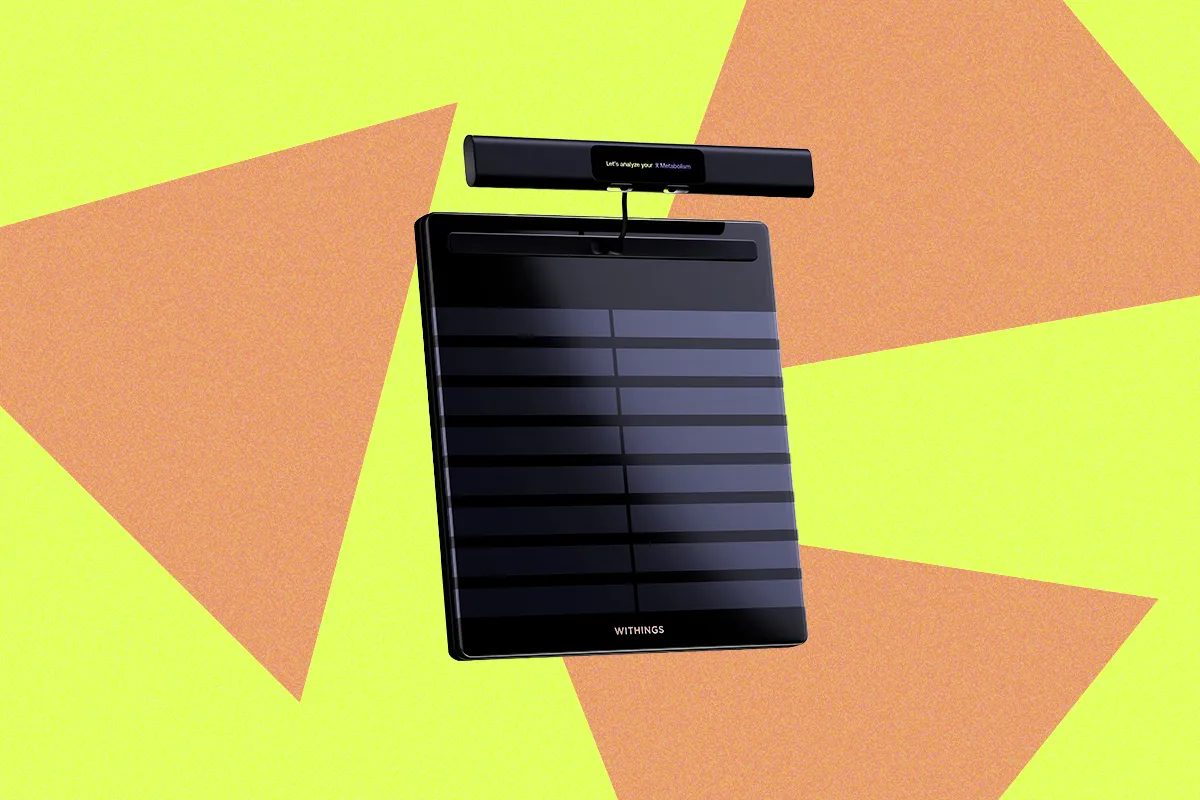
Withings BodyScan 2 Review: Worth Its Weight
After months of testing, this high-end smart scale has made me rethink how much a bathroom weigh-in can tell me.
以下正文同步自 Wired,版权归原站所有,已转换为易读排版。
Courtesy of Withings
$600 at Withings
CommentLoader
Save StorySave this story
CommentLoader
Save StorySave this story
Rating:9/10
WIRED
Dozens of health metrics measured, with weekly deep-dives (or more on demand). Very user-friendly hardware makes it easy to get a good scan. Professional ECG reading is arguably worth the price of entry.
TIRED
Extremely expensive, and it all but requires a subscription. Withings intelligence can be confusing (and contradictory).
I’m going to be honest from the start: No, you probably don’t need a $600 scale in your bathroom if you are just doing occasional weigh-ins. Hell, I don’t even know that elite athletes need to make this kind of extreme outlay even if they need to periodically check on how their training is going.
But I’m going to make the case for the Withings BodyScan 2 anyway. After spending several months with the device, the scale and its ecosystem have forced me to dig deeper into my health than ever before. At this point, I’m not sure I could go back to an older-model scale—even a very smart one like the original Withings Body Smart, which I used for years.
The unit offers two types of weigh-ins. Daily scans take about 30 seconds and include weight, an estimate of muscle and fat percentage (whole body and segmented across torso, arms, legs, and viscera), an estimate of basal metabolic rate, vascular age, and pulse wave velocity—though only a portion of these measurements are displayed live on the display.
Screenshot(s) courtesy of Christopher Null via Withings BodyScan 2 app
All of that is fairly par for the category, and it’s not until the big guns come out that the BodyScan 2 really starts to show off its biggest tricks. By default, you’re prompted to take a more intensive 90-second “longevity scan” every seven days, and I’ve come to simultaneously welcome and dread the weekly encounter. Here you’re subjected to a battery of tests, including all of the above plus measurements of blood oxygen level (SpO2), nervous system responsiveness, and—most notably—a full six-lead electrocardiogram that includes the ability to detect atrial fibrillation.
While some of these are, of course, more useful than other measurements—I’m still not sure how my nerve response score (76) could possibly be of any real, clinical use—it’s the ECG that makes the BodyScan 2 truly stand out in the field. Watching those heart-driven waveforms crawl across the BodyScan 2’s handlebar LCD is a nerve-wracking thrill. It’s perhaps no wonder that my pulse rate quickens every time I complete one of the tests, nervous about what the system may uncover lurking inside my chest.
When finished, the BodyScan 2 invariably sends you to the Withings mobile app for the details, which is where things really get interesting. The Withings app is easy to navigate if you just want a quick look at your vitals either in the moment or over time, but new additions driven by the BodyScan 2 really take things into a whole new world.
You’ll need a subscription (I know, I know) to unlock everything, specifically a new service called Withings+, which costs $10/month or $100/year. It’s a big ask, but to be frank, there’s not much reason to purchase the BodyScan 2 without it.
This can all get quite obtuse—understanding your Readiness score vs. your BodyPath score vs. your Health score can take a lot of digging, and results can often be in conflict. As well, some of this information requires extra hardware. For example, I have a sleep monitor under my mattress but don’t habitually carry a step tracker or fitness monitor. As such, Withings+ tends to wildly underestimate my steps—nor can it reach any conclusions about my nutrition, since I don’t digitally track what I eat, either. Maybe this is all part of Withings’ subtle way of encouraging me to buy more of its products to track all this stuff.
Withings+ isn’t always spot-on—it called out poor sleep from two nights previous rather than last night in answering a simple health question—but it’s surprisingly easy to get lost in its deep analytics, even if I don’t think there’s much I’m really going to be able to do about my heart’s “responsiveness” rating (a measure of how quickly it starts pumping after receiving an electrical signal to beat). At the very least, the information is something I intend to discuss with my doctor at my next appointment; you can even generate a PDF summary of your entire health picture to share with your medical team.
Screenshot(s) courtesy of Christopher Null via Withings BodyScan 2 app
Withings BodyScan 2
The objectively most interesting feature of Withings+ however is that it allows you to have your ECG read by a human physician. The feature is buried a bit in the app, and it’s not automatic: You have to manually request an ECG analysis on demand. You’re also limited to four readings per year. (Which is probably plenty for all but the worst hypochondriacs.) Readings come back in 24 hours and are archived in the app, though, again, they can be difficult to find. Fortunately, you can ask Withings’ AI where to go to dig them up.
The scale syncs with Apple Health, supports up to eight users, and contains a rechargeable battery that tops up via a USB-C connection, so no alkalines are required. Look at that: You’re saving some money after all!
正文由 探How 从来源站点 RSS 同步,内容未经改写;遇到排版缺失或需要图片、视频时请以原文为准。