Regression Testing in Agile
Regression Testing In Agile: Test Every Sprint Without Slowing Down
以下正文同步自 Hacker News 最新,版权归原站所有,已转换为易读排版。
Community
Resources
Ctrl + K540K
10.2K
Sign in
Community
Regression Testing In Agile: Test Every Sprint Without Slowing Down
Written By: Sancharini Panda
Reviewed by: Neha Gupta
- October 202613 minutes
AgileAutomated-testingCi-cdRegression-testing
Summarize this blog post with
Add as preferred source
Table of Contents
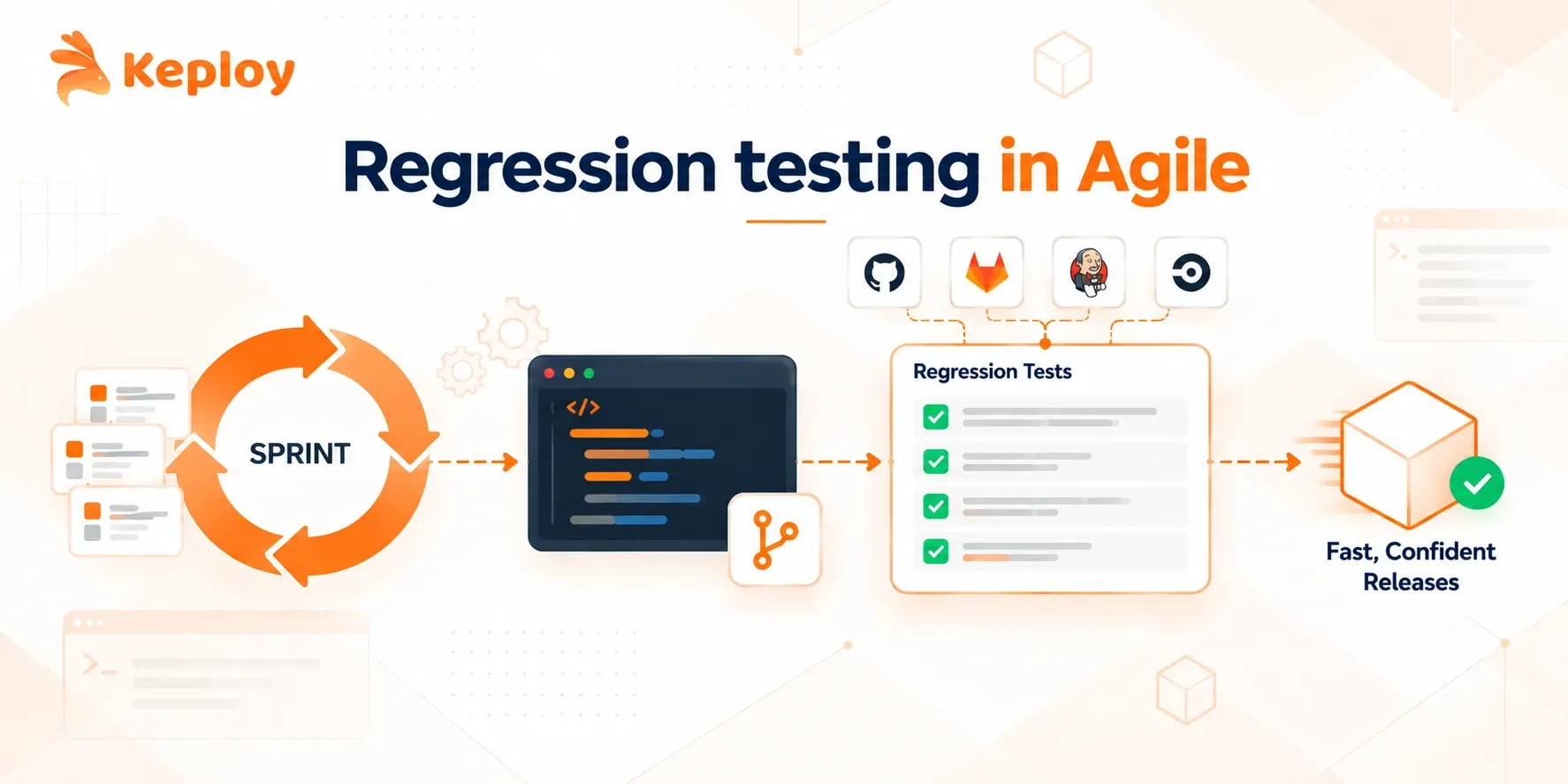
Regression testing in agile happens inside every sprint, alongside the stories being built. Targeted tests run on each pull request, the full suite runs before sprint review and every release, and hotfixes get a check of their own. The whole team shares the work while one tester curates the suite, and it stays fast when tests are chosen by what changed.
Every sprint ships new code, and some of it quietly breaks features that shipped months ago. The demo still goes well, because acceptance tests only look at the story on screen. The break surfaces later, often in a flow nobody on the team touched that sprint.
A story can pass every acceptance criterion and still change something another feature depends on, like a shared calculation or an API response. Catching that before release is the whole job of regression testing, and in agile it has to happen while the sprint is still running.
Regression testing in agile is the practice of re-running previously passing tests throughout each sprint to confirm that new user stories, bug fixes, and refactors haven’t broken existing functionality. Instead of a single test phase before release, it runs continuously as part of the team’s sprint cadence and Definition of Done.
The core idea is the same as any regression testing. What changes is the timing.
Waterfall teams ran regression once, near the end, against a finished build. Agile doesn’t have that kind of pause. Each story merges as soon as it’s done, so the codebase never sits still long enough to test it all at once.
Planning day is where most teams skip it. That’s a mistake, because it’s also the cheapest place to start.
The mid-sprint run matters more than it looks, because two stories can each pass their own pull request checks and still break each other once both land on the main branch.
Retro is the last stop. So if a regression escaped this sprint, someone should ask why no test caught it, and the answer usually turns into a new test.
Four triggers cover almost every situation an agile team runs into.
Per-story runs are a form of selective regression testing. You trade breadth for speed on each pull request and let the sprint-end run catch whatever the narrow checks missed.
After each deploy, a handful of smoke tests confirm the build is alive before anyone trusts the deeper results.
Dependency upgrades deserve their own mention. A library bump in the middle of a sprint isn’t a story, so it often skips planning entirely. Run the full suite anyway.
Everyone runs it. But only one person curates it.
That’s also why the Definition of Done matters. If "regression suite passes and new tests are added for this story" sits in the DoD, nobody can mark a story done without it.
Without that line, however, regression becomes whatever QA has time for on the last Thursday of the sprint.
In agile testing, testers work inside the team instead of after it, and regression is where that shows most. As a result, a tester who joins planning knows which flows a story could break before anyone writes a line of code.
Every sprint adds tests. Very few teams remove any. Over time, a suite that used to report back in minutes runs long enough that developers start merging before it’s done.
API coverage tends to lag behind UI coverage in agile teams, because writing API tests for every story feels like extra work at the end of a sprint. Keploy closes that gap by turning the API calls a developer already makes while checking a story into regression tests, with dependency mocks, that run in CI. The suite grows with each story without a separate scripting task.
AI coding assistants are already writing more of the code that lands in each sprint. More code per sprint means more changes, and every change is a fresh chance to break something that worked yesterday.
Teams that tie regression to each story will absorb that volume without slowing down. Teams still running a hardening sprint will find it getting longer every quarter.
Regression testing in agile runs on every story’s pull request, at the end of each sprint, before each release, and after any hotfix. Per-story runs are narrow and fast. The sprint-end and release runs cover the full suite.
The whole Scrum team shares it. Developers run targeted tests and add tests for the bugs they fix, while the agile tester or QA engineer curates the suite. The product owner defines which flows are business-critical.
Yes. Adding "regression suite passes and new tests are added" to the Definition of Done stops stories from being marked complete on acceptance criteria alone. It also makes regression a team habit instead of a QA task at the end of the sprint.
Usually not. A hardening sprint delays feedback by weeks, so bugs are harder to trace and more expensive to fix. Running regression inside every sprint catches the same bugs while the code is still fresh.
Automate the stable, repeatable checks that run on every pull request, especially API calls and critical user flows. Complex UI behavior and exploratory scenarios often still need a person. The goal is coverage of what matters, not a target percentage.
Agile testing covers every testing activity inside a sprint, from acceptance tests to exploratory sessions. Regression testing in agile is one part of it, focused only on confirming that existing features still work after each change.
正文由 探How 从来源站点 RSS 同步,内容未经改写;遇到排版缺失或需要图片、视频时请以原文为准。