How Tree Rings Challenged the Myth of American Wilderness
If a landscape is truly untouched by humans, then natural forces—plants, animals, wind, water, lightning—should be able to account for everything that happens there. But, starting in the nineteen-eighties, dendrochronol…
以下正文同步自 Hacker News 最新,版权归原站所有,已转换为易读排版。
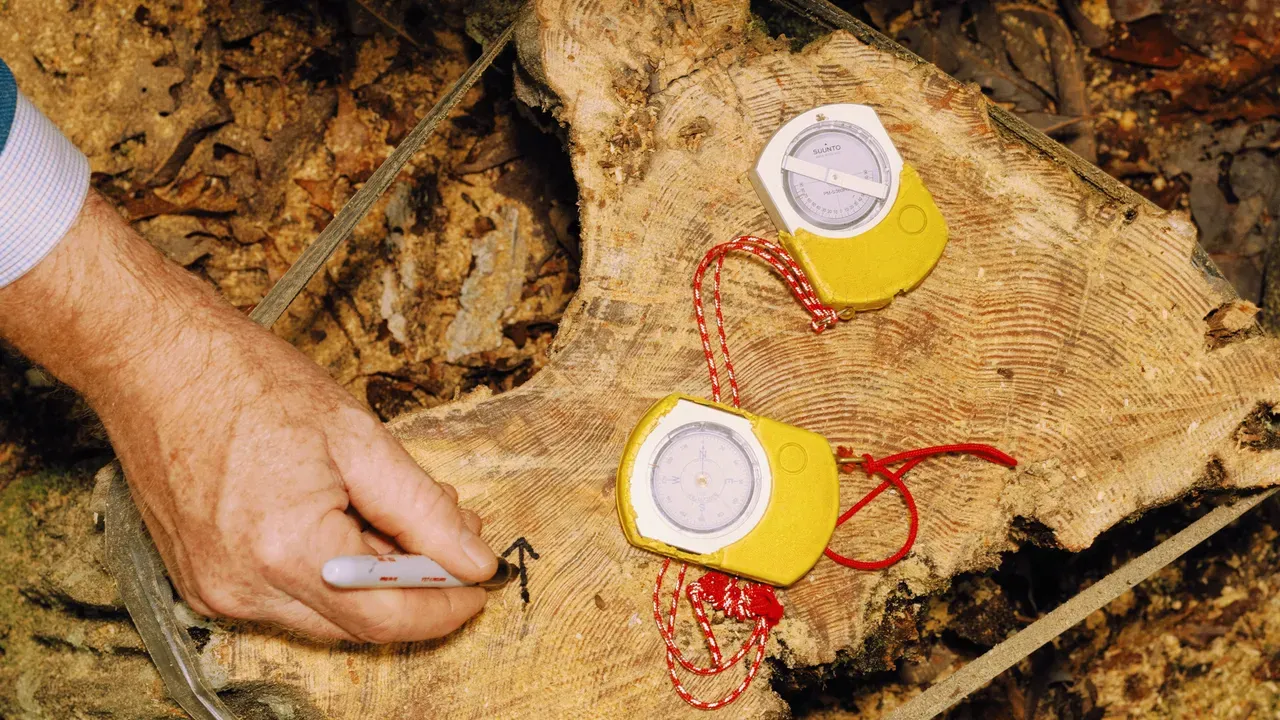
If a landscape is truly untouched by humans, then natural forces—plants, animals, wind, water, lightning—should be able to account for everything that happens there. But, starting in the nineteen-eighties, dendrochronologists—who study growth rings in the trunks of trees and link them to calendar years—made a puzzling discovery. Tom Swetnam, a dendrochronologist at the University of Arizona, spent eight years researching giant sequoias in Yosemite and other national parks. He documented an average of sixty scars from forest fires in each of the trees he studied. (Tree rings also record traces of solar activity, droughts, volcanic eruptions, and other phenomena.) The number of fire scars surprised him. Scientists had always assumed that such markings were the result of fires caused by lightning. “Are there enough lightning strikes to account for that kind of frequency?” Swetnam remembers thinking. “My back-of-the-envelope calculations said probably not.” The mystery extended far beyond sequoias. Trees around the country contained scars that lightning fires simply could not explain. In many places, there were scars in the parts of tree rings that correspond with the dormant season—autumn through early spring—when thunderstorms rarely or never occur. At study sites across the East, as many as eighty-eight per cent of scars dated to this season. What was the source of these fires? Richard Guyette, a self-taught dendrochronologist at the University of Missouri, researched pine, oak, and cedar trees. “Foresters learn to read their rings like it is a book made for them,” Guyette, who had a background in anthropology, once wrote. He hired Michael C. Stambaugh, a young graduate student in forestry, and Joe Marschall, a field researcher, to rove the woods with him in search of ancient wood. As they reconstructed the history of fire in places like the Ozarks, they noticed a clear link between burn scars and human population density. Guyette and his colleagues increasingly suspected that fires were not natural but anthropogenic—ignited by people. In some places, they found what they called a “wave of fire,” which appeared to move geographically as Europeans built settlements and violently disrupted Native American communities. Before Guyette’s death, in 2023, he established the Center for Tree-Ring Science, which Stambaugh now directs. “Trees are witnesses,” he told me. This past January, Marschall, now a senior research associate at the center, drove to Alabama, to visit Flagg Mountain, the southernmost peak in the Appalachian Mountains. Marschall has a reddish-white beard and a genial disposition; the pocket of his faded blue button-down was stocked with pens. He parked by the side of a dirt road, put on oil-stained chaps and a large backpack, and slung a chainsaw over his shoulder. Then he started hiking downslope through the forest. He ignored the maple, oak, and hickory trees that thrived in the area. Instead, he scoured the damp leaf litter for the nubs of old longleaf-pine stumps—the remnants of an evergreen forest that once covered more than ninety million acres. Generations ago, longleaf pines were logged to a fraction of their former range. As far as Marschall knew, no dendrochronologist had ever studied fire history in these woods before. Marschall’s initial assessment was that the tree’s life probably began before European settlers arrived in the region, at a time when the mountain was populated by autonomous Indigenous nations that later became part of the Creek Confederacy. “What I really want are the trees that were here even before this tree,” he told me. “They’re just bones, in some cases, but they’re still here.” Since Swetnam and Guyette began their work, dendrochronologists have found fire scars across the continent, from Central America to the northern tip of Alaska. The North American Tree-Ring Fire-Scar Network, which was launched in 2022 by eighty-seven dendrochronologists, is a database of more than three thousand study sites and more than thirty-seven thousand fire-scarred trees. It has helped researchers understand the ways that Indigenous communities may have used fire, and how this practice was transformed by European colonization. “We believe that Native Americans and Indigenous people were the main ignition sources for fire,” Marc Abrams, a forest ecologist at Pennsylvania State University who has utilized the network for his research, told me. Another ecologist, Charles Kay, has estimated that Native American ignition rates were potentially hundreds or thousands of times greater than lightning-ignition rates. Dendrochronologists are now chasing the traces of Indigenous fires deeper into the past. Their quest becomes more difficult every year, however, as the remains of pre-Columbian trees slough back into the earth or are dug up to make way for agriculture and construction. “Wood is ephemeral,” Marschall told me more than once. One day, at a hardware store near Flagg Mountain, he was pained to see bundles of fatwood—pine heartwood—being sold as kindling. Ten pounds of potentially irreplaceable data was going for $25.99. Marshall spent five days relentlessly hunting for stumps. Only three per cent of North America’s longleaf-pine ecosystem remains, and he knew that every specimen he left behind might disappear forever. He’d cut a slab, peer at its rings, and then cut another, just in case the tree might “give up any more secrets.” He often swaddled samples in duct tape to keep them from crumbling. Some days, Marschall worked into the evening, under the light of a headlamp. Once, he worked during a prescribed burn that local authorities ignited to clear vegetation and nurture the ecosystem. Longleaf pines depend on frequent, low-intensity blazes in order to reproduce. As the fire crept along, Marschall worked around the flames, cutting stumps before they could burn. By the time he drove back to Missouri, his S.U.V. reeked of pine and sagged under the weight of so much wood. Fire scars reinforced these historical examples. They provided independent confirmation of research by the anthropologist Omer Stewart, who began documenting Native American burning practices in the nineteen-thirties. Stewart found that Indigenous communities burned prairies to attract bison to fresh grass, and to maintain oak “orchards” where food could be gathered. He became convinced that Native Americans had reshaped the geography, and in some cases the climate, of North American ecosystems. Their impact “was profound, in terms of the amount of land converted to agriculture, the species they hunted and fished, and most particularly the way they shaped their world through the use of fire,” the naturalist Scott Weidensaul wrote, in his 2012 book “The First Frontier.” Weidensaul argued that early America “was fruitful beyond modern recognition, it was riotous in its natural wealth, but it was not wilderness.” The dendrochronologist Evan Larson, at the University of Wisconsin-Platteville, made a similar claim: settlers encountered rich landscapes because Native Americans were tending them. “Whenever you’re talking about fire, you’re engaging with a central narrative around this untamed frontier and wilderness,” Larson told me. “In fact, that’s never been true. The early success of pioneers was already benefitting from the labor of somebody else.” Not all scientists agree that Native Americans were an ecologically significant force before Europeans arrived. Researchers led by a team at the Harvard Forest have argued that charcoal and pollen records in New England do not support the idea of extensive Indigenous burning. Others believe that tree-ring research, and the scientific journals that publish it, overestimate the number of historical fires. “A study of fire-scar frequency which finds no fire scars is of no interest in most journals,” Glenn Matlack, a biologist at Ohio University, told me. He characterized Native Americans as “ordinary people trying to make a life for themselves and their families under difficult conditions,” not people who were planning in the long term or significantly manipulating the landscape. George Wuerthner, an ecologist at the Rewilding Institute, a conservation nonprofit, writes that the myth of a pristine wilderness is being replaced, incorrectly, with a myth of “human manipulation everywhere in pre-Columbus America.” Stambaugh has engaged with critics, but considers the data clear-cut. “They have to argue with a piece of wood,” he said. “Good luck.” Tree rings, he said, show such a strong signal of anthropogenic fire that they record pivotal historical events. In the Boston Mountains of Arkansas, he and Guyette found that shortleaf pines experienced an increase in fire in 1817—the same year that Cherokee from the Southeast were relocated to the area by treaty. After the 1830 Indian Removal Act, the U.S. government began to forcibly march Native Americans westward, along the Trail of Tears, and fires in their ancestral lands decreased. From 1831 to 1833, at the terminus of the trail, in present-day Oklahoma, the number of fires spiked. Stambaugh believes that the blazes may have been a desperate attempt to generate forage, perhaps to attract animals for hunting or to feed domesticated animals. “There are years in the data when there are two fires in one calendar year,” he said. “This was a terrible time. People were trying to survive.” Marschall pointed out a sliver of brown wood on a crowded countertop. During a research trip to Pennsylvania, one of Marschall’s colleagues had sat down to eat an apple on a rotting, weather-beaten log. “I think we should sample that,” Marschall had told the colleague. Its inner ring dated to 1579. It had five fire scars, the first from 1590. Until recently, few dendrochronologists looked for fire scars in the eastern U.S., but in 2010 Marschall, Stambaugh, and Guyette began collecting wood samples in central Pennsylvania. One nub of red pine turned out to contain three hundred and forty rings, but they could not be cross-dated with any other tree-ring data. The wood became part of what dendrochronologists call a “floating chronology,” meaning a group of trees with start and end dates that align with each other, but that don’t match the calendar years for which data is available. The sample sat in the lab for two years, until researchers finally collected enough additional data to pin down the tree’s age. The tree’s innermost ring dated to 1370. The first of its nineteen fire scars was from 1402. The fire-scar chronology was the oldest ever recorded in eastern North America. Stambaugh and Marschall went on to visit Maine and New York, and to create a citizen-science fire-scar app. Abrams, the forest ecologist in Pennsylvania, believes that some environmental challenges facing eastern states—the spread of invasive species, the shrinkage of meadows, the failure of oak trees to regenerate—might have more to do with the disappearance of fire than with climate change. Land managers are already using fire-scar data to decide when to ignite blazes on purpose. “This kind of data helps us make more confident, informed decisions about when and how to use fire on the ground today,” Jonathan Stober, a biologist at Talladega National Forest, not far from Flagg Mountain, told me in an e-mail. Several members of the Fond du Lac Band of Lake Superior Chippewa trained in dendrochronology to collect fire-scar data. Their research, published last year in Proceedings of the National Academy of Sciences, showed that fires rapidly declined after treaties ceded tribal lands to the U.S., in 1842 and 1854. Last November, on twenty-two acres of traditional tribal territory, the Fond du Lac Band Fire Program led the first intentional burn in generations. On Thursday, they conducted a second burn on seventeen acres of pine woodland at neighboring Minnesota Point in Duluth. Larson, the lead author of the paper, was there. “What is so powerful about
正文由 探How 从来源站点 RSS 同步,内容未经改写;遇到排版缺失或需要图片、视频时请以原文为准。