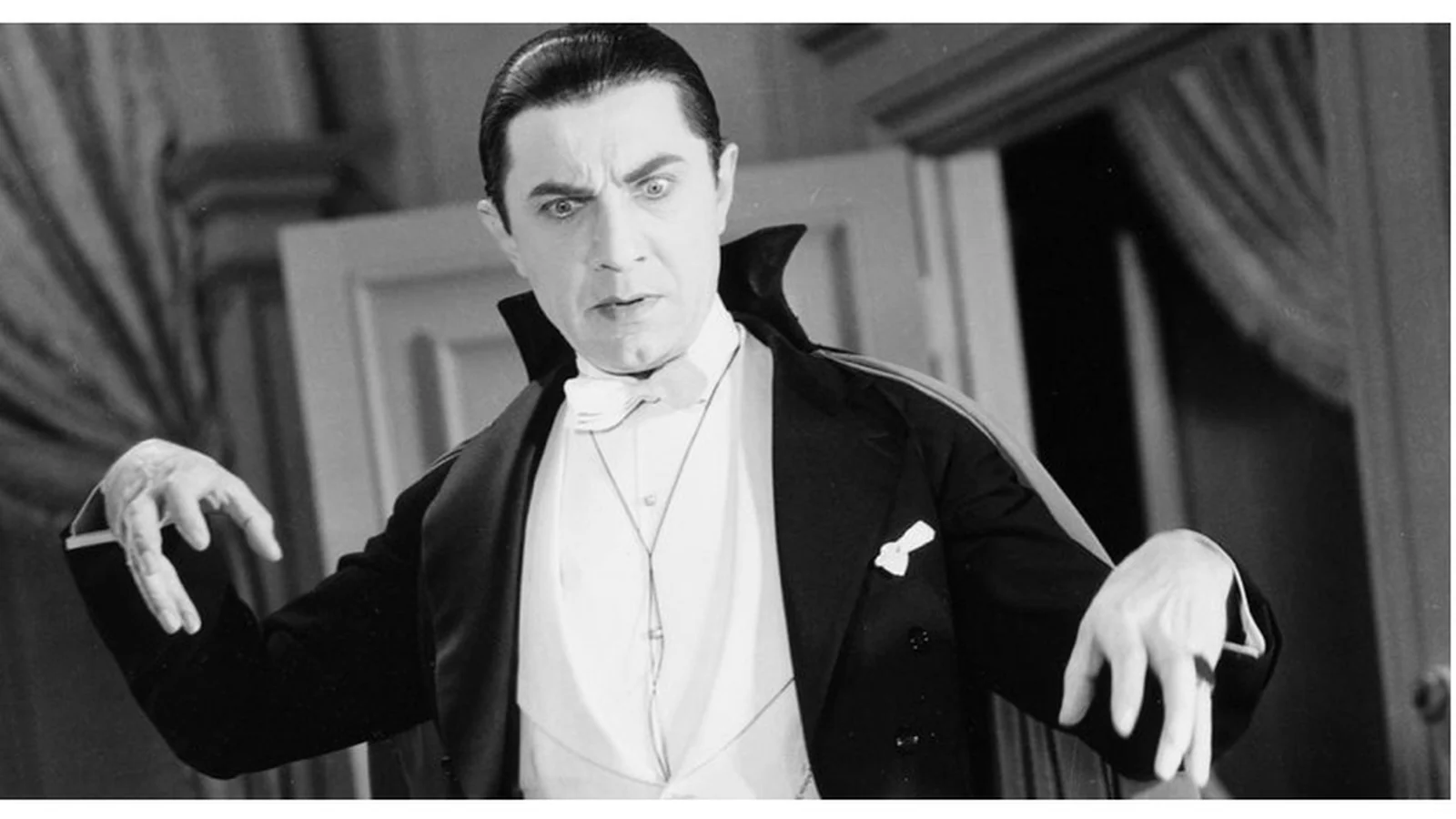
Was Dracula a Tax Dodger?
Analysis: If the Count was around today, his power to transform into a bat would be no use should he find an Revenue Audit letter on his doorstep
以下正文同步自 Hacker News 最新,版权归原站所有,已转换为易读排版。
Analysis: If the Count was around today, his power to transform into a bat would be no use should he find an Revenue Audit letter on his doorstep
Bram Stoker introduced us to Dracula well over a century ago and, through scores of literary, film and television adaptations ever since, his creation has enjoyed a supernaturally long life. With the 130th anniversary of his novel fast approaching, a biopic of famed 1930s Dracula star Bela Lugosi in the works and a recent Jonathan Bailey-led audio adaptation causing quite a stir online, interest in the immortal Count has arguably never been higher.
While the character has been analysed through many lenses over the years, ranging from gothic horror icon to astute metaphor for disease, we want to use Irish tax legislation to explore a fundamental yet nonetheless horrifying question: was Count Dracula a tax evader?
The first step in understanding the Count’s exposure to Irish tax lies with an examination of his residence, ordinary residence and domicile. Under Irish tax law, you are considered resident in Ireland if you spend 183 days or more here in a single tax year or 280 or more between the current and previous ones. Allied to this is the concept of ordinary residence. You will be deemed ordinarily resident in Ireland once you have been resident here for three consecutive tax years, a status which can only be shed following three consecutive years of non-residence.
We need your consent to load this rte-player contentWe use rte-player to manage extra content that can set cookies on your device and collect data about your activity. Please review their details and accept them to load the content.Manage Preferences
From RTÉ Radio 1's The Business, Siofra Mulqueen sinks her teeth into Dracula creator Bram Stoker business ventures
Importantly, you will be considered present in Ireland for a day once you are here for any part of that day. Even if Dracula was to arrive here just prior to the clock striking midnight, he would be deemed present in Ireland for the entirety of that day, marking the beginning of his slow crawl towards that 183-day threshold.
Unlike residence and ordinary residence, domicile is woefully ill-defined, and this could present difficulties for the Count. On the one hand, as your domicile broadly refers to the country in which you intend to reside permanently, Dracula could argue that he is non-Irish domiciled on the basis that he plans to live forever in his crumbling Transylvanian estate (his "domicile of origin").
On the other hand, in common law jurisdictions like Ireland, the place where you intend to be buried has long been recognised as a highly relevant piece of evidence when establishing domicile. The fact that Dracula would arrive in Ireland already dead and in his coffin (the state of being ‘undead’ largely unrecognised in the Irish tax code), this would suggest to us that the Revenue Commissioners would have quite a strong case that Ireland had become his "domicile of choice".
We need your consent to load this rte-player contentWe use rte-player to manage extra content that can set cookies on your device and collect data about your activity. Please review their details and accept them to load the content.Manage Preferences
From RTÉ Brainstorm, are you due a tax refund? 3 tax credits you may not know about
Once deemed Irish resident and domiciled, Dracula would become subject to Irish tax on his worldwide income. He would therefore be required to register for self-assessment, file an income tax return and pay the tax due by October 31st each year. He should be warned however: under Ireland’s Taxes Consolidation Act (1997), failure to satisfy his self-assessment obligations can result in interest of 0.0219% per day on any underpayment as well as penalties of up to as much as 10% of the total tax liability due.
But this is only the start of Dracula's Irish tax woes. The Count depends on a team of subordinates, such as the gypsies encamped in his castle courtyard, Mr. Renfield (his asylum-dwelling acolyte), and his three sinister vampire brides. The key question from an Irish tax perspective is whether these individuals are engaged under contracts of service (employees) or contracts for service (self-employed).
Dracula controls what, how, when and where their work is to be done. It is likely, therefore, that they would be classified as employees under the Irish tax code, meaning that the Count would need to register as an employer, calculate and deduct Pay As You Earn (PAYE), Pay Related Social Insurance (PRSI), and Universal Social Charge (USC) from their earnings and pay it over to the Revenue Commissioners.
We need your consent to load this rte-player contentWe use rte-player to manage extra content that can set cookies on your device and collect data about your activity. Please review their details and accept them to load the content.Manage Preferences
From RTÉ Radio 1's The History Show, Marc McMenamin reports on Dracula and Frankenstein's connections to Ballyshannon, Co Donegal
This is another area where there is likely to be considerable daylight between the Count and the tax authorities. Dracula would likely dispute his employer obligations on the basis that he seldom rewards his people in monetary terms. Mr. Renfield, for example, is paid in flies and spiders while the brides live rent-free in Dracula’s castle. Irish tax law typically treats such payments as taxable Benefits-in-Kind (BIKs) for employees, exposing Dracula not only to charges of failing to remit employment taxes but of failing to operate a proper payroll system too.
In Ireland, gifts and inheritances fall under Capital Acquisitions Tax (CAT) legislation. While recipients enjoy lifetime tax-free thresholds, based on the relationship between disponer and recipient, once these thresholds are exhausted, they become fully liable to tax on any benefits received.
When Dracula sires a new vampire, the Revenue Commissioners could conceivably take the view that granting immortality constitutes a lifetime transfer of immense value. While the Group A threshold (the highest by far) is more commonly known as the "parent to child" threshold, it is unlikely that the framers of the legislation intended this to include vampiric lineage. Consequently, the benefit would likely fall under the substantially lower Group C (or "strangers") threshold, thus bestowing his newly minted vampire offspring with potentially terrifying tax bills of their own.
We need your consent to load this rte-player contentWe use rte-player to manage extra content that can set cookies on your device and collect data about your activity. Please review their details and accept them to load the content.Manage Preferences
From RTÉ Radio 1's Drama on One, Bram Stoker's Dracula as read by Aiden Grennell in a 1999 production by Séamus Hosey
Bram Stoker introduced the world to Dracula well over a century ago. If the Count was to land on these shores today, his power to transform into a bat would do him little good should he find a dreaded Revenue Audit letter on his castle doorstep.
The Irish Revenue Commissioners should take heed, however: due to his apparent life-long failure to file an income tax return, his flagrant disregard for his employer obligations as well as widespread concealment of supernatural transfers of power, there is considerable evidence to suggest a centuries-long and indeed concerted effort to evade tax authorities worldwide.
This leads us to conclude that under Irish tax law, vampirism should be considered a wholly aggressive form of tax avoidance and Count Dracula to be one of literature’s most devious, cunning and prolific tax evaders.
Brendan McCarthy is an associate professor in the Department of Accounting & Finance at University of Limerick. Elaine Doyle is a professor in the Department of Accounting & Finance at University of Limerick.
The views expressed here are those of the author and do not represent or reflect the views of RTÉ
正文由 探How 从来源站点 RSS 同步,内容未经改写;遇到排版缺失或需要图片、视频时请以原文为准。