Proton Hosting Map of 300k Surveillance Devices – Flock Can't Easily Stop It
Proton moved researcher Joshua Michael’s 300,000-device Flock Safety map to Swiss servers after a September 2026 trademark complaint sought its removal
以下正文同步自 Hacker News 最新,版权归原站所有,已转换为易读排版。
Proton moved researcher Joshua Michael’s 300,000-device Flock Safety map to Swiss servers after a September 2026 trademark complaint sought its removal
Al is a long time tech writer with a penchant for all things nerdy. While he writes for Gadget Review, he manages a team of review writers, ensuring their content is nothing short of perfect.
All Articles by Al Landes
→
Al is a long time tech writer with a penchant for all things nerdy. While he writes for Gadget Review, he manages a team of review writers, ensuring their content is nothing short of perfect.
All Articles by
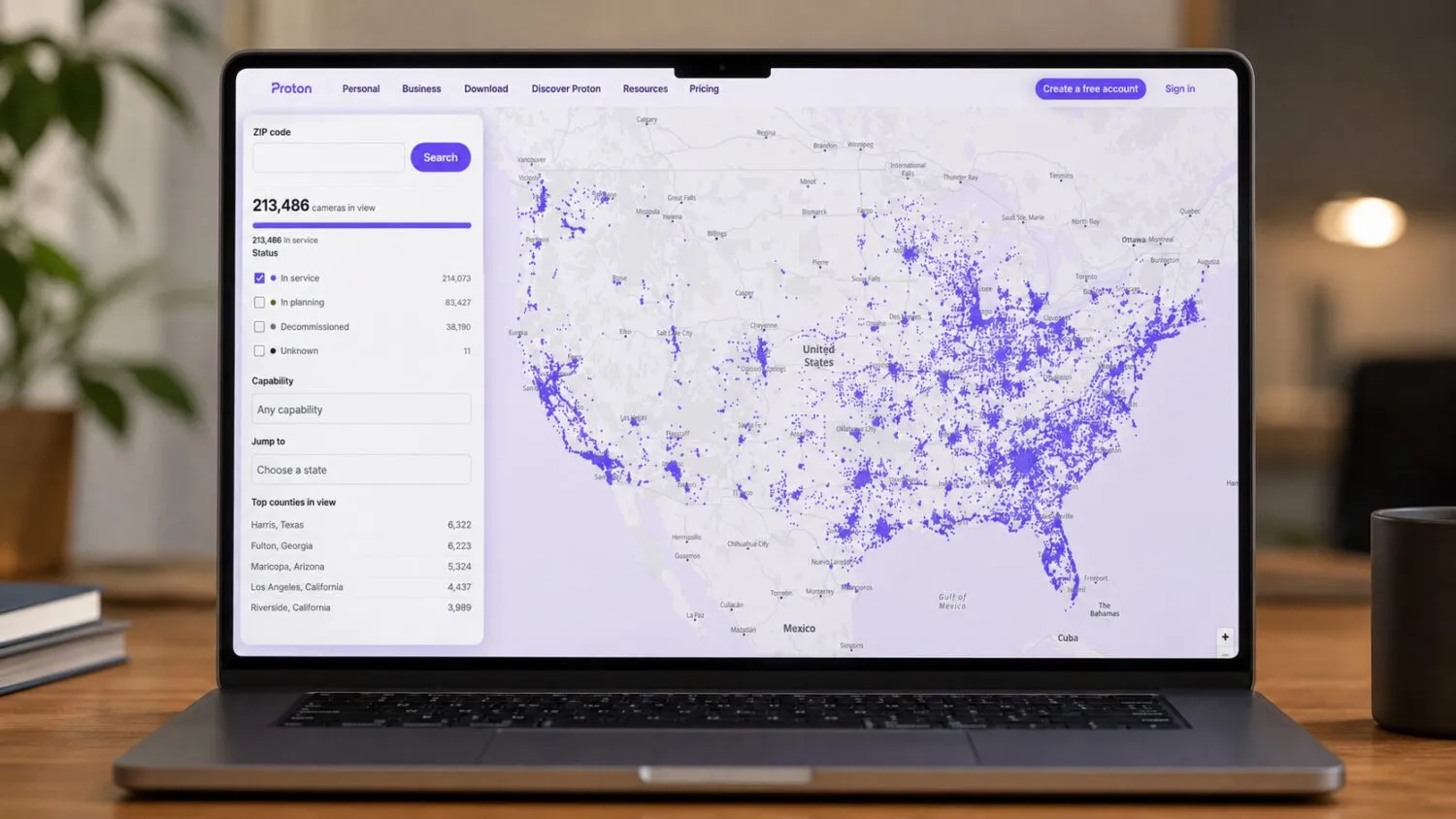
Image: Screenshot from Proton website/Illustration via Gadget Review
Key Takeaways
When a Flock Safety trademark complaint filed on behalf of Flock Safety sought to remove a public map of the company’s surveillance network, Proton moved the map to Swiss servers and kept it online. The privacy company’s decision preserves public access to an inventory that researcher Joshua Michael built from data he says Flock’s own website exposed.
Flock’s network reaches into hundreds of communities across the United States, and the map lets residents check whether that infrastructure operates near their homes, schools, or daily commutes.
The dataset covers more than 300,000 Flock-associated devices, and not all of them are cameras.
Proton’s hosted version draws from a December 2025 snapshot containing more than 170,000 cameras and more than 130,000 secondary units such as acoustic detectors, processing hardware, and networking equipment. Describing all 300,000 entries as cameras would misrepresent the dataset.
You can search the map by ZIP code to see what devices appear in your area, with equipment distinguished by model, including Falcon cameras and Picard processing units. Because the data reflects conditions as of December 2025, installations completed or removed after that date will not appear.
Flock has reportedly stated its network includes more than 120,000 cameras, while Michael’s dataset records a substantially higher camera count. The two figures may reflect different counting methods or dates, and the available reporting does not establish which is incorrect.
A publicly exposed access token, requiring no login, gave a researcher a window into Flock’s device-location data.
In November 2025, Michael said he found that Flock’s website exposed an access token that required no login to obtain. That token allowed him to query ArcGIS, a third-party geospatial mapping platform Flock uses, and retrieve device-location data.
Michael reported the vulnerability to Flock before preserving the dataset in December 2025, though reporting conflicts on whether he separately notified Flock about the exposure. Flock subsequently appeared to address the exposure.
Flock rejects the characterization of these events as a hack or information leak. The company has stated publicly that it “has never been hacked, and there has not been a leak of Flock information.” Whether an unauthenticated, publicly obtainable token constitutes a security breach under applicable definitions remains contested. The available reporting confirms the exposure and retrieval but does not establish a definitive legal classification.
A brand-protection vendor filed a trademark complaint seeking the map’s removal, and Proton responded by hosting a copy on Swiss servers.
On September 24, 2026, Doppel, a brand-protection vendor working on Flock’s behalf, filed a trademark-infringement complaint. The complaint argued that the map’s use of the “FLOCK SAFETY” name could cause consumer confusion or harm. Proton republished the map after the original was targeted for removal, framing the decision as a commitment to keeping surveillance infrastructure publicly visible.
Proton’s legal position is that hosting the map on Swiss infrastructure limits the practical reach of a foreign takedown demand unless it is backed by a Swiss court order. That is Proton’s legal argument, not a judicial determination.
The episode raises a policy question that extends beyond this particular map. Whether companies can use trademark complaints or platform pressure to remove independently compiled information about the scale and operation of their own surveillance systems remains unresolved; no court ruling addressing this dispute appears in the available reporting.
At Gadget Review, our guides, reviews, and news are driven by thorough human expertise and use our Trust Rating system and the True Score. AI assists in refining our editorial process, ensuring that every article is engaging, clear and succinct. See how we write our content here →
Join 150,000+ readers discovering the coolest gadgets, smart buying guides, and the tech news that actually matters.
13 Tech Innovations That Actually Earn Your Time
9 Budget Gaming Peripherals Under $100 That Work
17 Smart Office Gadgets That Actually Boost Productivity
With over 25 years of experience, our editorial process is built on human expertise, ensuring that every article is reliable and trustworthy. AI helps us shape our content to be as succinct and engaging as possible.
Learn more about our commitment to integrity in our Code of Ethics.
正文由 探How 从来源站点 RSS 同步,内容未经改写;遇到排版缺失或需要图片、视频时请以原文为准。