How the pandemic changed trust in science – in four charts
Miryam Naddaf is a reporter for Nature in London.
以下正文同步自 Hacker News 最新,版权归原站所有,已转换为易读排版。
Miryam Naddaf is a reporter for Nature in London.
Search author on: PubMed Google Scholar
Bluesky
X
Save article
View saved research
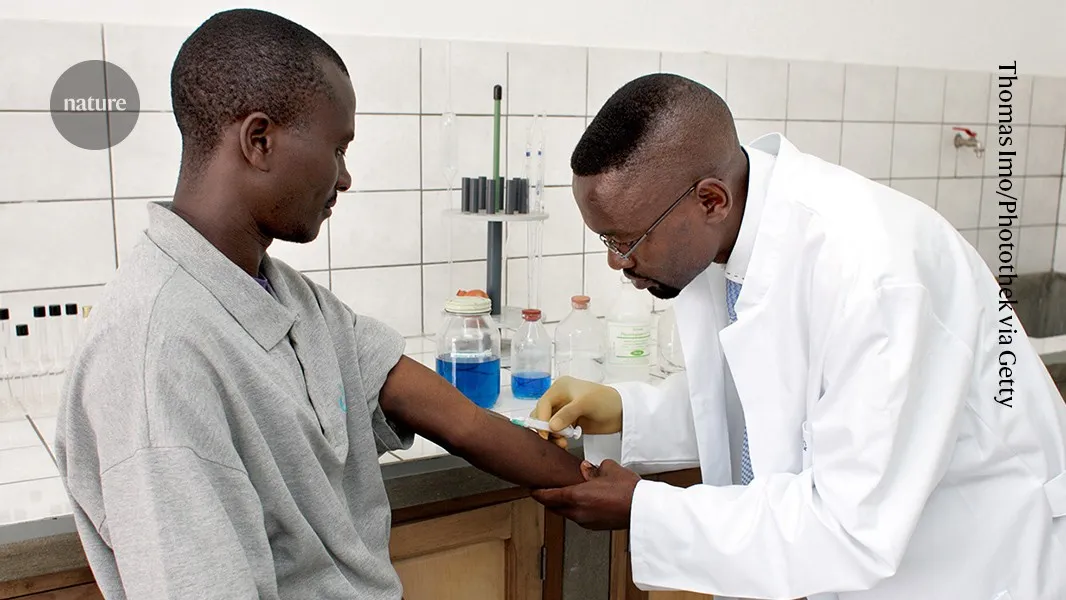
Science in the Democratic Republic of the Congo: 22% of participants in that nation said they had ‘no trust at all’ in science in 2025. Credit: Thomas Imo/Photothek via Getty
Trust in science and researchers has fallen following the COVID-19 pandemic, the largest survey of public confidence in science shows. Led by the global biomedical funder Wellcome in London and published on 10 October, it explores how people feel about science and health — including vaccines, pandemic preparedness, clean energy and, for the first time, artificial intelligence (see ‘Trust in decline’).
“We should be paying attention to, and thinking about, what needs to be done to earn that trust,” says Philippa Michael, head of public initiatives at Wellcome, who led the project. This is the third survey of its kind conducted by Wellcome, following editions in 2018 and 2020.
The analysis points to a “mixed” picture that varies between countries and regions, says Kathleen Hall Jamieson, a specialist in science communication at the University of Pennsylvania in Philadelphia (see ‘Regional differences’).
The study also shows a connection between science and people’s broader experiences, including their perceived financial security, says Michael (see ’Money matters‘).
“If people feel economically insecure, then they’re going to feel a greater distance between themselves and science and scientists,” says sociologist Gordon Gauchat, at Harvard Kennedy School in Cambridge, Massachusetts. This disconnect “is not about science’s efficacy or its ability to fix problems”, he adds.
The survey found that countries where people reported high confidence in hospitals and health-care clinics were “more likely to have greater trust in science”, notes Michael. Levels of trust were also high in respondents who were confident in accessing health-care services when needed. “It’s really essential that science is credible, relevant and beneficial to people in their lives,” Michael adds.
doi: https://doi.org/10.1038/d41586-026-03248-z
Largest post-pandemic survey finds trust in scientists is high
Science’s big problem is a loss of influence, not a loss of trust
Have people stopped trusting science? The data tell a surprising story
How to get science back into policymaking
US trust in scientists plunged during the pandemic — but it’s starting to recover
Can giant surveys of scientists fight misinformation on COVID, climate change and more?
I built the UK government’s metascience unit — here’s what countries need to know
Record-breaking retraction: scholarly publisher pulls 1,400 conference papers on one day
Patrick Stewart dies: how Captain Picard inspired today’s science leaders
Patrick Stewart dies: how Captain Picard inspired today’s science leaders
To heal sick cities, scientists and residents must work together
Educational intervention can rewire village social networks
We are looking for candidates pursuing curiosity-driven basic and translational research.
Taipei, TW-a vibrant city blending modern innovation, rich culture and convenient transportation.
The Institute of Biomedical Sciences, Academia Sinica
Seeking scientists in pathobiology, immunology, vaccinology, epidemiology, drug discovery, focusing on microbial infections and inflammations.
Center for Infectious Disease Research, Westlake University
Join HZAU's global faculty team to advance research with competitive benefits.
Zhejiang University (ZJU) sincerely welcomes talents at home and abroad to join us in creating a brilliant future together!
Zhejiang University (ZJU) sincerely welcomes talents at home and abroad to join us in creating a brilliant future together!
正文由 探How 从来源站点 RSS 同步,内容未经改写;遇到排版缺失或需要图片、视频时请以原文为准。