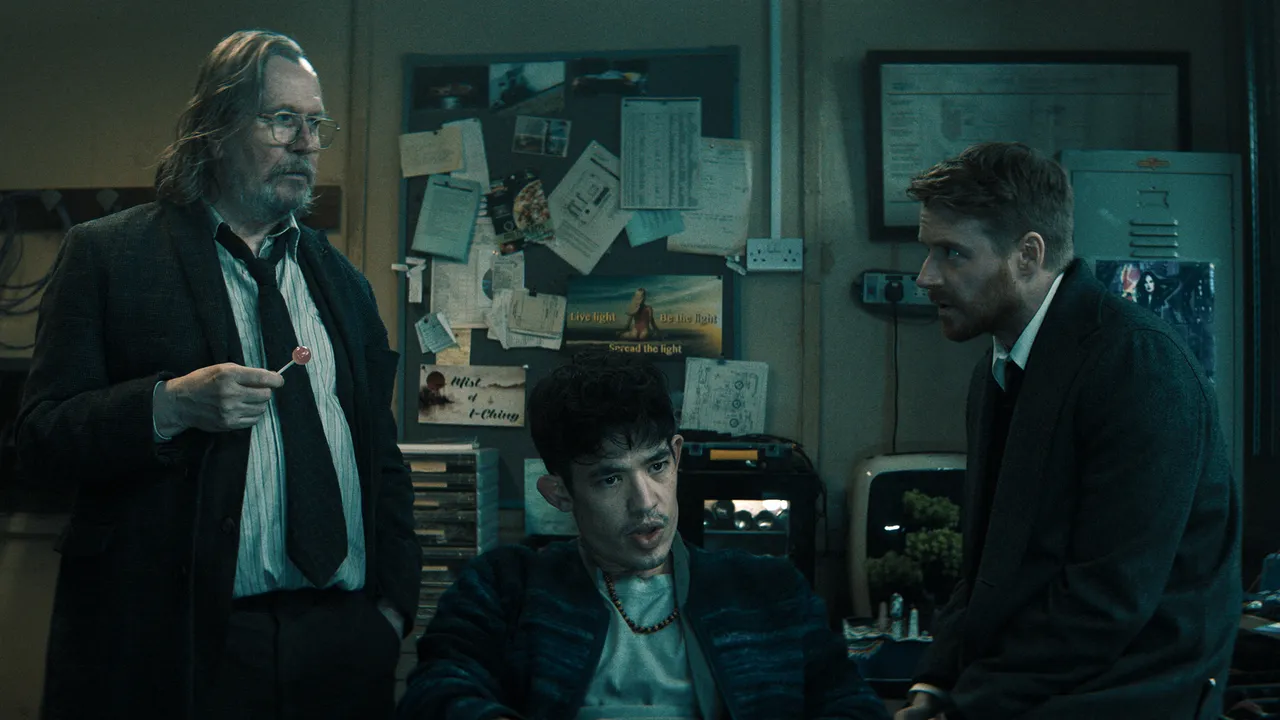
"Slow Horses," Apple TV's Best Show
Since its première, in 2022, “Slow Horses,” which just aired its sixth-season finale and will return for at least two more seasons, has become something not unlike Lamb: a treasure to those in the know, and a nonentity …
以下正文同步自 Hacker News 最新,版权归原站所有,已转换为易读排版。
Since its première, in 2022, “Slow Horses,” which just aired its sixth-season finale and will return for at least two more seasons, has become something not unlike Lamb: a treasure to those in the know, and a nonentity to outsiders. The show boasts nearly two dozen Emmy nominations, and a few wins, but has never reached the breakout status of fellow Apple TV series like “Ted Lasso” or “Severance,” despite being, in my estimation, the streaming site’s best offering by a mile. While most dramas this long in the tooth trend toward decline, the series’ many innovations, in a frequently stodgy genre, continue to pay off. The show has felt only more relevant in its past two seasons, as it tackles head on the larger question of what espionage means in a post-imperial Britain. The enemies that Lamb’s team is battling are often revealed not to be foreign agents or domestic terrorists, as they initially appear, but venal bureaucrats within the government who incite political chaos for the sake of personal gain. As is currently the case in the U.S., the debasement of the country is being led by the state itself. But “Slow Horses”—closely adapted from Mick Herron’s long-running book series—is, foremost, a fast-paced, immodestly budgeted spy romp, with Lamb’s brigade of pariahs, known within MI5 as Slough House, looking into one intrigue each season. (If it didn’t smell bad enough inside, Slough House’s unassuming office, located three miles from the agency’s starkly sleek headquarters, in central London, can only be entered by passing an overfilled dumpster.) The filth around Lamb is visceral, but deceptive: his fiefdom, whose independence he jealously guards, is probably the branch of MI5 least touched by the agency’s general lawlessness and institutional rot, which abides by the careerist ethos of “Cover your arse.” Lamb, who was once floated for the service’s top job, treats his current position as a kind of penance for past sins, both for himself and for his underlings. His lacerating wit spares no member of his staff—a mix of true incompetents, off-putting savants, ticking time bombs, and onetime offenders prematurely consigned to professional purgatory. The hope for rehabilitation spurs on the show’s protagonist, River Cartwright (Jack Lowden), to reckless heroics. The grandson of a legendary spook (Jonathan Pryce), River, whose early antics led to the simulated deaths of more than a hundred civilians in a training exercise gone sideways, bristles at being “sat around like a spare part” at Slough House. After a lifetime of being fed stories about British espionage’s glory days by his grandfather, River can’t help wanting to rejoin the agency proper, despite enjoying the camaraderie and protection that he never found within MI5’s standard ranks. But “Slow Horses” isn’t precious with its cast, either; it derives much of its stakes from its willingness to kill off, or otherwise dispense with, at least one major character every season. The show replaces each one with a fresh fuckup, who rarely has trouble adopting Slough House’s culture of picking at one another’s wounds until everyone’s a little too exposed for comfort. It’s to the credit of the original head writer, Will Smith (who left after the fifth season), that these arrivals introduce new dynamics to the office without unbalancing the series. But the deaths and departures do add up. Over the years, the series has seen River’s mounting pessimism curdle into a hardness toward his own teammates, and one formerly committed agent (Rosalind Eleazar), whose career-ruining mistake was to lose a tail, succumbs to opportunism when she finally realizes that there’s no meritocratic escape from Slough House. Beneath the spy plots, then, is a fond portrait of a group of people held in perpetual disgrace for their shortcomings, and thus forced to find individual paths to redemption. The series has proved even more compelling as an expression of national humiliation. Herron, who put out the first of the “Slough House” novels in 2010 and was subsequently dropped by his publisher for poor sales, has attributed his books’ late-coming success to Brexit, which became a touchstone of the fecklessness of the governing class. (“The country’s misfortune was my good luck,” he told the Guardian.) In the past two years, the show has darkened alongside the U.K.’s political mood. The premise of the first season—the apparent kidnapping of a young Muslim man by nativist extremists, which turns out to be a false-flag operation orchestrated by Diana to stage an easy publicity win for the agency—is practically quaint compared with the swampy backdrop of the sixth, in which Westminster élites fend off the influence of Russian money in London with one hand while grasping for a payout with the other. The show hasn’t lost its escapist thrills to its gloomier mood; the latest season features a pair of warmly grounded assassins on a mission to root out every “slow horse,” as well as the elaborate destruction of the kind of beach house that would otherwise be the setting for a Nicole Kidman murder mystery. But there’s as much suspense in the clipped exchanges within the MI5 offices, where espionage has become just another source of plunder and political favors. The show’s deepened cynicism—reflected in its desaturated palette, which renders some scenes practically monochromatic and bathes others in a sickly green tinge—has given the series a meaningful renewal, as Lamb’s world comes to feel less like fiction and more like a mirror. In an increasingly complicated world, those entrusted with power seem less able—or willing—than ever to take on the threats that loom. Perhaps no contemporary series better captures the current moment’s despair over this decay from within, yet “Slow Horses” is just as quick to remind us that there are still ways to fight back from the bottom. ♦
正文由 探How 从来源站点 RSS 同步,内容未经改写;遇到排版缺失或需要图片、视频时请以原文为准。